






A nighttime street view of several illuminated two-story red brick homes with front porches, flanked by a large tree.

AC Repair in Blaine, MN

Tell us about the job

Takes about a minute. No obligation.

RepairCentral ACAnoka County, MN
Step 1 of 2

What ZIP code is the job in?

Summers around Blaine run about three months, June through August, with afternoon highs near 80°F and a dew point around 59°F. That's a normal cooling load, nothing that pushes a system harder than it was built to handle. Hail and wind do come through this area with some regularity, so if the trouble started right after a storm, that's worth ruling out. But most AC calls here trace back to the same handful of causes you'd find anywhere: a failing capacitor, a dirty coil, low refrigerant, a clogged filter choking airflow. The fix is finding which one it actually is, not guessing based on the weather.

3 months
June through August, your air conditioner is on duty
80°F
the average summer afternoon it cools against
75 hail events
in ten years, and hail bends the fins on outdoor coils
40 wind events
in ten years, and wind drives debris into outdoor units
Isometric grayscale illustration of a cutaway house showing interior rooms, ductwork, an indoor air handler, and an outdoor condenser unit on a pad connected by lines.
Your air conditioner works hardest from June through August.

NOAA nClimDiv, 1991–2020 normals

AC switches on for June in most Blaine homes.

A part that barely got through last August is the one that quits first this June.

Half the homes here were built in 1986 or later, so a lot of this equipment still has years left in it

Half the homes here were built by 1986
Cooling runs June through August
Summer afternoons average 80°F
Nothing about Blaine wears out your AC fasterStorms pass through, hail and wind both, but the usual breakdown is still the usual breakdown

If your air conditioner came with a newer house, that matters when you're deciding what to do about a repair. A system that's a few years old, still under warranty or still well inside its expected life is almost always worth fixing rather than replacing. Half the homes around Blaine were built in 1986 or later, so for a lot of homeowners here that's the situation. Check when your house was built, or when the system itself was put in if it's been swapped out since. A contractor can tell you quickly whether what's wrong is a quick repair or a sign the unit is wearing out, but age alone shouldn't be the reason to replace something that just needs one part fixed.

Get the usual fix

Nothing about this area is especially hard on it. It's most likely the usual problem with the usual fix.

Find a contractor
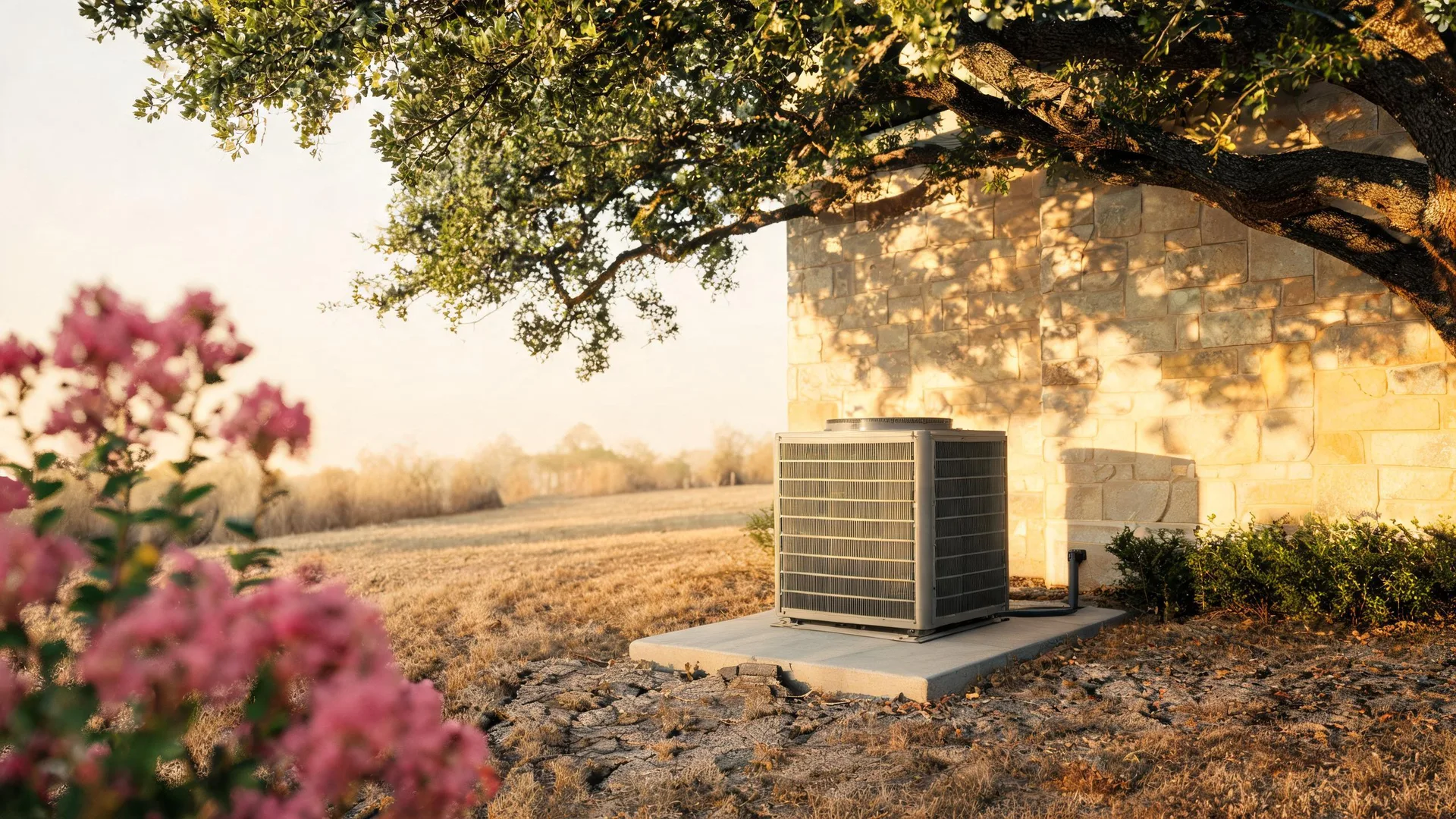
A gray residential air conditioner condenser unit mounted on a concrete pad in an open grass field.

Keep Running It and the Small Problem Finds the Big One

A system low on refrigerant will keep running, but the compressor is pumping gas that can't carry heat the way it should. Run it for days like that and the compressor itself takes the damage, not just the comfort in the house. A weak capacitor shows the same pattern. It starts the compressor and fan motor roughly instead of smoothly, and every rough start wears the motor windings a little more until one of them fails outright. A dirty coil makes the system work harder to move the same heat, which raises head pressure and leans on every part downstream of it. None of these fix themselves by running. They get worse on the same curve, slowly at first and then all at once, which is why the unit that was merely struggling last week is the one that won't start at all this week.

Check the filter first

A clogged filter is the most common reason an air conditioner stops keeping up. Pull it out and hold it to the light. If you can't see through it, replace it. A dirty filter starves the system of airflow, which can cause the coil to ice over and the whole system to lose its cooling power.

Look at the outdoor unit

Walk outside and check the condenser. Leaves, grass clippings and dryer lint can block the fins and stop it from shedding heat. Clear away anything piled against it and make sure the fan on top spins freely. Also check that the breaker for the outdoor unit hasn't tripped, since that alone can explain a system that won't start.

Aerial view of a square outdoor air conditioning condenser unit on a concrete pad beside a house wall with a sliding glass door.

A new air conditioner would save little on running costs in Anoka County, so the repair decision comes down to the unit's condition.

  • A new one at the federal minimum, 13.4 SEER2$160 a year
  • An older air conditioner$170 a year

Estimates for a typical Anoka County home, compared with an older unit built to the previous federal minimum, from EIA household energy data, Minnesota fuel prices and NOAA climate normals. Your home will differ.

Repair makes sense when a part like a capacitor or contactor has failed.

Replacement makes sense when the compressor has failed or the system uses R-22 refrigerant, which is no longer made.

A diagnostic visit starts before the panels come off. A tech will ask what the system is doing, when it started, and whether anything changed right before it did. Then they check pressures, electrical readings and airflow rather than guessing from the symptom alone, because a warm house can mean low refrigerant, a weak capacitor, a dirty coil or a failing motor, and each of those needs a different fix. They'll test the capacitor under load, not just look at it, since a capacitor can read fine sitting still and still fail to start the compressor. They'll check the refrigerant charge against what the system is supposed to have, because too little or too much both cause real damage. The goal is to find the one thing that's actually wrong before replacing anything, so the part that gets fixed is the part that was failing.