




A dark horizontal-sided building corner in the left foreground beside a mowed lawn, with a light-colored single-story house and large deciduous trees under a pale sky in the background.

AC Repair in Austin, MN

Tell us about the job

Takes about a minute. No obligation.

RepairCentral ACMower County, MN
Step 1 of 2

What ZIP code is the job in?

Before you call, check the thermostat is set to cool and the temperature is actually below room temperature. Go to the breaker box and make sure the breaker for the outdoor unit hasn't tripped. Look at the air filter. If it's gray and clogged, pull it out, because a blocked filter can starve the system of airflow and make it seem like something bigger is wrong. Walk outside and listen for the outdoor unit humming or the fan spinning. If the outdoor fan isn't moving but you hear a hum, that's worth telling the contractor when they arrive, it points to the capacitor or the fan motor. Check for ice on the refrigerant lines or the indoor coil. If you see ice, turn the system off and let it thaw before anyone works on it.

3 months
June through August, your air conditioner is on duty
79°F
the average summer afternoon it cools against
32 hail events
in ten years, and hail bends the fins on outdoor coils
59 wind events
in ten years, and wind drives debris into outdoor units
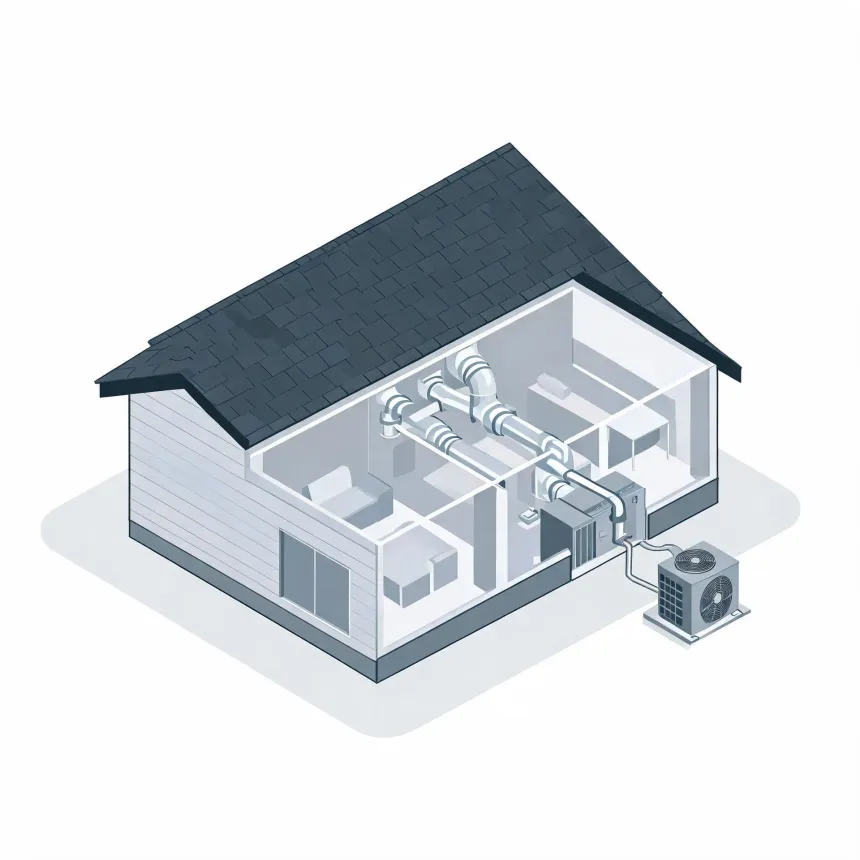
Isometric cutaway illustration of a house with a dark shingled roof, showing interior ductwork connected to an indoor air handler and an outdoor condenser unit beside the building.
Your air conditioner works hardest from June through August.

NOAA nClimDiv, 1991–2020 normals

Your AC in Austin only has to work hard three months out of the year.

A system that only sees real demand in June, July and August usually has less wear on it, so a repair is more likely to be worth making.

Half the homes in Mower County were built by 1958, old enough that the AC may be original

Half the homes here were built by 1958
Cooling runs June through August
Summer afternoons average 79°F
Nothing unusual is working against your AC hereMinnesota homes paid 15.45 cents per kilowatt-hour in 2024.

If your AC is on its last legs, get a diagnosis before you write it off. With highs averaging around 79°F and only three months of real work a year, most units here haven't been pushed hard, so an aging system is often one worn part away from running fine again. A contractor can tell you whether you're looking at a bad capacitor or contactor rather than a failing condenser. Wind and hail come through this county often enough that it's also worth asking whether the outdoor unit's fins or coil took a hit you didn't notice. Either way, the fix is usually smaller than the system's age suggests.

Find out what it needs before you write it off

If the AC in your house hasn't been touched since it was built, a repair call is how you find out what's actually wrong with it before anyone talks about replacing it.

Find a contractor
A gray cylindrical air conditioning condenser unit mounted on a concrete pad next to a light-colored vinyl-sided house exterior.

The system usually tells you what's wrong before it quits

Most of what sends someone looking for a repair shows up as a sound or a smell before it shows up as a warm house. A squeal when the outdoor fan starts is usually the motor bearing going. A clicking that keeps repeating instead of settling into a hum is often the contactor failing to catch. A musty smell from the vents points to the indoor coil, and a burning smell means a wire or motor winding is overheating, which is worth shutting the system off for rather than waiting out. Short cycling, where the system kicks on and shuts off again within a few minutes, wears the compressor harder than almost anything else, and it usually traces back to a dirty coil, a refrigerant problem, or a failing capacitor rather than the compressor itself. Warm air from the vents with the outdoor unit running fine often means the charge is low. None of these signs tell you the system is done. They tell you which part is asking for attention before it takes something bigger down with it.

The capacitor goes before the compressor does

The start capacitor gives the compressor and fan motor the jolt they need to kick on. It's a small part, and it's usually the first thing to wear out, failing from age and from the heat inside the unit itself. A compressor can run for years and still be fine while the capacitor next to it has already given out.


A warm house doesn't always mean a dying system

When a compressor actually fails, it's often because something smaller failed first and nobody caught it. Low refrigerant from a slow leak makes the compressor work harder than it should. A dirty coil or weak airflow does the same. By the time the compressor itself is the problem, it's usually the last domino, not the first.

Overhead view of an outdoor AC condenser unit on a concrete pad next to a house with a dark shingle roof.

A new air conditioner would save little on running costs in Mower County, so the repair decision comes down to the unit's condition.

  • A new one at the federal minimum, 13.4 SEER2$140 a year
  • An older air conditioner$150 a year

Estimates for a typical Mower County home, compared with an older unit built to the previous federal minimum, from EIA household energy data, Minnesota fuel prices and NOAA climate normals. Your home will differ.

Repair makes sense when a part like a capacitor or contactor has failed.

Replacement makes sense when the compressor has failed or the system uses R-22 refrigerant, which is no longer made.

A diagnostic visit starts with the thermostat and the return air, not the outdoor unit. A contractor will check the temperature split between the air going into the system and the air coming out of it, because that number says more about what's wrong than how the house feels. From there it's gauges on the refrigerant lines to check the charge, and a meter on the capacitor and the motor windings to see if they're pulling power the way they should. The contactor gets a look too, since the contacts on it burn and pit over time and that alone can stop the outdoor unit from starting. If the coil is dirty or the airflow is weak, that shows up in the readings before anyone has to guess at it. None of this takes the system apart. It just tells the contractor which part is lying about being fine.