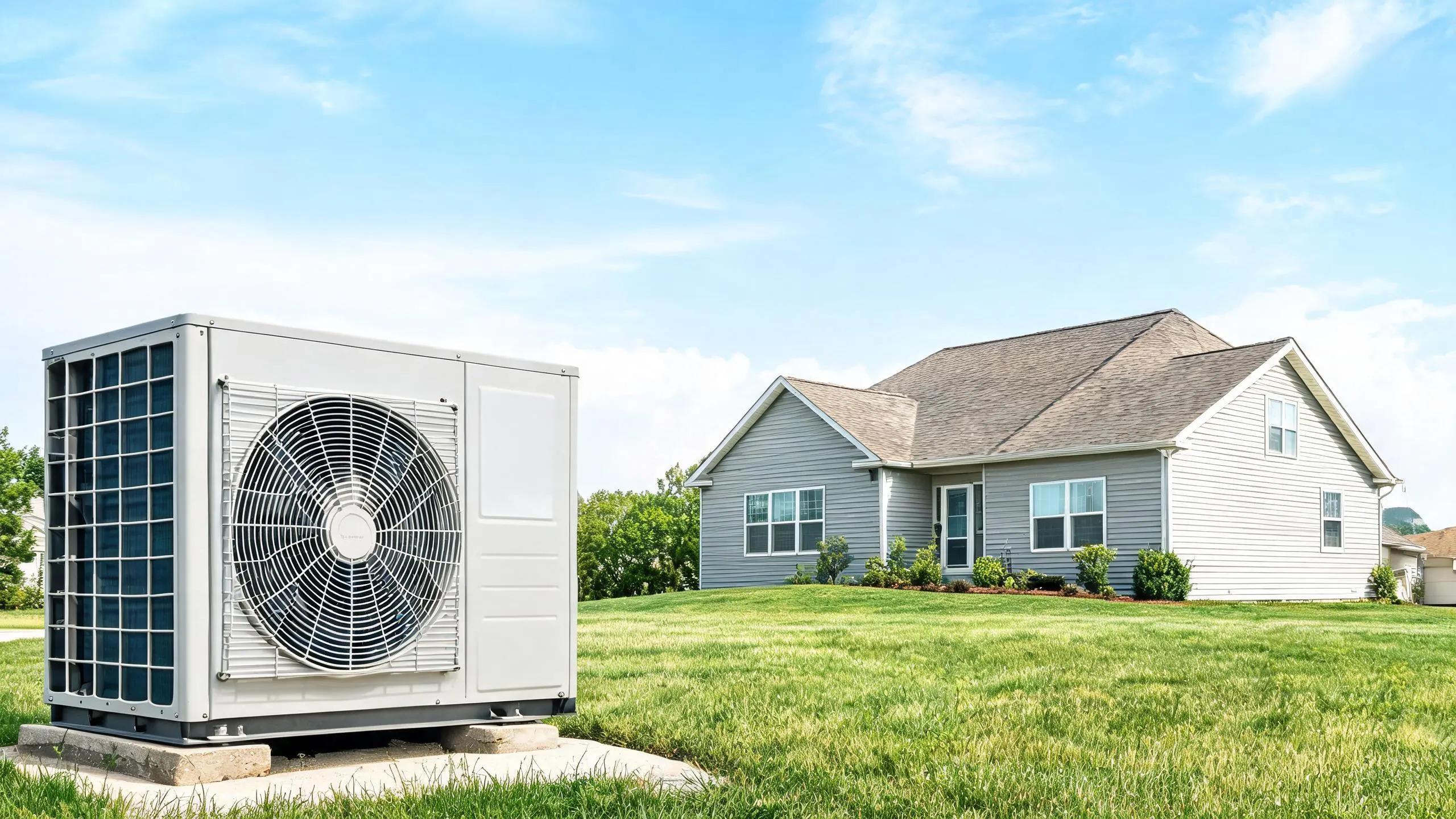





An outdoor HVAC condenser unit on a concrete pad in front of a single-story house with gray siding and a shingle roof.

Heat Pump Repair in Minneapolis, MN

Tell us about the job

Takes about a minute. No obligation.

RepairHeat PumpHennepin County, MN
Step 1 of 2

What ZIP code is the job in?

Your heat pump sits outside through a lot more than cold. Hennepin County has had 142 damaging wind events and 132 hail events between 2015 and 2024, plus 33 winter storms bringing heavy snow, ice and blizzard conditions. That outdoor unit takes all of it directly, the coil and fan exposed to wind-driven debris and ice buildup year after year. Add in a long, cold heating season that keeps the system pulling heat from outdoor air for months at a stretch, and the wear adds up faster than it would somewhere milder. Whatever symptom brought you to this page, it's worth having someone diagnose the actual cause rather than guess at it.

8 months
October through May, your system heats
3 months
June through August, it cools
10°F
the average winter night it heats against
80°F
the average summer afternoon it cools against
Isometric cutaway illustration of a single-story house showing interior ductwork, an indoor air handler, and an outdoor condenser unit connected by lines along the exterior wall.
Your system heats October through May and cools June through August.

NOAA nClimDiv, 1991–2020 normals

Heat here starts up in October, after the system has sat idle since May.

A weak part usually waits for that first cold morning to fail.

A heat pump that's struggling costs more to run here than almost anywhere else

Power here costs 16.88 cents per kilowatt-hour
142 damaging wind events from 2015 to 2024
132 hail events from 2015 to 2024

Half the homes in Hennepin County were built in 1973 or earlier. If yours is one of them, there's a decent chance the heat pump itself isn't original to the house, but whatever is out there now has likely been through a lot of winters already. Heat pumps run longer here than in milder climates, since they're drawing on outdoor air through months of real cold, and that adds hours to the compressor every single year it operates. An older unit that's starting to act up isn't necessarily done, but a repair bill on a machine that's already logged a decade or more of hard winters is worth a second question. Before paying for the fix, it's worth asking how much life is actually left in the system.

Find out what's really wrong before you fix it

Get the actual cause checked before paying for a fix. A system that works this hard all year can throw off a symptom that looks like one problem and turns out to be another, so a proper diagnosis is what makes the repair hold.

Find a contractor
A gray air-source heat pump mounted on a concrete pad next to a house with gray vinyl siding, surrounded by gravel and flanked by green shrubs and white hydrangea flowers.

What this repair buys you

A contractor can give you a straight answer on how many years are left before you spend money on this repair. If the heat pump is original to a house built in 1973 or earlier, that answer matters more than usual. If it was swapped in more recently, the repair is more likely to make sense on its own. Either way, it's worth knowing before the bill, not after.

What you can check safely

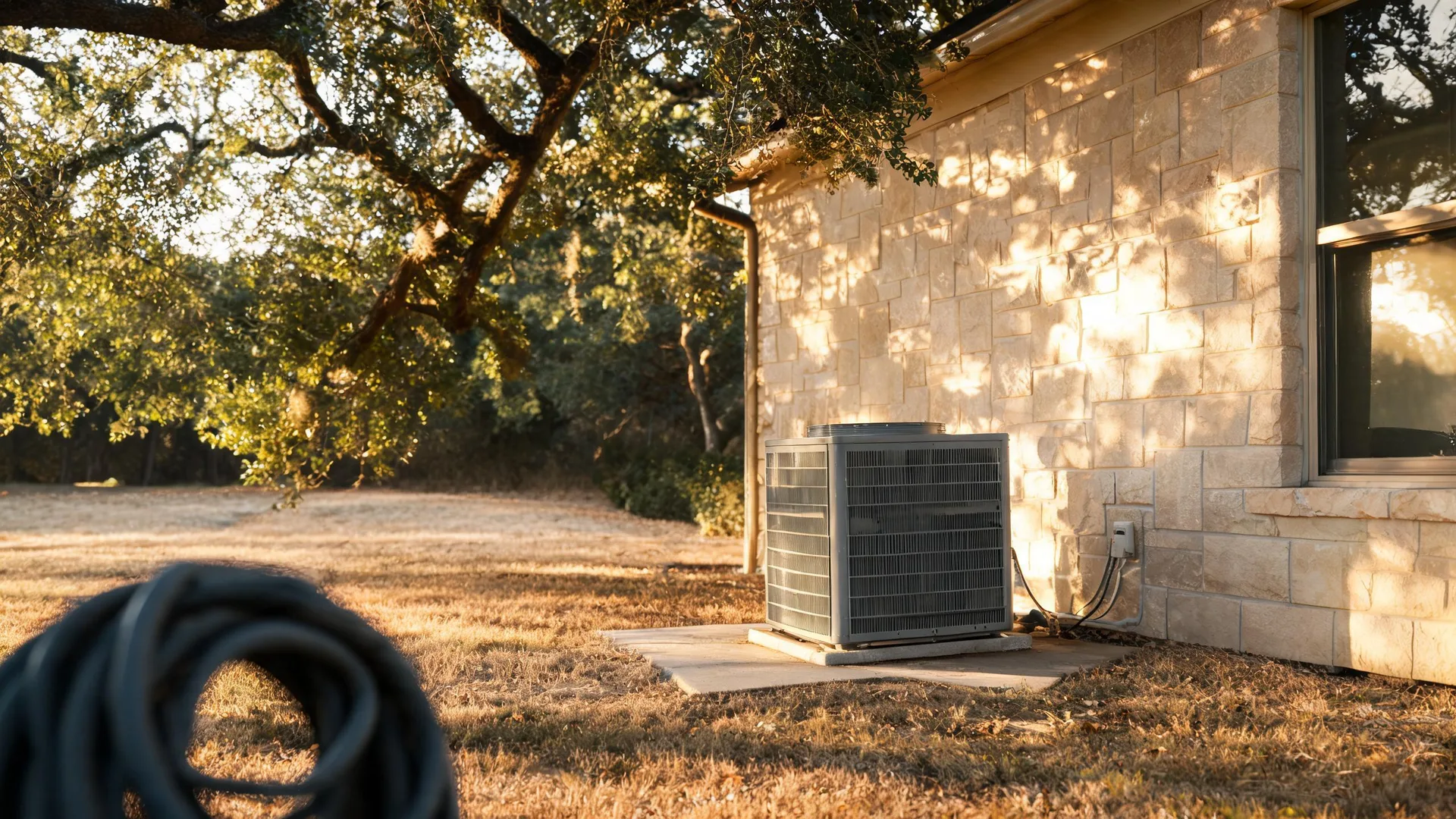
Look at the outdoor unit and see if the coil is packed with ice, caked in snow, or blocked by leaves and debris. Clear away anything blocking airflow around it. Check the breaker for both the indoor air handler and the outdoor unit, since a tripped breaker can look like a dead system. Swap the thermostat batteries if it runs on them, and check that it's actually set to heat and not fan only. Go to the air handler and look at the filter. A filter packed with dust chokes airflow and can bring the whole system to a crawl.
What to leave for a contractor

Don't pull panels off the outdoor unit or touch anything inside the cabinet. The refrigerant lines, the compressor and the reversing valve all need gauges and training to diagnose safely. If you hear grinding or screeching from the outdoor fan, shut the system off at the breaker instead of letting it run. The same goes for a burning smell or a breaker that trips more than once. Those point to an electrical fault or a failing motor, and running it longer can turn a repair into a replacement.

Most heat pump failures trace back to the reversing valve, the part that switches the system between heating and cooling. It can stick in one position, which leaves you with heat when you want cooling or the other way around. The capacitor is another common point of failure, since it has to kick the compressor and fan motors into motion every time the system cycles on, and that part wears down with age until it can't deliver the jolt anymore. Refrigerant leaks show up too, usually at a fitting or a coil seam, and a system low on refrigerant will run constantly without catching up to the thermostat. The outdoor fan motor fails on its own sometimes, often with a grinding or screeching sound before it quits. A defrost control board that stops sending the right signal can let ice build up on the outdoor coil until the system can't pull heat from the air at all.

Storms here are frequent enough to matter for a machine that lives outdoors. Hennepin County logged 313 severe weather events between 2015 and 2024, and 142 of those were damaging wind. Wind that strong throws branches and grit straight into the coil and fan. Hail is just as common, with 132 events over that same stretch, and hail dents fins and can crack a fan blade without stopping the unit outright. Statewide, 13% of households lost power for a day or more in 2024, which matters for heat as much as for cooling. If the outdoor unit has taken a hit from wind or hail recently, even one it seemed to shake off, that's worth mentioning to whoever comes out to look at it.