A low ground-level view across a mown lawn toward a dark two-story house with a covered front porch, flanked by large leafy trees under an overcast sky.

Heat Pump Repair in Blaine, MN

Tell us about the job

Takes about a minute. No obligation.

RepairHeat PumpAnoka County, MN
Step 1 of 2

What ZIP code is the job in?

A heat pump that runs year-round

A heat pump in Blaine carries both the heating and the cooling load, so it's switching modes and cycling for most of the year. Zone 6A winters keep it working hard on the heating side, and that's on top of whatever cooling it did over the summer.


Earlier wear, earlier breakdowns

That workload catches up with parts faster than it would somewhere milder. A problem that might take years to show up elsewhere can show up in less time on a system running this many hours. When something starts acting up, it's worth finding the actual cause instead of guessing.

9 months
September through May, your system heats
3 months
June through August, it cools
9°F
the average winter night it heats against
80°F
the average summer afternoon it cools against
Isometric grayscale illustration of a cutaway house showing interior rooms, ceiling ductwork connected to an indoor air handler, and an outdoor condenser unit beside the exterior wall.
Your system heats September through May and cools June through August.

NOAA nClimDiv, 1991–2020 normals

Electricity in Anoka County runs 15.48 cents per kilowatt-hour.

A heat pump that's struggling pulls more of it just to keep up, and you pay for every hour it runs that way.

Nine months of heat, three of cooling, and no real break in between

Cooling runs June through August
Heat runs September through May
75 hail events from 2015 to 2024
Half the homes here are newer than you'd thinkHalf of Anoka County's homes were built in 1986 or later.

A heat pump that's losing efficiency doesn't trip a breaker or shut itself off. It just keeps running, drawing more power to hit the same temperature, and the meter doesn't care why. If yours is short cycling, running constantly, or not keeping up with the thermostat, that's the extra draw showing up in how it runs before it shows up in the mail. Waiting a billing cycle to see how bad it gets just confirms what a technician could tell you in an hour. Have it looked at while the fix is still a part, not a replacement.

Heavy use catches up with a heat pump. Get the actual cause before it gets worse.

A heat pump running this many hours a year wears parts faster than one that gets a real break. When it starts acting up, that's usually what's behind it, not a one-off fluke. A technician can tell you which part is giving out and whether it's worth repairing before it takes anything else with it.

Find a contractor
A man in a cap, dark t-shirt and tan work pants walks up concrete steps toward a dark green front door, carrying a waxed canvas tool bag, with a potted shrub beside the entry.
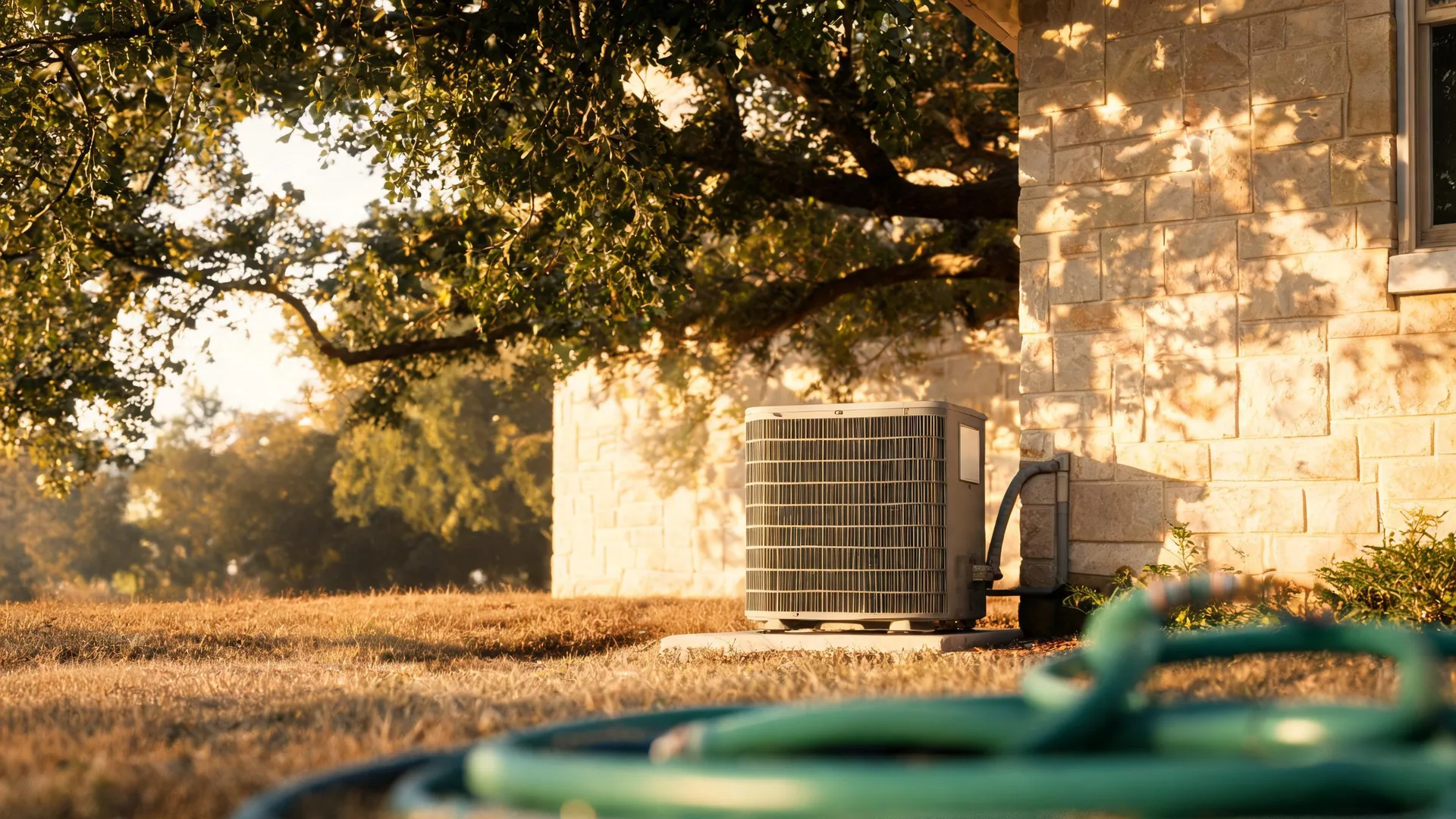
A gray heat pump outdoor unit mounted on a concrete pad next to a residential house with lap siding and stone accents.

If your system is newer, repair is the easy call

If your heat pump came with a newer build, repair is the better bet before replacement crosses your mind. A system installed within the last decade or so still has years of parts life in it, and a repair now keeps it running without starting over. Ask whoever comes out when the unit was put in if you don't already know. That date tells a technician more about what's worth fixing than how the system sounds or acts.

The reversing valve takes the abuse

A heat pump has one part an AC doesn't: the reversing valve that switches it between heating and cooling. Every time the system changes direction, that valve shifts, and over years the seals inside it wear and it can start sticking in one position or leaking refrigerant past itself. A heat pump that won't switch modes, or blows cool air when it should be heating, usually points straight at that valve.

The outdoor coil works in weather an AC never sees

In heating mode, the outdoor coil is pulling heat out of cold air, and it does that by running colder than the air around it, which means it frosts up. A defrost cycle is supposed to clear that off on a schedule, but a failing defrost control board or a stuck sensor lets frost build past what the coil can shed. Ice on the outdoor unit in winter is a sign that cycle isn't doing its job, not something to wait out.

Before calling anyone, there are a few things worth checking yourself. Look at the thermostat first. Make sure it's set to the mode you think it's in, and that the set temperature is actually past the room temperature, since a setting bumped by accident looks exactly like a system failure. Check the outdoor unit for anything blocking it, leaves, snow, a cover left on, anything that stops airflow across the coil. Check the air filter, because a clogged one starves the system and can make it look like the unit itself is failing when it's just not getting airflow. Look at the breaker panel if the system won't start at all. A tripped breaker is something you can reset once; if it trips again, stop and leave it for a technician, since that usually means a short or a part pulling too much current. None of this fixes a bad reversing valve or a failed defrost board, but it rules out the simple stuff before you pay someone to find it.

A diagnostic visit starts with the thermostat and the data the system itself can give up. Most outdoor units have a control board that stores fault codes, and a technician will check that before taking anything apart. From there it's gauges on the refrigerant lines, checking pressures in whatever mode the system is stuck in or struggling with. Low pressure can mean a leak, high pressure can mean a blocked coil or a failing compressor, and the numbers point to different parts depending on which way they're off. Electrical testing comes next: the capacitor, the contactor, the wiring to the reversing valve, checking for the voltage each part is supposed to get and whether it's actually getting it. The point of all this is narrowing down one failed part from everything else that's working fine, rather than replacing parts until something changes.