Gas heat is the default here
Almost 8 in 10 homes in Washington County heat with utility gas. If your furnace runs on gas, a new AC installed alongside it is the common setup, not an exception.
Takes about a minute. No obligation.
Almost 8 in 10 homes in Washington County heat with utility gas. If your furnace runs on gas, a new AC installed alongside it is the common setup, not an exception.
Central AC needs an air handler or furnace to move the air across the coil. Whoever installs your system will check that the new coil matches what your gas furnace can push, especially if only one side is being replaced.

NOAA nClimDiv, 1991–2020 normals
Summers here run about three months, with afternoons near 80.
A system that runs three months a year doesn't need the top tier to hold up.




Sizing a new system comes down to a load calculation, not a copy of the old unit's tonnage. A contractor works through the square footage, the window area and direction, the insulation, and the ceiling height to figure out how much heat actually builds up inside on a hot afternoon. Too big and the compressor cools the air fast, shuts off, and never runs long enough to pull moisture out, so the house feels cold and clammy at the same time. Too small and it runs flat out all day without ever catching up to the thermostat setting. Either way shows up in how the house actually feels, not just on the install day. The furnace or air handler the coil pairs with has to move enough air across that coil too, so sizing one side means checking the other.
It won't be worked hard here, so pick a reliable system that fits. You don't need the top efficiency model.
Find a contractorThat SEER2 number on the label is a ratio, not a size. It tells you how much cooling the unit produces for the energy it uses over a full season, averaged across mild days and hot ones. A higher number usually means the compressor can slow down and hold steady instead of switching fully on and off all day. What the rating doesn't tell you is whether the unit is sized right for the space it's cooling, or whether it's been matched to a coil and ductwork that let it breathe. Systems with the same rating on the label can run differently once they're in, depending on what they're paired with. The rating also assumes the install was done right, with the correct charge and full airflow across the coil. A high-efficiency unit set up wrong will run worse than a basic one set up correctly.
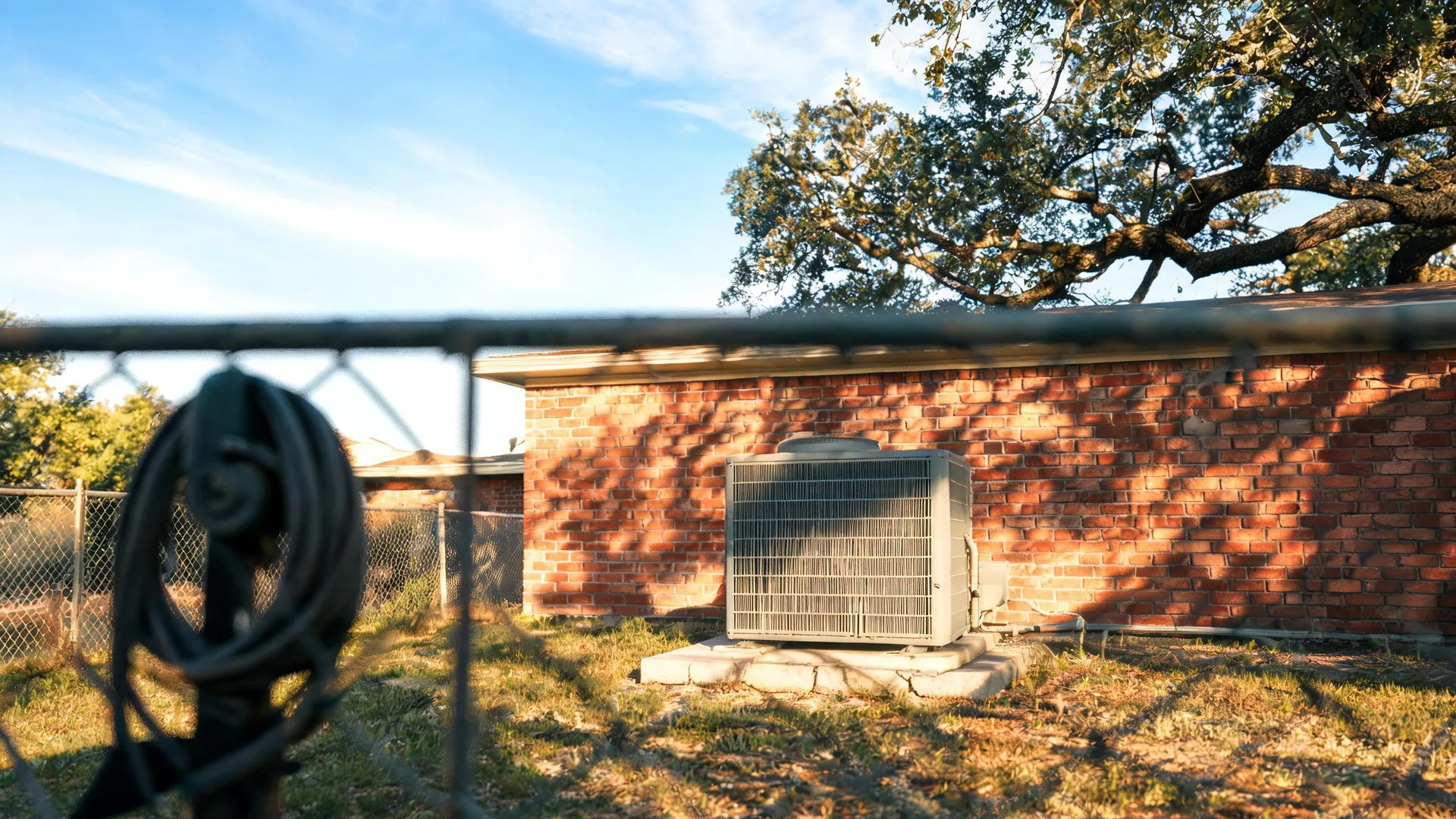
Whoever installs the new system will disconnect the old condenser, cut it loose from the line set, and take it with them. The refrigerant inside has to be recovered first, not vented, so a licensed contractor handles that step as part of the removal.
If the old line set is still in good shape, a new system can sometimes reuse it instead of running new copper. But the lines have to match the diameter the new unit calls for, and they have to be free of contamination from the old refrigerant. Whoever installs it will check both before deciding whether to reuse or replace.
Estimates for a typical Washington County home, from EIA household energy data, Minnesota fuel prices and NOAA climate normals. Your home will differ.
The crew starts outside, setting the new condenser on its pad and running the line set up to the coil. Inside, the coil goes in above or beside the furnace, and that joint gets brazed, not just fitted together. Once everything's connected, the system gets pulled down into a vacuum to pull out moisture and air, because either one left in the lines will keep the system from running right. Only after that does the refrigerant go in, weighed in to the amount the unit calls for. Before anyone leaves, the system runs with gauges on it to confirm the charge and check airflow across the coil. A thermostat swap, if you're getting one, usually happens last.