A nighttime view of a tree-lined residential street with illuminated two-story brick houses and street lamps.

AC Installation in Winona, MN

Tell us about the job

Takes about a minute. No obligation.

New system or replacementCentral ACWinona County, MN
Step 1 of 2

What ZIP code is the job in?

Most homes here run on gas heat

Utility gas heats 55.4% of occupied homes in Winona County, more than electricity, propane, and fuel oil combined. A gas-heated home typically pairs its furnace with a separate cooling coil and condenser, so an AC installation usually means adding or replacing that coil and condenser while the furnace itself stays in place.

What that means for your quote

A contractor will check whether your ductwork and furnace can pair with the new condenser before pricing the job. If your home heats with electricity or propane instead, the setup and equipment options may differ, so say which fuel you have when you ask for quotes.

3 months
June through August, your air conditioner is on duty
80°F
the average summer afternoon it cools against
83 hail events
in ten years, and hail bends the fins on outdoor coils
13.4 SEER2
the federal minimum any new unit must meet
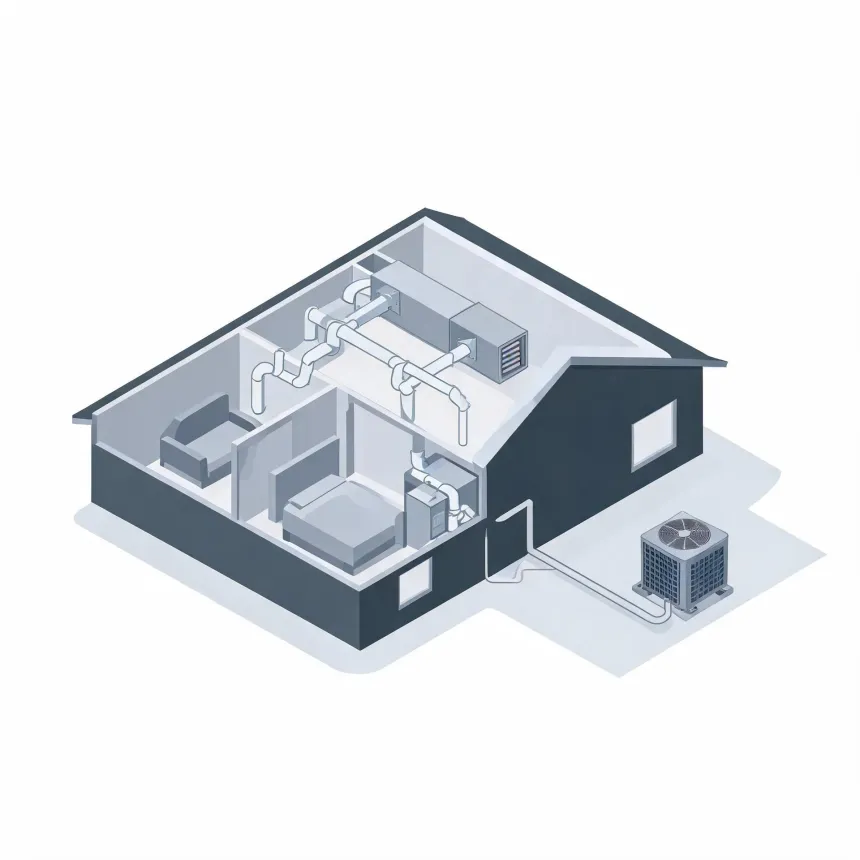
Isometric cutaway illustration of a house showing interior ductwork, an air handler and furnace unit, and an outdoor condenser connected by lines outside the wall.
Your air conditioner works hardest from June through August.

NOAA nClimDiv, 1991–2020 normals

A standard-sized AC sized correctly for your home runs efficiently without any local quirks to plan around.

At 15.45 cents per kilowatt-hour, Minnesota's electric rate doesn't change that math, so there's no reason to pay more for a bigger or higher-efficiency unit than your home calls for.

Winona sees its share of wind, hail and winter storms, but none of it changes what size AC your home needs

190 severe weather events from 2015 to 2024
13% of homes statewide lost power a day or more in 2024
63 damaging wind events from 2015 to 2024

Cooling here only has to carry June through August, with afternoon highs averaging around 80. That's a short season and a mild one, nothing like the load a unit faces in a hotter zone. A system sized to your home's actual square footage and layout will keep up fine on the warmest days without running constantly. Going bigger doesn't buy you anything here. An oversized unit cools the air fast and shuts off before it pulls the humidity down, which leaves the house feeling clammy even at the right temperature. The right call is the size your contractor calculates from a load calculation, not a bigger number for peace of mind.

Have it in place before June

Cooling in Winona County runs June through August. Installing before May is out means the new coil and condenser are in and tested before the first hot stretch, not scheduled around one.

Find a contractor
An outdoor air conditioning condenser unit mounted on a concrete pad surrounded by gravel, photographed against a partly cloudy blue sky.

Your home may be older than central air itself

Half the homes in Winona County were built in 1969 or earlier. A house that age was rarely built with central air already in it. If yours is one of them, a contractor will need to check what ductwork and electrical you already have before sizing a new coil and condenser, rather than assuming it will just slot into place. That check is part of the job, not a sign something is wrong with your house.

The old condenser gets hauled away

A contractor disconnects the refrigerant lines, pulls the old condenser and coil, and takes them off site. Refrigerant has to be recovered first, not vented, since releasing it is against the law. Most installers fold this removal into the job rather than billing it separately, but it's worth asking what happens to the old unit when you get your quote.

The furnace and ductwork stay put

Swapping out the cooling side doesn't mean touching the heating side. The furnace keeps running the blower and the ducts keep carrying air the same way they always have. The only new connections are where the refrigerant lines meet the coil above the furnace and where the condenser ties into power outside.

Overhead view of an outdoor AC condenser unit on a concrete pad next to a house with a dark shingle roof.

Going above the federal minimum saves little here, about $20 a year.

  • A higher-efficiency unit$130 a year
  • A new unit at the federal minimum, 13.4 SEER2$150 a year

Estimates for a typical Winona County home, from EIA household energy data, Minnesota fuel prices and NOAA climate normals. Your home will differ.

Installation day starts with the old equipment coming out and the new coil and condenser going in, but most of the time goes into the connections around them. A contractor runs refrigerant lines between the condenser outside and the coil above the furnace, then pressure tests them before any refrigerant goes in. A joint that leaks slow won't show up that afternoon. It shows up as a warm house months later. The electrical disconnect outside gets wired to the new condenser, and the breaker has to match what the new unit calls for. Once everything's connected, the system runs through a startup check. Refrigerant charge, airflow across the coil, the thermostat talking to the new equipment. That test run is what tells you the job is done right, not just done.