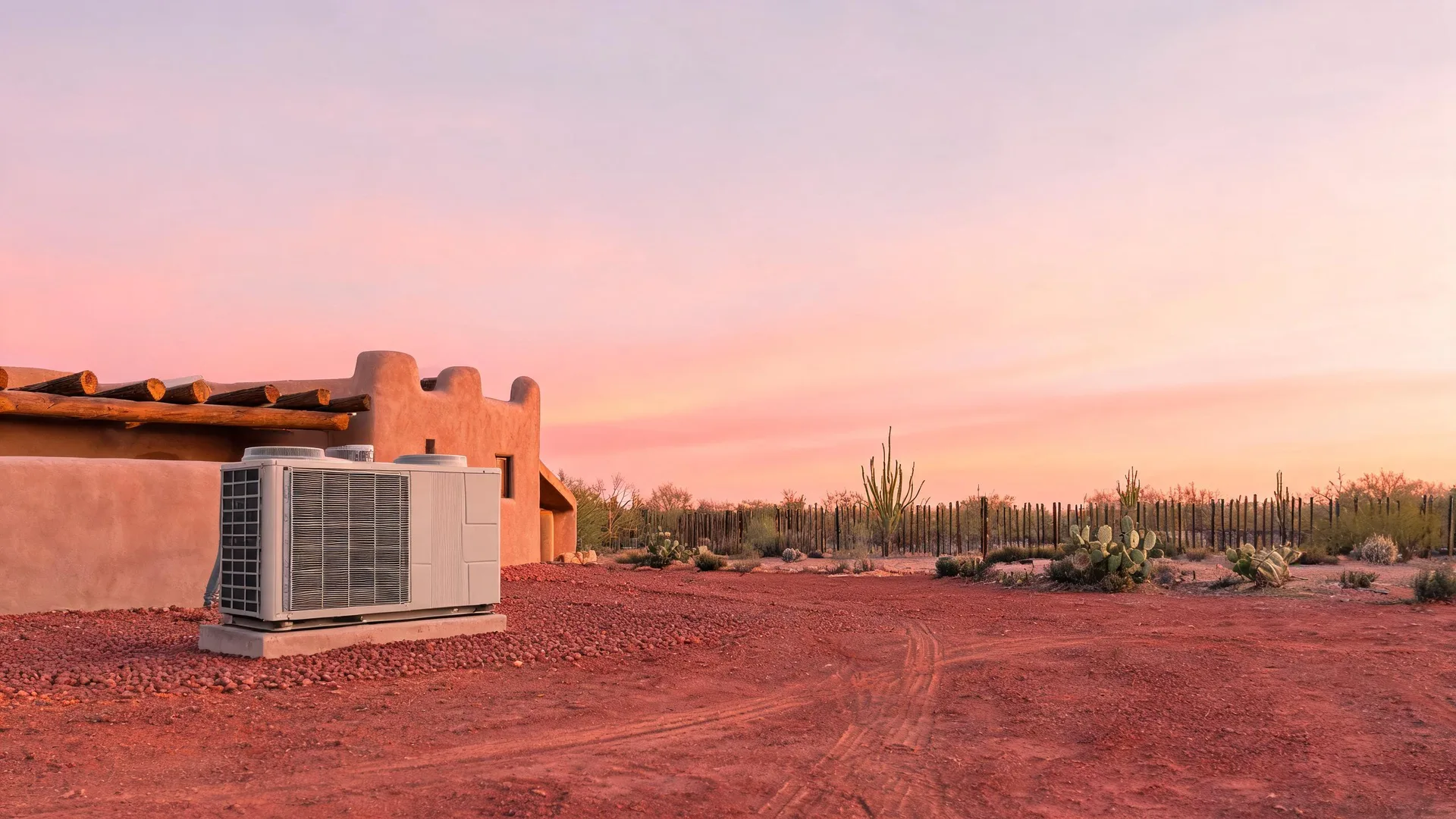
Gas furnaces are the common setup here
Just over half of homes in Kandiyohi County heat with utility gas. A central air conditioner is built to pair with that kind of furnace, sharing the same ductwork and the same indoor coil location.
Takes about a minute. No obligation.
Just over half of homes in Kandiyohi County heat with utility gas. A central air conditioner is built to pair with that kind of furnace, sharing the same ductwork and the same indoor coil location.
If your home already has a gas furnace and ducts, adding or replacing central air usually means fitting new equipment into what's already there, not rebuilding the system around it.

NOAA nClimDiv, 1991–2020 normals
A standard central air conditioner, sized right, cools a Willmar home fine.
There's no reason to pay for extra tonnage or a higher SEER2 rating than this house needs.



Taking out the old condenser usually means disconnecting the refrigerant lines, the electrical whip, and the line set running to the indoor coil. Old refrigerant has to be recovered, not vented, so a contractor will pull it into a tank before the unit comes off the pad. If the indoor coil is being swapped too, that gets cut free from the plenum and lifted out. A slab-mounted condenser just gets unbolted and hauled off. The old equipment itself has value as scrap metal, and most contractors factor removal into the install rather than leaving it for the homeowner to deal with.
Kandiyohi County falls under zone 6A, and any split-system air conditioner installed under 45,000 Btu/h has to meet a federal minimum of 13.4 SEER2. That sets the floor for what a contractor can put in. A federal tax credit is also available for qualifying equipment, worth checking before you settle on a unit.
Find a contractor
Cooling runs three months here, June through August, with afternoon highs averaging 80°F. The rest of the year the condenser sits idle. That's a short stretch of work, and it means less wear on the compressor and coil over the system's life than you'd see in a place where the unit runs most of the year. A standard system, sized right for the house, covers those three months without strain. Where equipment here fails early, it's usually a cover left off over winter, a line set kinked during install, or years without a filter change, not the machine running out of life from overuse.
Most manufacturer warranties on the compressor and coil are only good if the system gets registered within a set window after install, and some require proof of annual maintenance to stay valid. A contractor who doesn't mention this isn't doing you a favor by skipping it. Get the registration deadline and the maintenance requirement in writing before you sign off on the install.
A permitted install means an inspector checks the refrigerant connections, the electrical disconnect, and the condensate drain before the job is called done. That inspection is what catches a bad braze joint or a miswired disconnect while it's still easy to fix. If a contractor suggests skipping the permit to save time, that's a sign they're cutting corners somewhere else too.
Estimates for a typical Kandiyohi County home, from EIA household energy data, Minnesota fuel prices and NOAA climate normals. Your home will differ.
Install day starts with the refrigerant lines and power disconnected and the old condenser off the pad before new equipment ever shows up. Once the new condenser is set, the line set gets connected, pressure tested, and checked for leaks before any refrigerant goes in. The system gets evacuated to pull out moisture and air, since either one left in the lines will cut into how well the coil transfers heat. Refrigerant charge gets weighed in to the manufacturer's spec rather than eyeballed, and airflow across the indoor coil gets checked too. Only after all that does the contractor run the system and confirm it's pulling down temperature and holding steady. None of it is quick, and a contractor rushing past the testing steps is cutting corners that show up later as a system that never quite cools right.