






Aerial view of a gray outdoor air conditioning condenser unit mounted on a concrete pad next to a house with vinyl siding.

AC Installation in St. Cloud, MN

Tell us about the job

Takes about a minute. No obligation.

New system or replacementCentral ACStearns County, MN
Step 1 of 2

What ZIP code is the job in?

Just over half the homes in Stearns County heat with gas, and most of those pair the furnace with central air on the same ductwork. If your house already has that setup, adding or replacing an AC usually means matching a new outdoor unit to the coil and ducts already in place. Electricity heats about a quarter of homes here, and those often run on heat pumps or electric furnaces instead. The system you're working with now is a good guide for what makes sense to install next.

3 months
June through August, your air conditioner is on duty
79°F
the average summer afternoon it cools against
74 hail events
in ten years, and hail bends the fins on outdoor coils
13.4 SEER2
the federal minimum any new unit must meet
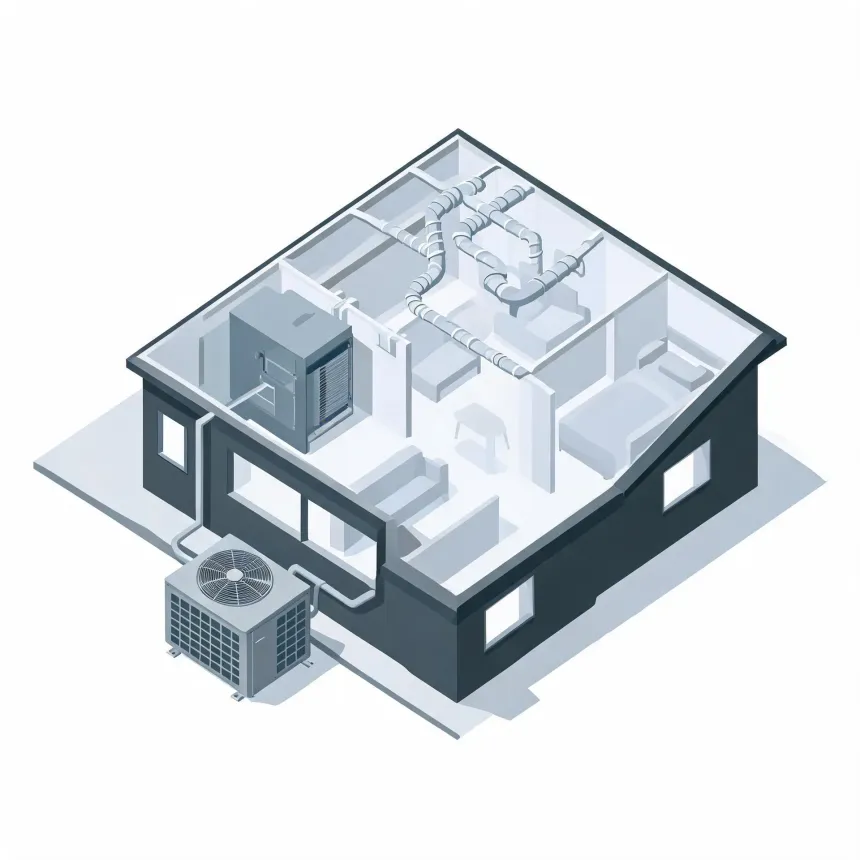
Isometric cutaway illustration of a small house showing interior rooms with furniture, ceiling ductwork and an air handler, plus an outdoor condenser unit connected by refrigerant lines beside the building.
Your air conditioner works hardest from June through August.

NOAA nClimDiv, 1991–2020 normals

Cooling in St. Cloud starts up in June and runs through August.

May is the month to get a new AC installed, before the first hot week puts you on a waiting list.

Stearns County sees its share of wind, hail and storms. None of it calls for a bigger or pricier AC.

203 severe weather events from 2015 to 2024
13% of homes statewide lost power a day or more in 2024
86 damaging wind events from 2015 to 2024
Summer here doesn't ask for anything specialThree months of cooling, afternoons near 79. A standard system handles it.

Stearns County falls in climate zone 6A, which is built around winter more than summer. Any split-system AC under 45,000 Btu/h sold here new has to meet 13.4 SEER2 at minimum, same as the rest of the country. That's a floor, not a size requirement, so it doesn't push you toward a bigger or more complex system than this place needs. A straightforward 13.4 SEER2 unit, sized right for your house, clears the bar on its own. Pairing it with a matched coil is what lets it actually run at that rating once it's installed.

The right size, done right, is all this job needs

A standard system sized off a proper load calculation will run fine here, and electricity in Minnesota runs 15.45 cents per kilowatt-hour, so there's no case for paying more for capacity or efficiency this place doesn't call for. Get the sizing and the SEER2 rating right and the rest of the decision is straightforward.

Find a contractor
A man in a cap, dark jacket and olive pants climbs porch steps toward a green front door, carrying a canvas tool bag filled with hand tools, with a potted shrub to the right.
A gray metal air conditioning condenser unit mounted on a concrete pad in a flat grassy field under a partly cloudy sky.

The number on the label only holds if the parts underneath it match

The SEER2 number on the label tells you how much cooling the unit delivers for the electricity it uses, averaged over a season. A higher number means less power to produce the same cooling, every time the compressor cycles on. That rating only holds if the outdoor unit is paired with the coil it was tested with. Swap in a different coil and the system still runs, but it won't hit the number on the label. The rating also assumes the unit is sized right for the space. An oversized system shuts off before it finishes a full cooling cycle, which wastes the efficiency it was built for. A correctly sized system run on a matched coil will earn its rating for as long as the compressor lasts.

Someone has to disconnect it first

The old outdoor unit still has refrigerant in the lines and power running to it. A contractor recovers the refrigerant rather than releasing it, disconnects the electrical, and unbolts the unit from its pad before it comes off the property. The indoor coil comes out too if it's being replaced, since that's usually part of the same job.


What's left depends on what you're keeping

If the ductwork and coil are staying in place, removal is quick, just the outdoor unit and whatever refrigerant lines aren't being reused. If the whole system is coming out down to the coil, there's more to disconnect and more to haul off. Either way the old equipment doesn't get left behind for you to deal with.

Aerial view of a gray central air conditioning condenser unit on a concrete pad next to a house with vinyl siding.

Going above the federal minimum saves little here, about $10 a year.

  • A higher-efficiency unit$120 a year
  • A new unit at the federal minimum, 13.4 SEER2$130 a year

Estimates for a typical Stearns County home, from EIA household energy data, Minnesota fuel prices and NOAA climate normals. Your home will differ.

Installation day starts with the old unit coming out and ends with the new one running a full cycle before the contractor leaves. In between, the outdoor unit gets set on its pad and leveled, the line set gets connected or replaced, and the coil gets matched up on the indoor side. The system gets evacuated to pull moisture and air out of the lines, then charged with refrigerant to the amount the manufacturer specifies for that line length. After that, a contractor checks airflow at the vents, checks the refrigerant charge against the target pressures, and tests the thermostat to make sure it's calling for cooling the way it should. None of that happens fast, and a job that skips steps to finish early usually shows it within the first year.