A nighttime street view of several illuminated two-story red brick homes with front porches, flanked by a large tree.

AC Installation in Princeton, MN

Tell us about the job

Takes about a minute. No obligation.

New system or replacementCentral ACMille Lacs County, MN
Step 1 of 2

What ZIP code is the job in?

Gas is the most common setup here

Utility gas heats 42.3 percent of homes in Mille Lacs County, more than any other fuel, with propane close behind at 35.5 percent. If your furnace runs on gas or propane, central air usually pairs with it, using the same ducts and the same thermostat.


What that means for your install

If ductwork is already in place for a gas or propane furnace, adding or replacing AC means connecting to a system that already moves air through the house. The contractor can check the existing ducts and furnace before deciding what size unit the house needs.

2 months
July through August, your air conditioner is on duty
78°F
the average summer afternoon it cools against
20 hail events
in ten years, and hail bends the fins on outdoor coils
13.4 SEER2
the federal minimum any new unit must meet
Isometric grayscale illustration of a cutaway house showing interior rooms, ductwork, an indoor air handler, and an outdoor condenser unit on a pad connected by lines.
Your air conditioner works hardest from July through August.

NOAA nClimDiv, 1991–2020 normals

Princeton gets two months of real cooling weather, July and August, with afternoon highs averaging 78.

A central air system here spends most of the year idle, so a well-built mid-range unit will do the job without strain.

Two mild months don't call for an oversized or high-end system

Power costs 15.45 cents a kWh statewide
Cooling runs July through August
Summer afternoons average 78°F

A contractor sizes an air conditioner with a load calculation, not a tape measure on the house. That means walking the floor plan, counting windows, checking which way the house faces, and looking at how much insulation is in the attic. Square footage alone leaves out too much. Houses the same size can need different size units if one has more glass facing west or a darker roof. Getting it right matters because an oversized unit cools the air fast and shuts off before it pulls the moisture out, so the house feels clammy even at the right temperature. An undersized one runs constantly and still can't catch up on the hottest afternoons. The right size runs long, steady cycles that match what the house actually loses and gains through its walls and windows.

Have it installed before June is out

June is the month to get this done. Cooling here runs July through August, and a system put in before then is ready on the first hot day instead of catching up after one.

Find a contractor
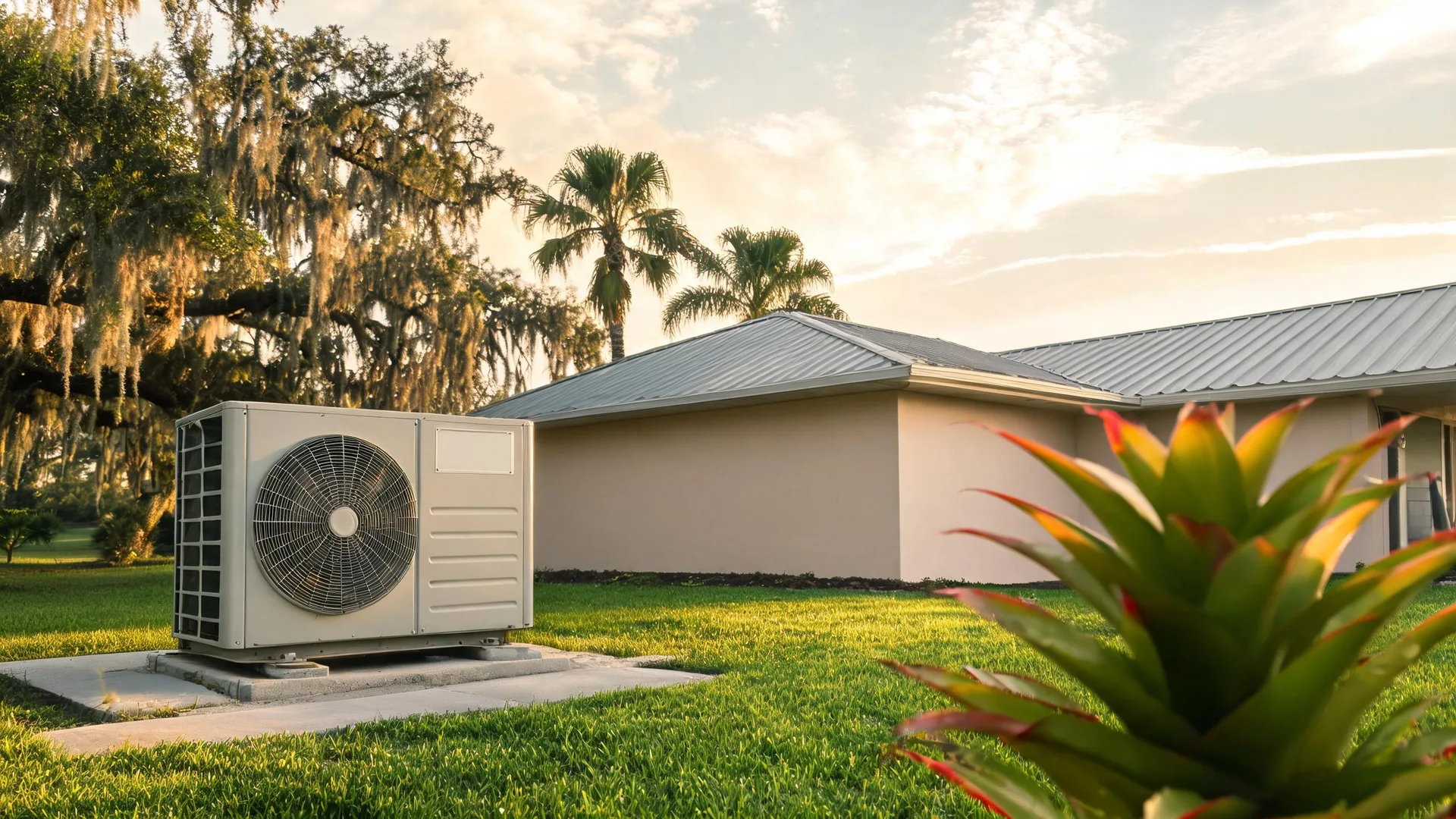
An outdoor residential air conditioning condenser unit mounted on a concrete pad, surrounded by gravel with a blue sky in the background.

Two months of work, not a year's worth

Two months of cooling means two months of runtime a year. The rest of the time the unit sits. That low use is why a mid-range system makes sense here. Pick one built well, from a brand with parts and service easy to find locally. Skip paying for cooling capacity this house will rarely ask for.

The label rates efficiency, not size

SEER2 tells you how much cooling a unit delivers for the power it uses, nothing about how big a house it can handle. A high rating on an undersized or oversized unit won't fix a sizing problem. The load calculation decides the size. The rating only matters once that number is set.

A higher number costs more to buy, less to run

A unit with a higher SEER2 rating usually has a higher price tag and a lower power bill over time. Where that math lands depends on how many hours a year the system actually runs. A unit that sits idle most of the year has fewer hours to earn back the difference than one running most months.

Overhead view of a gray residential air conditioning condenser unit mounted on a concrete pad beside a house with asphalt shingle roofing.

Going above the federal minimum saves little here, about $10 a year.

  • A higher-efficiency unit$100 a year
  • A new unit at the federal minimum, 13.4 SEER2$110 a year

Estimates for a typical Mille Lacs County home, from EIA household energy data, Minnesota fuel prices and NOAA climate normals. Your home will differ.

Sizing and efficiency only get you so far. What a contractor finds once the old equipment comes off the wall or out of the closet changes the job just as much. A line set that's the wrong length or diameter for the new unit has to be replaced, not reused. A disconnect box or breaker sized for the old system may not meet code for the new one. If the condenser pad is cracked or sinking, that gets fixed before the new unit sits on it. None of this shows up until the work is underway, which is why installs that look identical on paper can take different amounts of labor. A contractor who inspects the full setup before quoting, not just the equipment, gives you a number that holds once the job starts.