Aerial view of a residential air conditioning condenser unit mounted on a concrete pad next to a house with vinyl siding and a sliding glass door.

AC Installation in Pine City, MN

Tell us about the job

Takes about a minute. No obligation.

New system or replacementCentral ACPine County, MN
Step 1 of 2

What ZIP code is the job in?

Propane runs most furnaces here

More homes in Pine County heat with bottled or tank LP gas than with anything else, at 43.4%. Utility gas and electricity make up most of the rest. A new AC has to pair with whatever furnace or air handler is already moving the air, propane-fired or not.

The coil has to match the rest

If your home runs a propane furnace, the new outdoor unit needs an indoor coil sized to work with that furnace's blower. Matching the system to what's already there, rather than picking a new fuel path, keeps the installation straightforward.

2 months
July through August, your air conditioner is on duty
78°F
the average summer afternoon it cools against
78 hail events
in ten years, and hail bends the fins on outdoor coils
13.4 SEER2
the federal minimum any new unit must meet
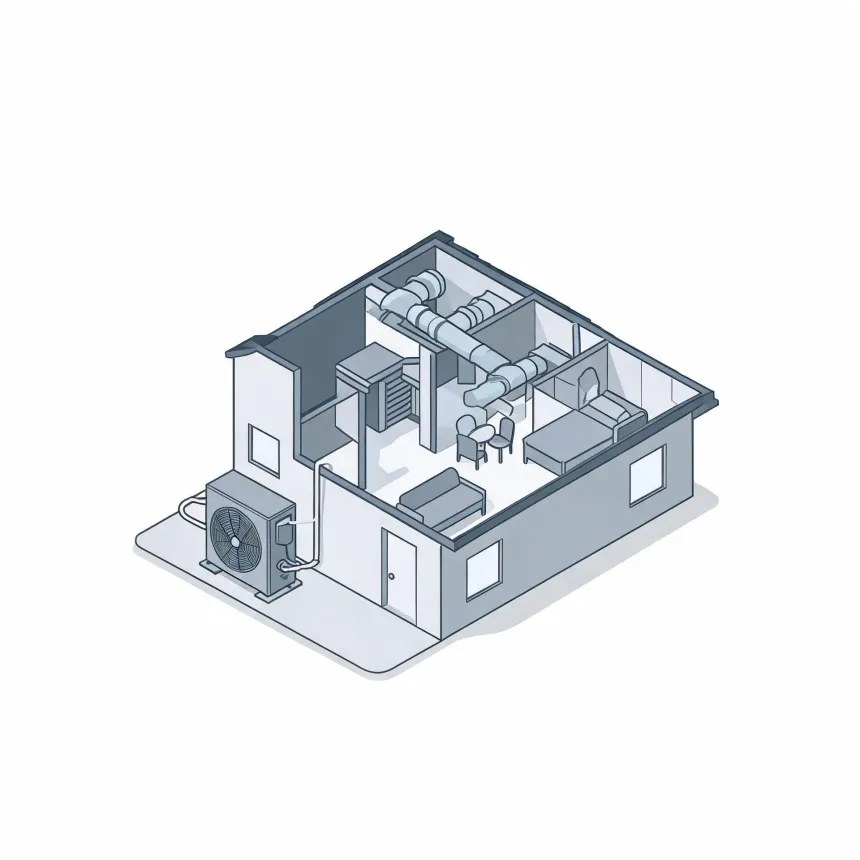
Isometric line illustration of a cutaway house showing interior rooms with furniture and ceiling ductwork, connected to an outdoor condenser unit with a fan beside the building.
Your air conditioner works hardest from July through August.

NOAA nClimDiv, 1991–2020 normals

An oversized air conditioner cools the air fast and shuts off before it finishes pulling moisture out of it.

Sizing comes from a load calculation on the house itself, the square footage, windows and insulation, not just a guess based on the old unit.

Two months of cooling is short. June is when you get this done before it matters.

Cooling runs July through August
Summer afternoons average 78°F
53 damaging wind events from 2015 to 2024
Cheap power means fit matters more than efficiencyMinnesota homes paid 15.45 cents per kilowatthour in 2024, below the national average.

The size of the job usually comes down to what's already in the house. If the ductwork is in good shape and sized right for the new unit, the installer connects to it and moves on. If it's undersized or leaky, that's work on top of the equipment itself, and it affects how well the new system actually cools. Where the line set runs, how far the outdoor unit sits from the indoor coil, and whether the electrical panel has room for a new circuit all factor in too. A straightforward swap, same footprint, same ductwork, same electrical, is a different job than one where something upstream needs attention first. That's usually what separates a quick quote from one that takes a second visit to figure out.

Two months of work a year means you don't need to overbuy

Afternoon highs here average 78 degrees across June, July and August, and the AC only runs about two months a year, July through August. That's not much for a system to work against. A mid-range unit sized right for the house will keep up without trouble. Put the money into getting the fit right instead of chasing the highest efficiency rating on the shelf.

Find a contractor
A gray residential air conditioning condenser unit mounted on a concrete pad outdoors, surrounded by green grass under a partly cloudy blue sky.

The label tells you efficiency, not comfort

The rating on the label tells you how much cooling a unit delivers for the power it uses, measured under set lab conditions. It's there so you can compare one unit against another, not to predict your power bill. A higher rating usually comes with a bigger coil and a compressor that can run at partial speed instead of just on or off, which tends to mean steadier temperatures and a quieter unit outside. It also means more that can go wrong and more for a technician to know when it does. None of that tells you whether the ductwork can move the air this system needs, or whether the unit is sized right for the house. A mid-efficiency system that fits the house well will outperform a high-efficiency one that's the wrong size or choking on leaky ducts. The number on the label is worth comparing. It's not worth chasing past what the rest of the system can support.

The old unit gets hauled away, not left behind

When the new outdoor unit goes in, the old one comes out the same day. The refrigerant inside gets recovered first. It cannot be vented into the air, and any licensed installer will handle that as a matter of course. The compressor and coil get scrapped from there. Once a compressor has been pulled out of a sealed system, it is not going back into service.

The line set and pad often stay put

The copper line set running between the indoor coil and the outdoor unit can often be reused if it is the right diameter for the new system's charge. That means no new holes through the wall. The concrete pad outside usually stays too, unless the new unit needs a different footprint or better leveling than the old one had.

Overhead view of an air conditioning condenser unit on a concrete pad next to a house with asphalt shingle roofing and vinyl siding.

Going above the federal minimum saves little here, about $10 a year.

  • A higher-efficiency unit$80 a year
  • A new unit at the federal minimum, 13.4 SEER2$90 a year

Estimates for a typical Pine County home, from EIA household energy data, Minnesota fuel prices and NOAA climate normals. Your home will differ.

Most installs run one day, start to finish. The crew pulls the old outdoor unit and indoor coil, sets the new pad or checks the old one for level, and runs the line set if it isn't being reused. The indoor coil goes in next, above or beside the furnace, then the refrigerant lines get connected. Before any charge goes in, the system gets pulled down into a vacuum. Any air or moisture left in the lines will cause problems later, so that step doesn't get skipped. Once it's charged, the unit gets run, the temperature split at the vents gets checked, and the amp draw gets checked against what the compressor is rated for. If the ductwork is sound and the electrical panel has room, that's the whole job.