A quiet suburban street at twilight featuring two-story brick homes with illuminated windows and large trees lining the sidewalk.

AC Installation in Owatonna, MN

Tell us about the job

Takes about a minute. No obligation.

New system or replacementCentral ACSteele County, MN
Step 1 of 2

What ZIP code is the job in?

Gas heat is the norm here

Utility gas heats 70.0% of homes in Steele County. Most of those homes have a gas furnace paired with central air, so an AC installation here usually means adding a coil and condenser to a system that already moves air through ducts.

What that means for your quote

If your home already has ductwork from a gas furnace, the installer can often match a new condenser and coil to that setup rather than designing a system from scratch. Homes on electric heat or LP gas are more likely to need a closer look at what's already there before anyone can say what fits.

3 months
June through August, your air conditioner is on duty
79°F
the average summer afternoon it cools against
17 hail events
in ten years, and hail bends the fins on outdoor coils
13.4 SEER2
the federal minimum any new unit must meet
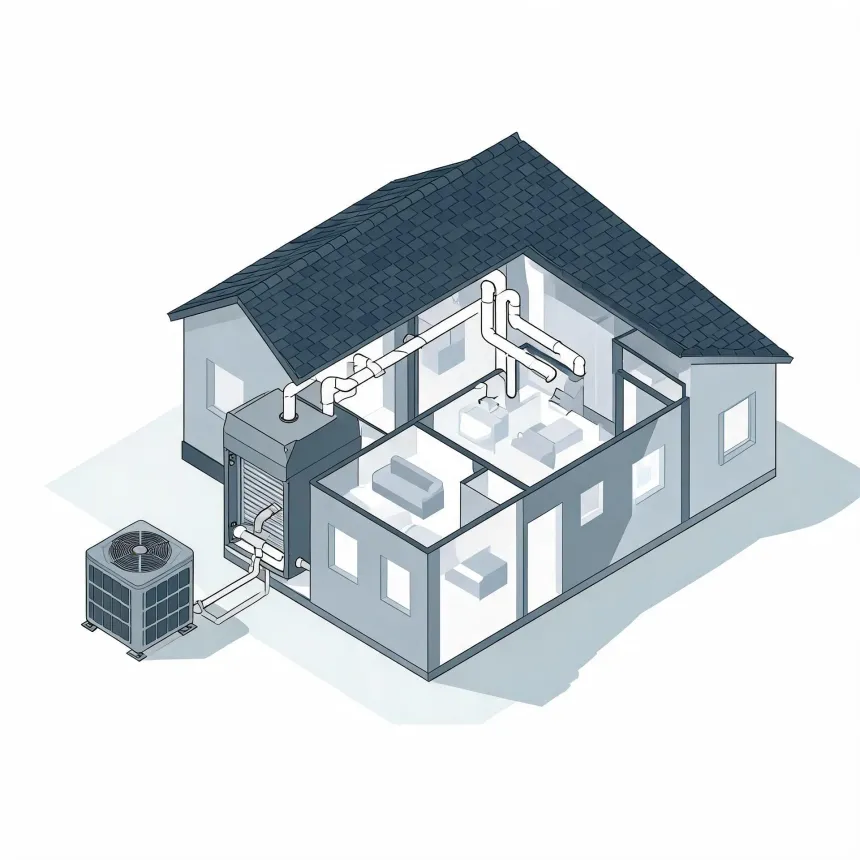
Isometric illustration of a cutaway single-story house showing interior rooms, ductwork running from an indoor air handler, and an outdoor condenser unit on a pad beside the building.
Your air conditioner works hardest from June through August.

NOAA nClimDiv, 1991–2020 normals

Cooling starts in June here, so May is the month before it.

An AC installed in May gets tested and running before August asks anything of it.

Three months of 79 degree afternoons isn't a hard summer for an AC

Cooling runs June through August
Summer afternoons average 79°F
17 hail events from 2015 to 2024
A standard system covers this fineMinnesota homes paid 15.45 cents per kilowatthour in 2024.

Half the homes in Steele County were built in 1975 or earlier, half in 1975 or later. That split doesn't point an installer toward a bigger unit or a pricier one. A standard split system, sized to the square footage and the ductwork already in place, is the right call either way. What matters more than the age of the house is what's already running through it. If a gas furnace and ducts are already there, the installer is matching a coil and condenser to that, not building a case for upsizing. Ask what size unit they're proposing and why. For most homes here, the answer should come from a load calculation, not the build year.

Your new AC has to meet a 13.4 SEER2 minimum here

Any split-system AC under 45,000 Btu/h installed here now has to meet 13.4 SEER2 at minimum, the federal floor for Steele County's zone 6A. That's not about how hard the summers are. It's the standard every new unit has to clear before an installer can even propose a size. There's also a federal tax credit for qualifying high-efficiency equipment, worth asking your installer about when they spec the system.

Find a contractor
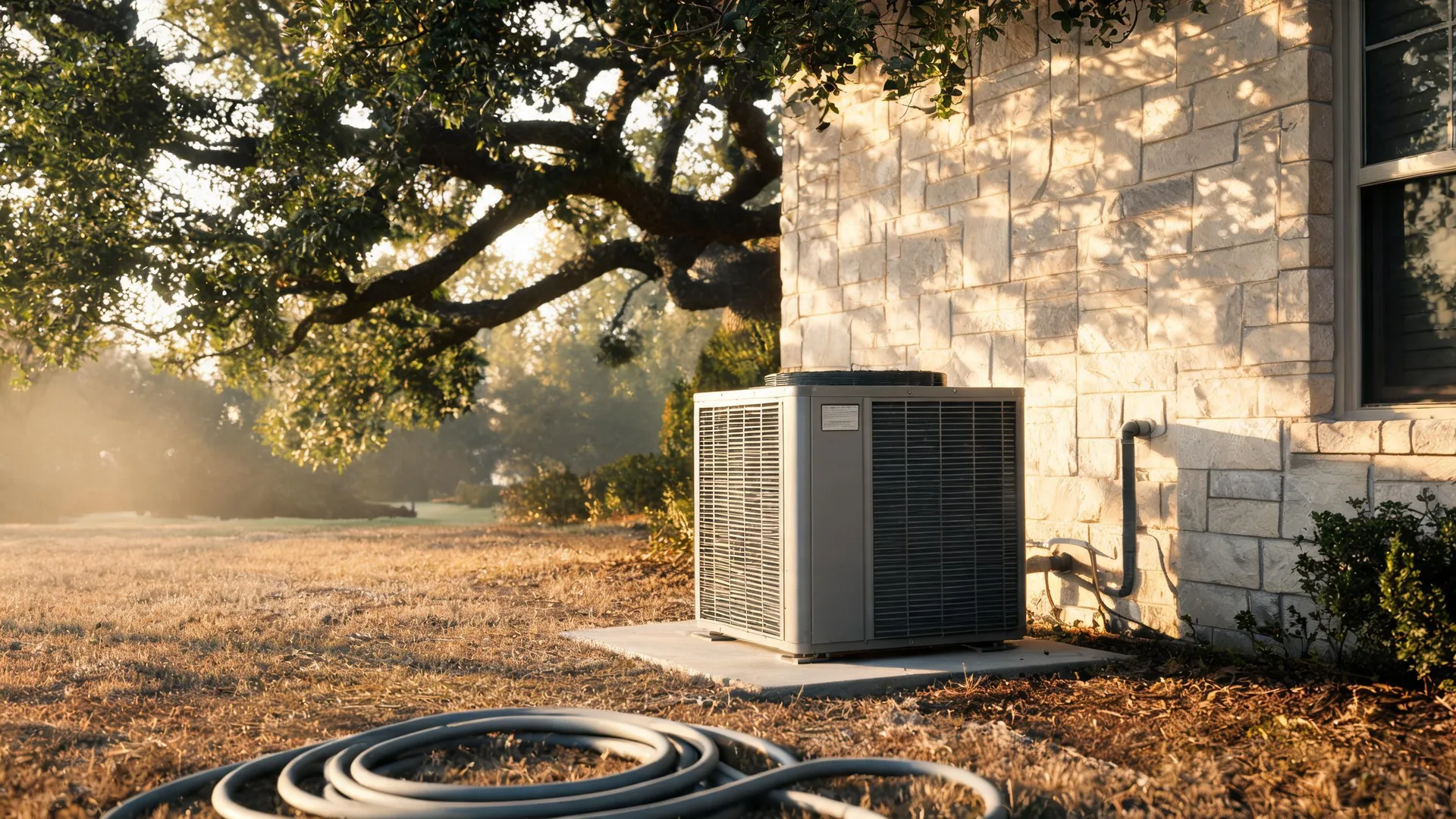
A gray metal air conditioning condenser unit mounted on a concrete pad in a flat grassy field under a partly cloudy sky.

What you're paying for isn't just the condenser

The condenser sitting outside is only part of what you're paying for. Matching the coil to it, sizing the line set correctly, checking that the ductwork can actually move the air that condenser pushes out, setting the refrigerant charge once everything is in place. That labor is where a lot of the cost sits, and it's also what decides whether the system ever hits the efficiency it's rated for. A condenser sized against a real load calculation and charged correctly on day one is the one that runs for years without strain. One that just matches the old unit's size without anyone checking the ductwork or the charge can struggle from the start, even if the equipment itself is fine. Installations with the same equipment can land at very different prices because one crew is pulling new line set and reworking a return, while another is bolting onto ductwork that already fits the job.

Ask what the load calculation found

A load calculation looks at the square footage, the windows, the insulation and the ductwork to figure out how much cooling the house actually needs. Installers quoting the same house should land on close to the same answer if they both ran one. If a quote jumps straight to a tonnage with no mention of this, ask how they got there.

Ask how the coil and condenser get matched

The condenser outside and the coil inside have to be matched to each other, not just installed side by side. A mismatched pair can still run, but it won't hit the efficiency rating on the sticker. Ask whether the coil is rated for the condenser being proposed, and whether the existing ductwork was checked to make sure it can move the air the new system pushes.

An outdoor air conditioning condenser unit positioned beside a blue-sided house at sunset.

Going above the federal minimum saves little here, about $20 a year.

  • A higher-efficiency unit$130 a year
  • A new unit at the federal minimum, 13.4 SEER2$150 a year

Estimates for a typical Steele County home, from EIA household energy data, Minnesota fuel prices and NOAA climate normals. Your home will differ.

The old condenser doesn't get left behind for the sake of tidiness. Whoever installs the new system has to reclaim the refrigerant from the old one before it comes apart, since venting it into the air isn't legal or safe. Once that's done, the old condenser, coil and line set come out, and the new line set usually gets pulled fresh rather than reused, since old line set can carry contamination or the wrong diameter for the new equipment. The furnace and ducts typically stay untouched if they're already in good shape and matched to the new coil. What gets hauled away is scrap metal at that point, nothing worth salvaging for parts.