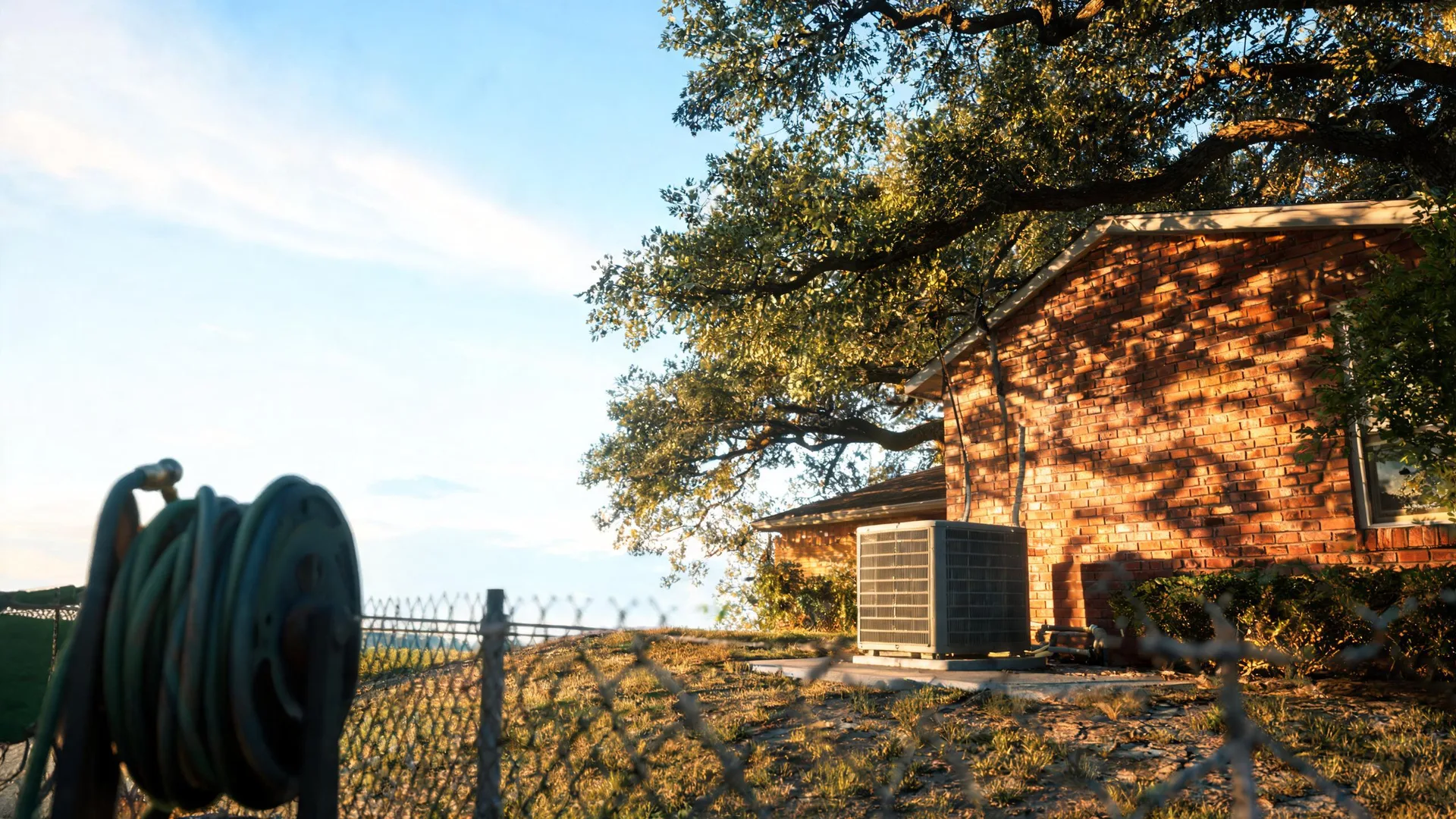
Gas furnaces are the common pairing here
Almost 7 in 10 homes in Wright County heat with utility gas. A new AC usually gets matched to the furnace already in the house, sharing the same ductwork and the same indoor coil location.
Takes about a minute. No obligation.
Almost 7 in 10 homes in Wright County heat with utility gas. A new AC usually gets matched to the furnace already in the house, sharing the same ductwork and the same indoor coil location.
Since most homes here were built around a gas furnace, the ducts needed to move cooled air are probably already run through the house. Installing AC often means adding a coil and an outdoor unit to what's there, not building a duct system from scratch.

NOAA nClimDiv, 1991–2020 normals
Cooling in Wright County starts in June and runs through August.
Get a new system in during May, and it's running before the first hot day, not after it.




Ask what size unit they're proposing and how they got that number. A contractor should size the system to the house, the windows, and the insulation, not just swap in whatever matches the old unit's tonnage. Bigger isn't better here. An oversized unit cools the air fast and shuts off before it pulls the moisture out, so the house feels clammy even at the right temperature. Ask what SEER2 rating the system carries and how that compares to what's being replaced, since that's what tells you about efficiency, not the size of the unit. Also ask where the indoor coil will sit and whether it matches the furnace already in place, since a mismatched coil can cost you efficiency no matter how good the outdoor unit is.
Wright County falls in climate zone 6A, and since January 2023 every split-system air conditioner under 45,000 Btu/h sold in the country has to meet a federal minimum of 13.4 SEER2. That sets the floor for what a contractor can install here. A federal tax credit is available for qualifying high-efficiency equipment, worth looking into when you're comparing systems.
Find a contractor
Sizing an AC comes down to how much heat the house gains in a day, not how many square feet it covers. A contractor works that out room by room, counting windows, wall area, ceiling height, and which way the house faces, then adds it up to a total load. That number points to a tonnage. A unit sized off the old equipment instead of a real load calculation can still end up wrong, even if the old one seemed fine. Too big, and the compressor short cycles. It kicks on, cools the air fast, and shuts off before it's run long enough to pull moisture out of the house, so you get a cold house that still feels damp. Too small, and it runs flat out on the hottest afternoons and never quite catches up. The compressor that gets sized right at install is the one that runs the way it's built to for years.
A contractor disconnects the refrigerant lines, recovers whatever refrigerant is left in the system, and removes the outdoor unit and the old indoor coil. Refrigerant can't legally be vented into the air, so a licensed contractor pulls it into a tank before any lines get cut. The pad or mounting brackets outside usually get reused or cleared away at the same time.
Older systems often run a refrigerant that's being phased out, and a contractor can't just top off a new coil with it even if some is recovered from the old unit. The new system needs a matched coil and the refrigerant it was designed for. That's part of why the indoor coil usually gets swapped along with the outdoor unit instead of staying behind.
Estimates for a typical Wright County home, from EIA household energy data, Minnesota fuel prices and NOAA climate normals. Your home will differ.
Install day starts with the old system coming apart and ends with the new one running. The outdoor unit and indoor coil come out first, then the line set gets checked, since a new system usually needs new lines if the old ones are the wrong size or have years of oil residue inside them. The new coil goes in above or beside the furnace, the new outdoor unit gets set on the pad, and the lines connecting them get run, flushed, and sealed before anything is charged with refrigerant. Once the lines are tight, a contractor pulls a vacuum on the system to remove air and moisture, because either one left behind will break down the refrigerant and damage the compressor over time. After the vacuum holds, refrigerant goes in to the weight the manufacturer specifies, not just until the lines feel cold. The last part is running the system through a full cycle, checking the temperature split between the air going in and the air coming out, and listening for anything that shouldn't be there.