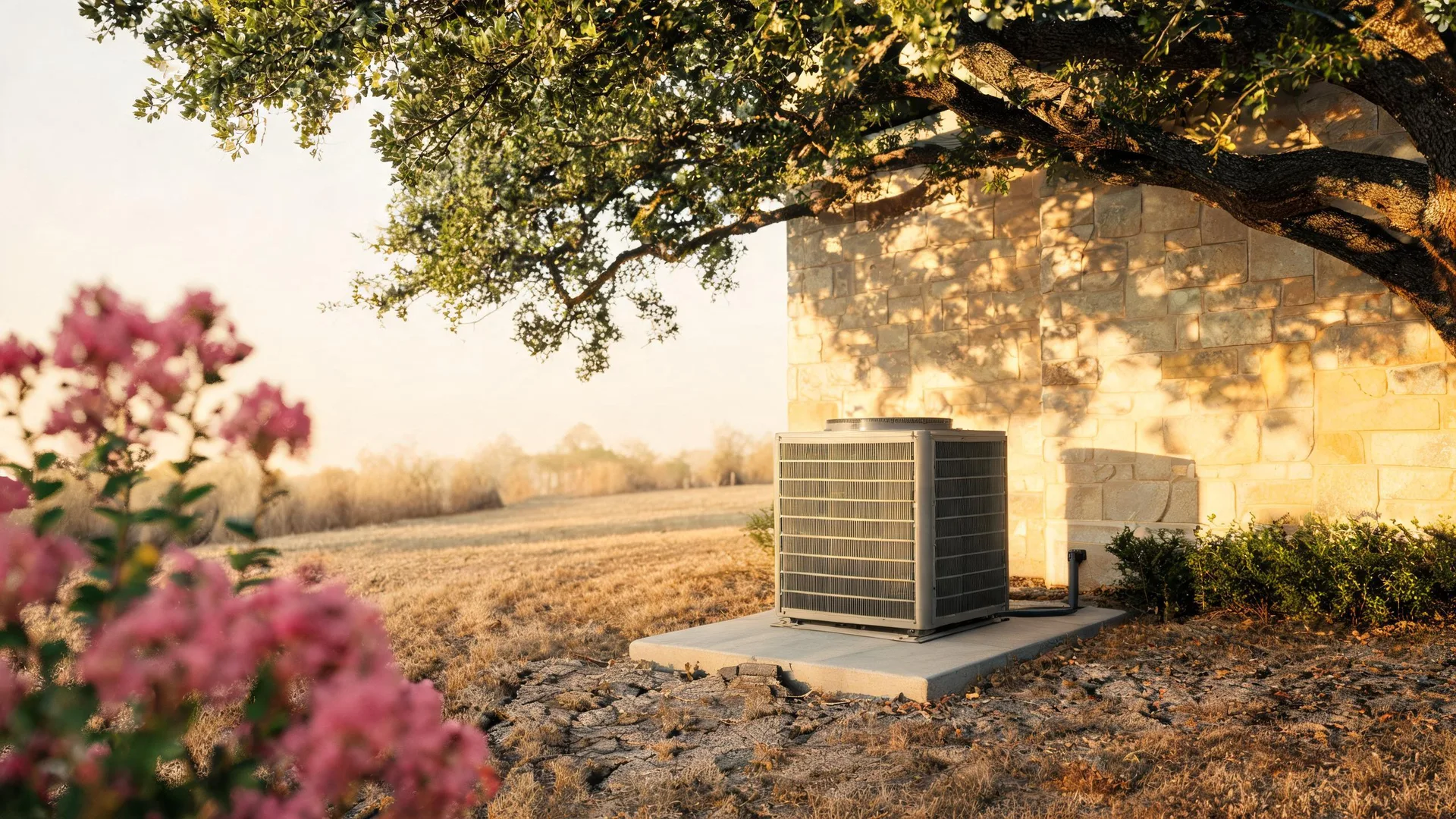
Gas furnaces are the norm here
Utility gas heats 67.3% of homes in Nicollet County. Most AC installs here pair the new cooling unit with a gas furnace already in place, using the existing ductwork and gas line.
Takes about a minute. No obligation.
Utility gas heats 67.3% of homes in Nicollet County. Most AC installs here pair the new cooling unit with a gas furnace already in place, using the existing ductwork and gas line.
If your home heats with gas, the contractor matches the air conditioner to your current furnace and coil setup rather than redesigning the system. That keeps the job focused on the AC itself, not the whole system.

NOAA nClimDiv, 1991–2020 normals
A standard size and efficiency rating cools a North Mankato home fine.
No need to pay for a bigger unit or a higher SEER2 rating than this place calls for.




The SEER2 number on the label tells you how much cooling you get out of the power the unit draws, measured over a full season of use rather than on one hot afternoon. A higher number means less power to make the same amount of cooling, but it doesn't mean a bigger or stronger unit. A home that's already matched to a correctly sized system doesn't gain anything from paying up for a rating past what the place needs. The rating also depends on the coil and furnace blower working with the condenser the way they were matched at installation. Put a high-rated condenser on a mismatched coil and you lose the gain the label promised. The number on the sticker only holds up if the whole system was put together to earn it.
It won't be worked hard here, so pick a reliable system that fits. You don't need the top efficiency model.
Find a contractorInstallation cost mostly comes down to what the job has to work with, not just the equipment on the truck. A straightforward swap, same tonnage, same spot, existing ductwork in good shape, goes faster and costs less than a job where the duct runs are undersized for the new unit or the line set needs to be run somewhere new. The coil has to match the condenser, and if the furnace blower can't move enough air for the new system, that's a separate problem to solve before the AC can do its job right. Electrical matters too. Some condensers need a different breaker or disconnect than what's already there, and that's work an installer has to account for, not skip. None of this is about the brand on the unit. It's about whether the parts already in place can carry the new system or whether something has to change to make them work together.
A contractor works out the right size by looking at the home's square footage, window area, insulation, and layout, not by matching whatever was there before. The old unit might have been wrong from the start, or it might have been sized for a system that's since changed.
An oversized unit cools the air fast and shuts off before it pulls the moisture out, so rooms feel cold and damp instead of comfortable. It also cycles on and off more, which wears the compressor harder over time than a unit sized to run longer, steadier stretches.
Estimates for a typical Nicollet County home, from EIA household energy data, Minnesota fuel prices and NOAA climate normals. Your home will differ.
Install day starts with the old unit coming out. That means the condenser outside, the coil at the furnace, and the line set running between them. The crew recovers the refrigerant from the old system rather than venting it, then disconnects the electrical and the line set. Setting the new condenser means a level pad outside with clearances around it, so it isn't boxed in by fencing or shrubs. The coil goes in above or beside the furnace, matched to the new condenser, and the line set gets run, connected, and checked for leaks before anything is charged. Once the system is sealed, the crew pulls a vacuum on the lines to clear out air and moisture, then weighs in the refrigerant charge to the amount the manufacturer calls for. Last comes the test run, checking airflow at the registers, confirming the thermostat talks to the system, and watching the condenser cycle on and off the way it should.