






A quiet residential street at dusk lined with illuminated two-story brick houses and mature trees.

AC Installation in North Branch, MN

Tell us about the job

Takes about a minute. No obligation.

New system or replacementCentral ACChisago County, MN
Step 1 of 2

What ZIP code is the job in?

Most houses in Chisago County heat with utility gas, 67.2% of them. That matters for AC installation because a gas furnace already gives the system a blower and a duct network to work with. Central air usually ties into that same ductwork, with the outdoor condenser matched to the furnace's coil and blower. If your home is one of the gas-heated ones, swapping in a new condenser and coil is often the simplest path, since the air-handling side is already there. Homes that heat with electricity or propane here are a smaller share, and what fits depends more on what system they already have.

3 months
June through August, your air conditioner is on duty
80°F
the average summer afternoon it cools against
26 hail events
in ten years, and hail bends the fins on outdoor coils
13.4 SEER2
the federal minimum any new unit must meet
Isometric grayscale illustration of a cutaway house with the roof lifted, showing interior rooms, ductwork, an indoor air handler, and an outdoor condenser unit beside the building.
Your air conditioner works hardest from June through August.

NOAA nClimDiv, 1991–2020 normals

Summer here runs about three months, June through August.

A central air system in Chisago County doesn't need to be built for heavy, constant use.

Three months of cooling, so get it done in May

Cooling runs June through August
Summer afternoons average 80°F
29 damaging wind events from 2015 to 2024
A standard system covers it hereMinnesota homes paid 15.45 cents per kilowatthour in 2024

Chisago County is zone 6A, a cold climate with winters that run long. Any new split-system central air conditioner installed here has to meet 13.4 SEER2 at minimum, the federal floor for systems built from 2023 on. That applies whether it's going into a new build or replacing what's already there. A contractor sizing your system works from that number up, not down. If you're comparing quotes, check that whatever's being proposed actually clears it.

Three months of cooling, no need to oversize

June through August is what your system has to handle here. A straightforward match between condenser and coil, sized to your house, gets you through those months without paying for more than this climate asks for.

Find a contractor
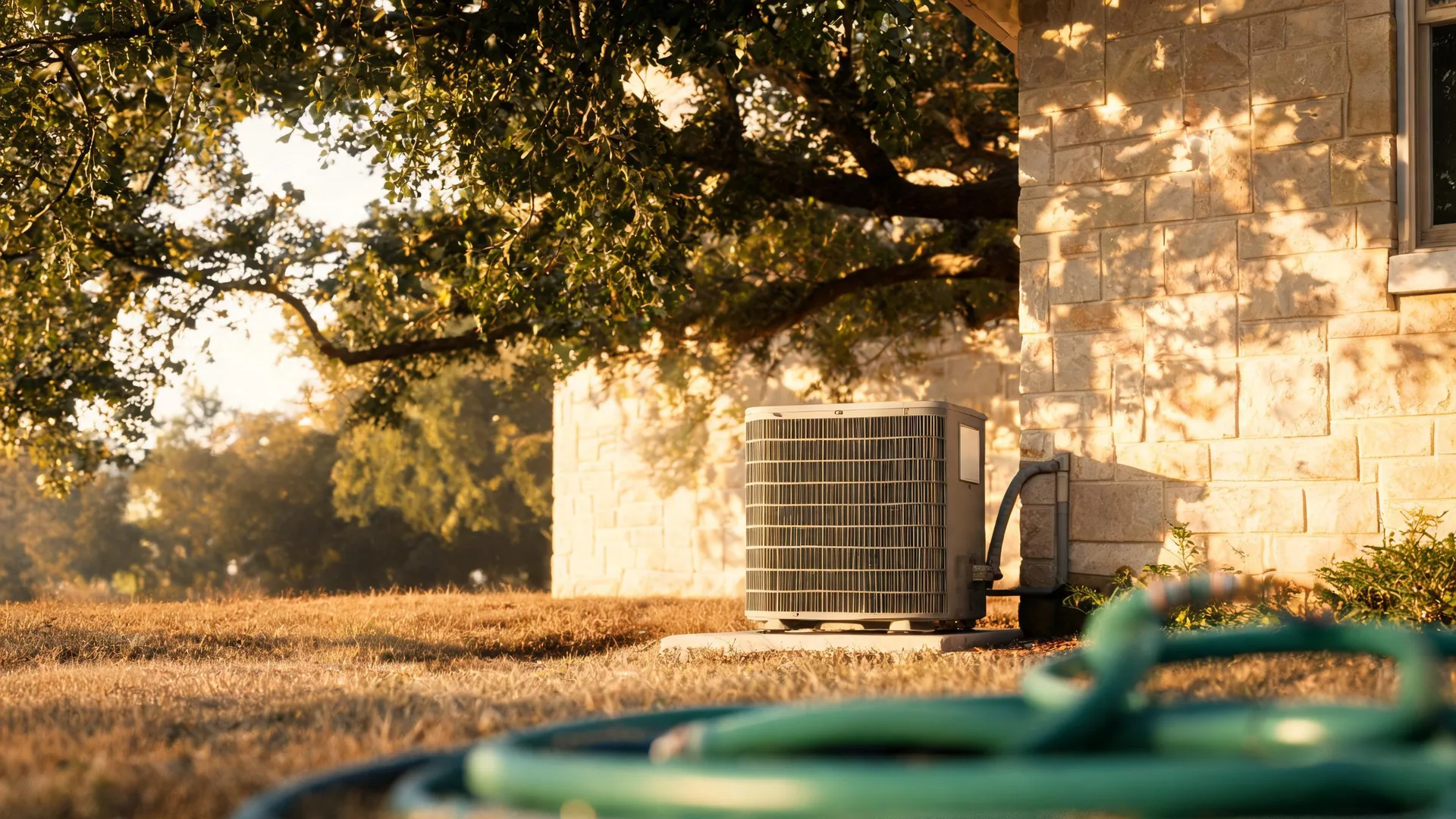
An outdoor air conditioning condenser unit mounted on a concrete pad beside a house, with electrical conduit running to a wall-mounted disconnect box.

Sized for the load, not the last unit

Sizing starts with a load calculation, not a guess based on square footage or what the last unit was. A contractor measures the house, the windows, the insulation, and works out how much heat actually gets into the rooms on the hottest day. That number tells them the right tonnage. Too big and the unit cools the air fast, shuts off, and never runs long enough to pull moisture out, so the house feels cool but damp. Too small and it runs constantly, struggling to catch up, and wears out chasing a temperature it can't hold. The right size runs in full cycles, long enough to dehumidify, short enough to rest the compressor. That balance is the whole point of sizing, and it's worked out before anything gets installed.

The old condenser gets hauled away

Once the new condenser and coil are in and running, the old outdoor unit comes off the pad and leaves with the crew. The refrigerant inside gets recovered first, since it can't legally be vented to the air. A coil in the attic or a closet comes out too if it's being replaced, along with whatever line set isn't being reused.

The refrigerant lines usually get replaced, not reused

Old line sets often carry the wrong oil for new refrigerant, and residue left behind can contaminate a new system fast. Most installs run new copper rather than gamble on lines that have been carrying refrigerant for years. That's worth asking about when comparing quotes, since reusing old lines without checking them is a shortcut that shows up later as a failure nobody can trace.

An outdoor air conditioning condenser unit installed beside the exterior wall of a blue vinyl-sided house at sunset.

Going above the federal minimum saves little here, about $20 a year.

  • A higher-efficiency unit$120 a year
  • A new unit at the federal minimum, 13.4 SEER2$140 a year

Estimates for a typical Chisago County home, from EIA household energy data, Minnesota fuel prices and NOAA climate normals. Your home will differ.

Install day starts with the old system still running. The crew shuts it down, recovers the refrigerant, and disconnects the lines before anything gets carried out. Setting the new condenser on the pad and getting the coil in goes fairly fast. What takes longer is brazing the line set, pulling a vacuum on it, and holding that vacuum to prove there's no leak before any refrigerant goes in. Skip that step and moisture left in the lines turns into acid once the system runs. Once it's charged, a tech checks the refrigerant level against the manufacturer's spec, confirms the blower airflow, and cycles the system a few times to make sure it starts, cools, and shuts off the way it should. The outdoor unit gets its final electrical hookup last, after everything else has checked out.