Three illuminated two-story brick houses on a tree-lined residential street photographed at twilight, with warm window light and landscape uplighting visible against a deep blue evening sky.

AC Installation in Mankato, MN

Tell us about the job

Takes about a minute. No obligation.

New system or replacementCentral ACBlue Earth County, MN
Step 1 of 2

What ZIP code is the job in?

Gas furnaces are the common pairing here

Utility gas heats 64.7% of homes in Blue Earth County, more than any other fuel. New central air almost always ties into the existing furnace setup, since the furnace blower moves the cooled air through the ducts.


That shapes what your install involves

If your home already has a gas furnace with ductwork in place, adding or replacing central air means matching a new outdoor unit and coil to that system. The question worth asking is whether your ducts and blower were sized for the furnace alone or can handle the added cooling load.

3 months
June through August, your air conditioner is on duty
80°F
the average summer afternoon it cools against
44 hail events
in ten years, and hail bends the fins on outdoor coils
13.4 SEER2
the federal minimum any new unit must meet
Isometric line illustration of a cutaway house showing interior rooms with furniture, ductwork leading to an indoor air handler, and an outdoor condenser unit connected by a line set.
Your air conditioner works hardest from June through August.

NOAA nClimDiv, 1991–2020 normals

Half the homes in Blue Earth County were built in 1978 or earlier, half later.

A standard-sized system fits either one. Nothing about the age here calls for upsizing or special equipment.

Three months of real work a year, that's all this unit has to do

Cooling runs June through August
Summer afternoons average 80°F
50 damaging wind events from 2015 to 2024

Cooling here runs June through August, three months total. May is the one to put on your calendar. A new system takes some time to size, order and install, and if you wait until the first hot week, you're choosing from whatever is in stock and whoever has an opening. Get it done in May and the unit is tested and running before it has to work. There's no rush fee for being early.

No reason to size up or pay for more than you need

A standard-sized, standard-efficiency system is the right call here. Nothing about Mankato homes or Minnesota electricity rates points toward oversizing or paying for a higher tier than you need. Get the sizing right for your ducts and furnace, and a standard unit will do the job.

Find a contractor
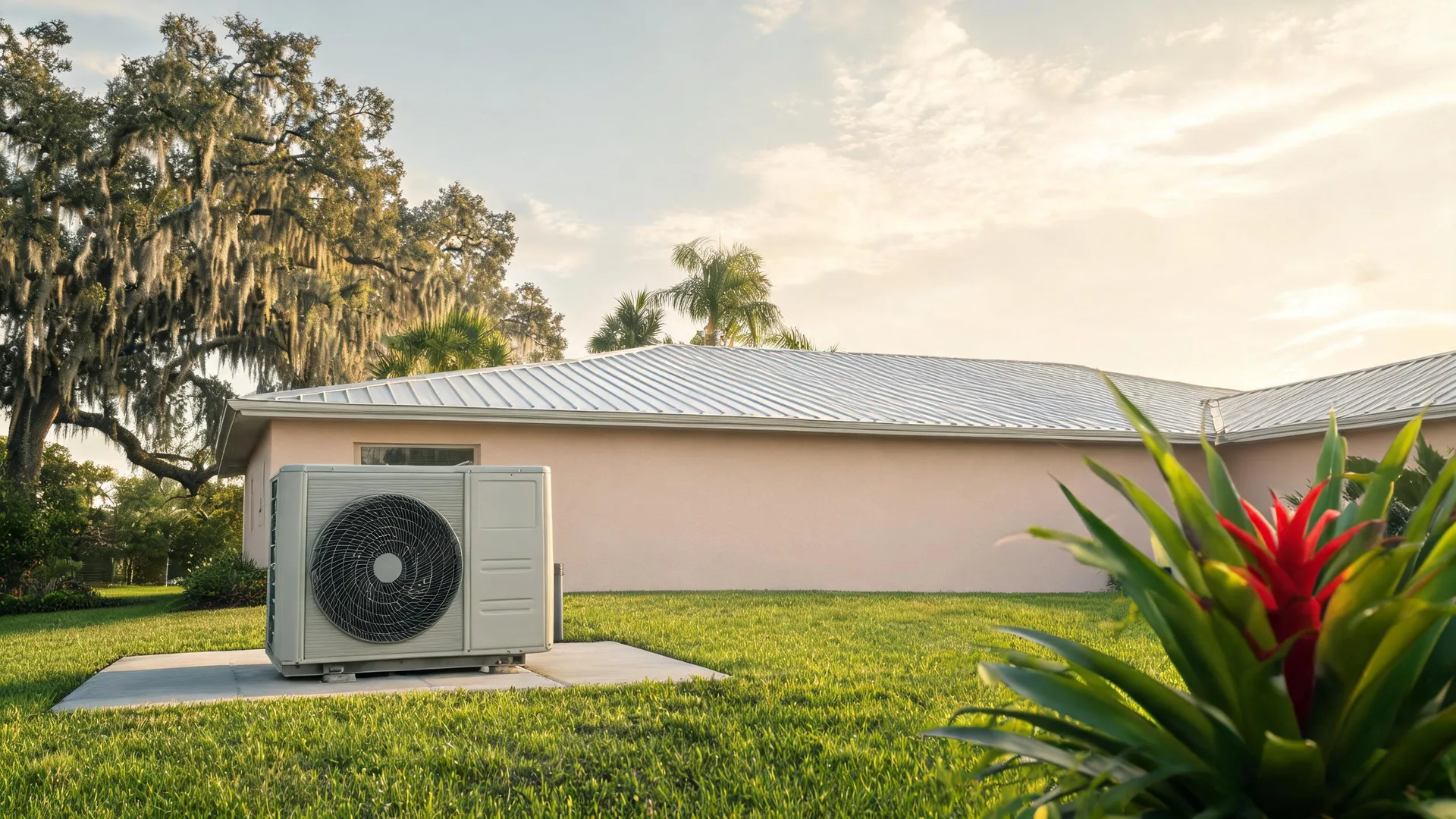
An outdoor air conditioning condenser unit mounted on a concrete pad surrounded by gravel, photographed against a partly cloudy blue sky.

Light duty, so spend on fit, not on power

Three months a year, afternoons in the low 80s. That's the job this unit has. It doesn't need to be the biggest or the most efficient model on the lot, it needs to match your ducts and your furnace blower and run when June comes. Put the money into getting the sizing right rather than into a higher tier you won't use.

The rating tells you the ratio, not the output

The efficiency number on the label measures how much cooling the unit delivers for the power it draws over a season, averaged across a range of conditions. It isn't a measure of how strong the unit is or how cold it can get a room. Units with the same rating can still be sized differently for different homes. The rating and the sizing are chosen separately, and both have to be right for the install to work.

A higher number costs more and may never pay back

A unit with a higher rating costs more to buy, usually because of a larger coil or added refrigerant capacity to hit that number. That extra cost only turns into savings if the system logs enough running hours for the lower power draw to matter. A unit that only runs light duty for a short stretch of the year won't rack up the hours to make the higher tier worth paying for.

Overhead view of an outdoor AC condenser unit on a concrete pad next to a house with a dark shingle roof.

Going above the federal minimum saves little here, about $20 a year.

  • A higher-efficiency unit$150 a year
  • A new unit at the federal minimum, 13.4 SEER2$170 a year

Estimates for a typical Blue Earth County home, from EIA household energy data, Minnesota fuel prices and NOAA climate normals. Your home will differ.

Installation day starts with the old equipment coming out, if there is any, and the new outdoor unit and coil going in. The coil sits in the plenum above or beside the furnace, so that part of the ductwork gets opened up and resealed around it. Refrigerant lines run between the coil and the outdoor unit, and those get brazed, pressure tested for leaks, then evacuated before any refrigerant goes in. The electrical disconnect outside gets wired in, and the condensate drain gets checked so the coil has somewhere for the water to go. Once it's all sealed and charged, the system runs through a full cycle while the installer checks the refrigerant charge, the airflow off the vents and the temperature drop across the coil. A thermostat swap, if you're doing one, usually happens last, once everything else is confirmed to be moving air and cooling it correctly.