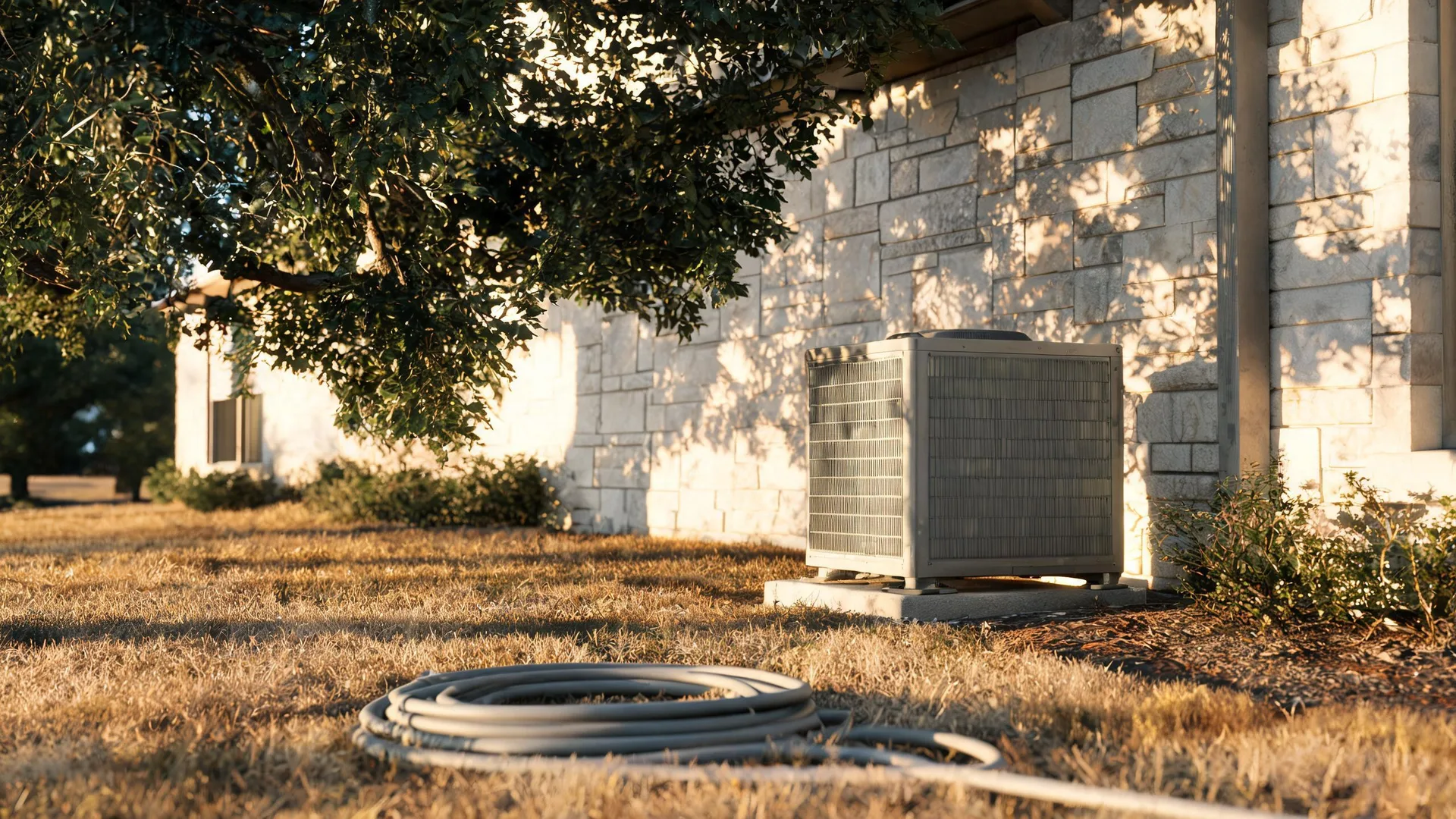
Propane and gas split this area
Utility gas heats 38.7% of homes in Morrison County and bottled or LP gas heats another 27.9%. An AC install here usually pairs the new system with a furnace running on one of those two fuels.
Takes about a minute. No obligation.
Utility gas heats 38.7% of homes in Morrison County and bottled or LP gas heats another 27.9%. An AC install here usually pairs the new system with a furnace running on one of those two fuels.
Central air ties into the furnace's blower to move cooled air through the house. Whatever fuel heats your home now, the AC install works around that existing furnace rather than replacing it.

NOAA nClimDiv, 1991–2020 normals
A correctly sized AC unit runs on standard efficiency ratings, nothing special for this area.
Little Falls homes don't need oversized equipment or a higher SEER2 rating to handle the electric rates here, at 15.45 cents per kilowatt-hour.




Morrison County sits in zone 6A, the cold side of the energy code, with winter running long here. That classification governs furnace and insulation rules more than it does air conditioning. Any split-system AC under 45,000 Btu/h installed here still has to meet the federal floor of 13.4 SEER2, same as anywhere else in the country. There's no stricter cooling standard tied to this climate zone, so the unit itself isn't special to Little Falls. What changes from one house to the next is sizing and ductwork, not the efficiency rating on the nameplate.
Morrison County homes split about evenly between built in 1977 or earlier and built in 1977 or later. A standard load calculation accounts for that kind of age difference already. There's no reason to size up or pay for extra efficiency here that your house doesn't call for.
Find a contractorJuly and August are the only months the compressor runs here, and afternoon highs average 78°F those months. That is not a big gap between outside and in, so the system is not working to chase a steep temperature difference. Low run time and a mild gap add up to light duty over the life of the unit. Put the money into correct sizing and a clean installation rather than a higher efficiency tier this climate does not ask for.
A contractor should run a room by room load calculation based on your square footage, windows, and insulation, not size the unit off the one you're replacing or a quick rule of thumb. Ask to see the numbers. A unit sized too big cools the air fast but shuts off before it pulls the humidity down, so the house feels clammy even at the right temperature.
The new coil and blower have to move a certain amount of air through the ducts already in your house. If those ducts are undersized or leaky, the system can't deliver the air it's rated for no matter how good the outdoor unit is. Ask whether the installer checked duct size and sealed the connections, not just set the new unit next to the old one.
Estimates for a typical Morrison County home, from EIA household energy data, Minnesota fuel prices and NOAA climate normals. Your home will differ.
Sizing starts with a load calculation, not a tape measure on the old unit. A contractor works out how much heat the house gains room by room, counting window area, wall insulation, and ceiling height, then matches a system to that number. Too big and the compressor short-cycles, cooling the air fast and shutting off before it pulls the moisture out, so the house feels damp even at the right temperature on the thermostat. Too small and it runs long on the hottest afternoons without ever catching up to the thermostat setting. The right size isn't a bigger or smaller version of the old equipment. It's a separate calculation done for the house as it stands now.