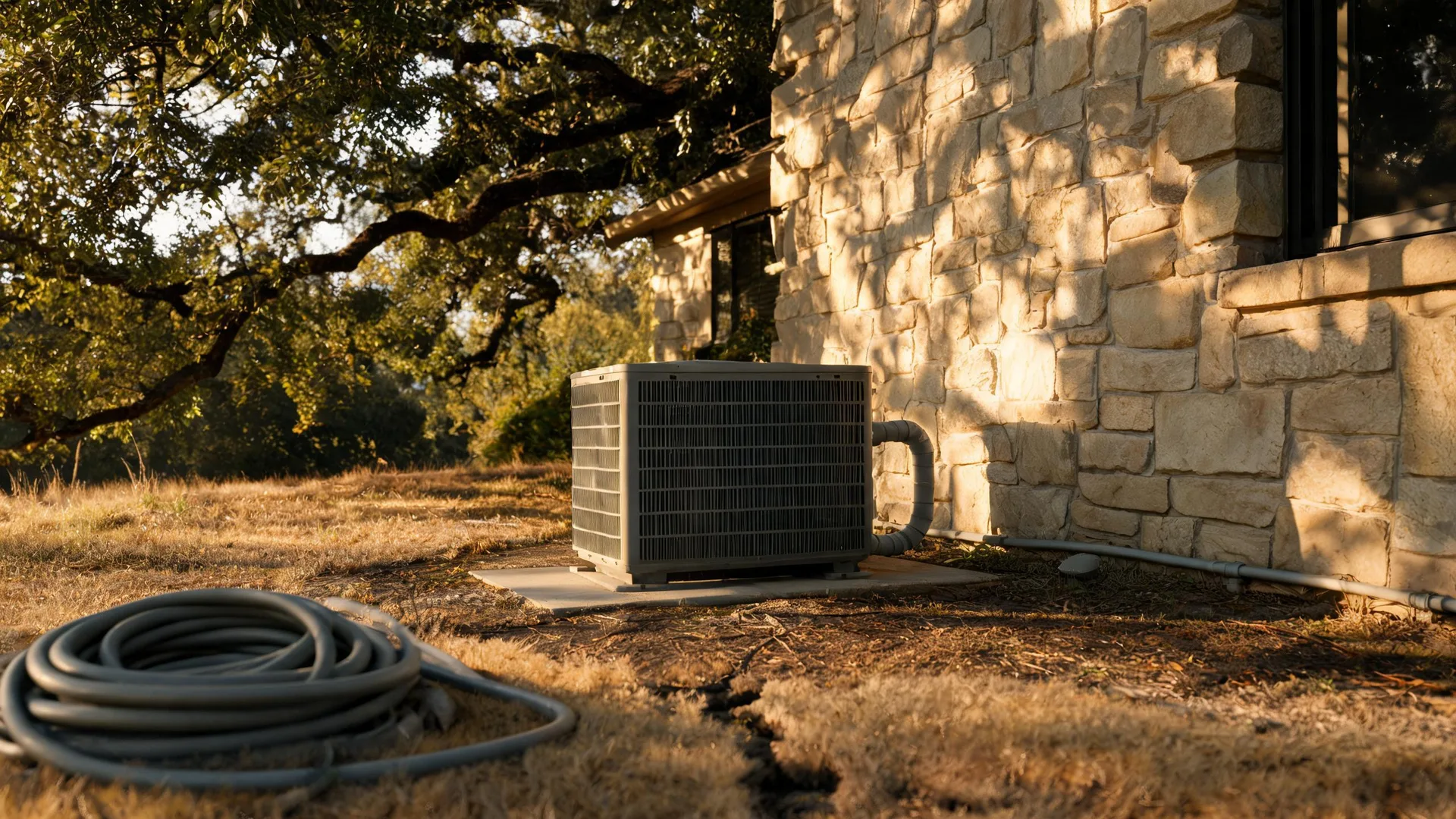
Gas furnaces are the norm here
Utility gas heats 75.4% of homes in Carver County. An AC installation here usually means matching a new outdoor unit to the existing gas furnace and its blower, rather than rethinking the whole system.
Takes about a minute. No obligation.
Utility gas heats 75.4% of homes in Carver County. An AC installation here usually means matching a new outdoor unit to the existing gas furnace and its blower, rather than rethinking the whole system.
When gas heats the home, the furnace's blower moves the cooled air too. Installing AC means pairing a new condenser and coil to that existing blower, which keeps the job straightforward if the furnace is in good shape.

NOAA nClimDiv, 1991–2020 normals
Chaska summers run three months, with afternoons averaging around 80.
An AC here only has to carry three months of mild heat, so the top-tier model isn't a requirement.



Ask what size the contractor is putting in, and ask how they landed on it. The right size comes from a room by room look at the house, not a quick guess based on the old unit. A system that's too big cools the air fast but shuts off before it pulls the moisture out, so the house feels clammy even at the right temperature. One that's too small runs constantly and never quite catches up on the hottest afternoons. Ask what happens to the coil and blower already in the house, since the new outdoor unit has to match what's there or work gets added to make it fit. Ask about the warranty on the compressor versus the labor, because those are often different lengths and only one of them is cheap to use.
Three months of mild afternoons is a light workload. A standard system installed now will be ready to run when it warms up in June.
Find a contractorThe old condenser and coil come out first, then new line sets get run if the old ones won't work with the new equipment. Once the new condenser, coil and lines are in place, the system gets pulled into a vacuum before any refrigerant goes in. That step clears out air and moisture that would otherwise sit in the lines and cause problems down the road. After charging, the contractor checks the refrigerant level against the system's specs, tests the thermostat and airflow at the vents, and listens for anything running rough before calling it done. A system that gets fired up and left without that check can run for years slightly undercharged or overcharged, and that shortens the life of the compressor even when the house seems to be cooling fine.
A contractor works out the right size by going room by room, checking window area, insulation, and layout, then adding up the total load. Swapping in a unit that matches the old one's rated capacity skips that work, and the old one may never have been sized right to begin with.
An oversized unit cools the air quickly and shuts off before it has run long enough to pull humidity out, so rooms feel damp even once the thermostat is satisfied. An undersized one runs without stopping and still falls behind when the afternoon heat peaks.
Estimates for a typical Carver County home, from EIA household energy data, Minnesota fuel prices and NOAA climate normals. Your home will differ.
The old condenser gets disconnected and hauled off, along with the refrigerant lines running to it. That refrigerant has to be recovered first, not vented, so a contractor with the right equipment handles that step before any copper gets cut. If the coil inside the furnace is being swapped too, that comes out at the same time, since a new outdoor unit paired with an old, worn coil can mean the match never performs the way it should. Old refrigerant lines sometimes get reused and sometimes don't, depending on their size and condition against what the new system calls for. The pad the old unit sat on usually stays, ready for the new one to set down on.