






A illuminated two-story red brick house on a quiet residential street at dusk, flanked by mature trees under a deep blue evening sky.

AC Installation in Albert Lea, MN

Tell us about the job

Takes about a minute. No obligation.

New system or replacementCentral ACFreeborn County, MN
Step 1 of 2

What ZIP code is the job in?

Most houses in Freeborn County run on utility gas, 64.8% of them. Bottled or LP gas covers another 18.7%, with electric heat behind that at 13.0%. An AC installation here almost always means adding cooling to a home that already has a gas furnace, so the job is matching a new outdoor unit and coil to the ductwork and furnace already in place, not replacing the heat source. The ductwork sized for that furnace is usually built to take a matched cooling coil without rework.

3 months
June through August, your air conditioner is on duty
79°F
the average summer afternoon it cools against
28 hail events
in ten years, and hail bends the fins on outdoor coils
13.4 SEER2
the federal minimum any new unit must meet
Isometric illustration of a cutaway single-story house showing interior rooms, ductwork running from an indoor air handler, and an outdoor condenser unit on a pad beside the building.
Your air conditioner works hardest from June through August.

NOAA nClimDiv, 1991–2020 normals

A standard SEER2 unit sized to the home is the right call in Albert Lea.

At 15.45 cents per kilowatt-hour, there's no local reason to pay more for a bigger or higher-tier system.

Three months of work a year is all it does

Cooling runs June through August
Summer afternoons average 79°F
38 damaging wind events from 2015 to 2024
Half these homes were built in 1959 or earlierThe new system has to fit ductwork sized decades ago, not the other way around.

Cooling in Albert Lea runs June through August. May is the month before that starts, and it's the better time to put in a new system than waiting until the heat is already here. A contractor can size the unit to the ductwork already in place and get the installation done on a normal schedule instead of a rushed one. Wait until the house is already warm, and you're choosing from whatever can be scheduled soonest, not necessarily the setup that fits best. Getting it in before June means the system is ready the day it's actually needed.

Meets the standard. Fits the ductwork.

Any system going in has to clear 13.4 SEER2, the federal minimum for this size unit. Albert Lea falls in climate zone 6A, so that's the floor regardless of which contractor installs it. A unit sized to your ductwork at that rating is what belongs in this house.

Find a contractor
An outdoor air conditioning condenser unit mounted on a concrete pad surrounded by gravel, photographed against a partly cloudy blue sky.

The old unit leaves, the ductwork stays

The old outdoor unit and coil get hauled off once the new ones are in, and what happens to them depends on the refrigerant inside. Old systems built before the industry switched refrigerants have to be recovered before the unit is broken down, not just left to vent off. A tech pulls that refrigerant out with a recovery machine and the metal gets scrapped separately. None of that affects what goes into your house. The only piece of the old system that matters going forward is whether the ductwork it was tied to still fits the new coil, and that gets checked on install day, not after.

The coil and the ductwork have to match the outdoor unit

An outdoor unit sized without matching the coil to it, or sized without regard to the ducts already moving the air, will short cycle or run long and still leave rooms uneven. Getting that match right takes more labor and attention than swapping in whatever unit is on the truck, and it's where a lot of the installation cost actually goes.

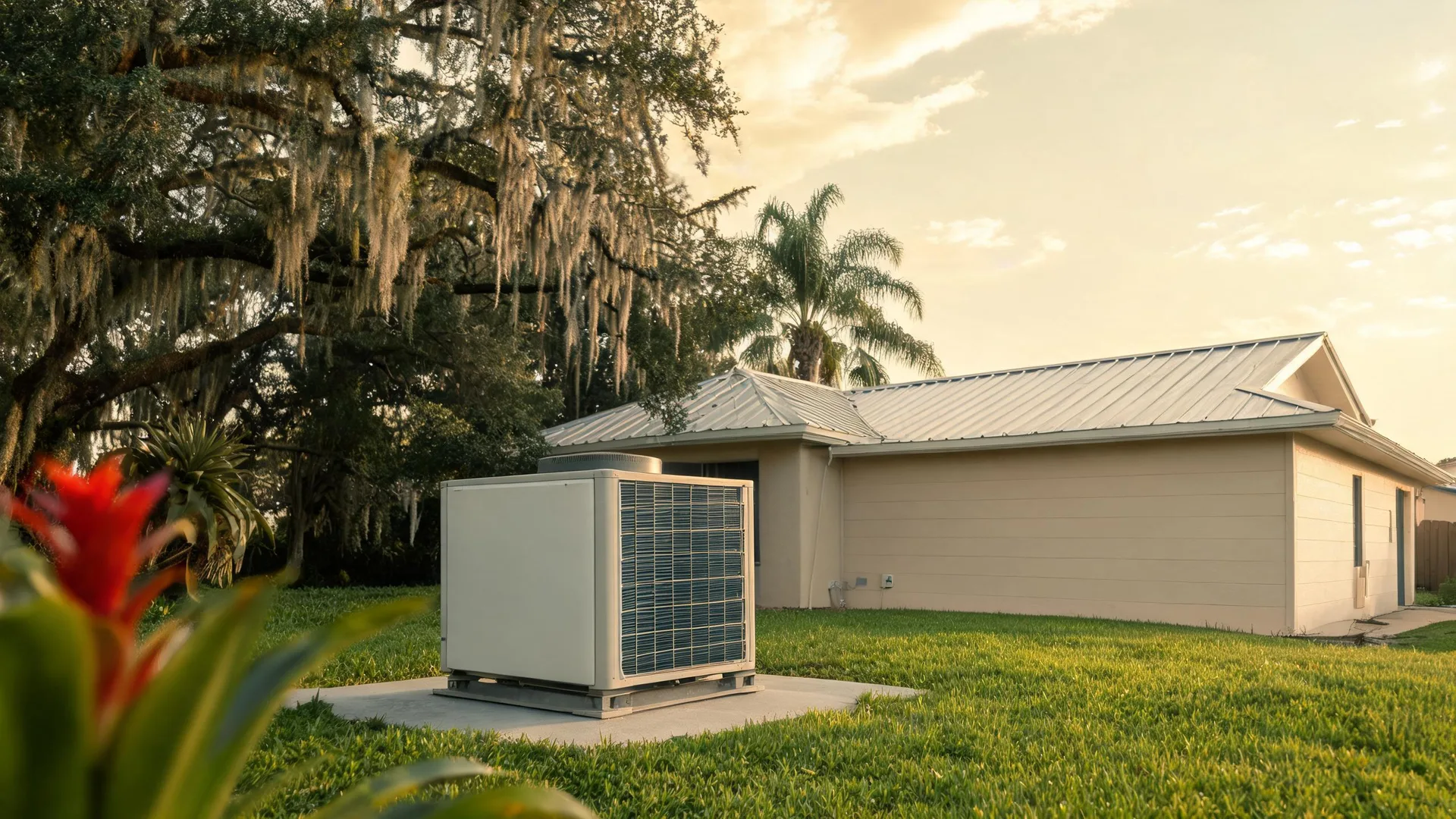
The ducts already in the house set the limits

A contractor has to work with the ductwork that's there, not redesign it. If the trunk lines and returns are undersized for the new coil, that can mean modifying ducts or adding a return, which adds to the job. A straightforward match to existing ducts costs less than one that needs rework to move enough air.

Overhead view of a gray residential air conditioning condenser unit mounted on a concrete pad beside a house with asphalt shingle roofing.

Going above the federal minimum saves little here, about $20 a year.

  • A higher-efficiency unit$130 a year
  • A new unit at the federal minimum, 13.4 SEER2$150 a year

Estimates for a typical Freeborn County home, from EIA household energy data, Minnesota fuel prices and NOAA climate normals. Your home will differ.

Installation day starts with the outdoor unit and coil going in, but most of the time gets spent on the connections, not the box itself. The old outdoor unit comes out, the new one goes on the pad, and the coil goes in above the furnace where the old one sat. Line sets get connected, the system gets evacuated to pull out moisture and air, then it's charged with refrigerant to the amount that unit calls for. A tech checks static pressure in the ducts and airflow at the registers before calling it done, since a coil can be sized right and still move the wrong amount of air if a duct run is too small for it. The last step is running the system and checking the temperature split between the air going in and the air coming out, which tells you whether it's actually cooling the way it should.