





Three lit brick homes on a tree-lined residential street photographed at dusk.

Heat Pump Repair in Woodbury, MN

Tell us about the job

Takes about a minute. No obligation.

RepairHeat PumpWashington County, MN
Step 1 of 2

What ZIP code is the job in?

A tech starts outside at the heat pump itself, checking the refrigerant charge, the reversing valve, and the outdoor coil for ice or dirt buildup. Then it's inside to the air handler, looking at the filter, the blower, and the auxiliary heat strips if your system has them. They'll run the thermostat through both modes to see if the reversing valve actually switches the system between heating and cooling, since a stuck valve is one of the most common reasons a heat pump blows the wrong temperature air. If the outdoor unit is short cycling or won't start at all, they'll check the capacitor and contactor before assuming anything bigger is wrong. Most of what they find comes down to one part that failed, not the whole system.

8 months
October through May, your system heats
3 months
June through August, it cools
10°F
the average winter night it heats against
80°F
the average summer afternoon it cools against
Isometric line illustration of a cutaway house showing interior rooms with furniture, ceiling ductwork, and an outdoor condenser unit connected by lines along the exterior wall.
Your system heats October through May and cools June through August.

NOAA nClimDiv, 1991–2020 normals

Minnesota electricity runs 15.45 cents per kilowatthour.

A heat pump losing its charge or running on a stuck reversing valve burns through that power with nothing to show for it.

Half the heat pumps in Woodbury are still well within their working life

Half the homes here were built by 1992
77 hail events from 2015 to 2024
34 winter storms from 2015 to 2024

September is the last easy month before heat season starts in October. That's when a heat pump that was already struggling switches over from cooling to heat, and whatever was wrong with it in summer, a sticking reversing valve or a charge that was low, shows up as weak heat or no heat at all on the first cold morning. Heat runs here from October through May, eight months on this system, so a problem that shows up in September does not wait for a convenient time to get worse. Getting it checked before the cold sets in means the repair happens on a slow week instead of the week you actually need the heat.

Stop paying for a struggling machine

Power costs more here, so a machine that's running badly costs you every month. Get it fixed soon.

Find a contractor
A gray heat pump condenser unit mounted on a concrete pad against the gray lap-siding exterior wall of a house.

A newer system is worth repairing

If your heat pump came with the house and the house is newer, that's worth knowing before you decide anything. A repair on a system with years left in it is money that keeps paying off, not money chasing a machine on its way out. Call it in and ask the tech straight out how much life the unit has left before you commit to anything bigger than a part replacement.

The reversing valve wears from the inside

Every time a heat pump switches between heating and cooling, the reversing valve slides a core back and forth to redirect refrigerant. Over years of cycling, that core sticks or the coil that moves it weakens, and the valve stops switching cleanly. It can fail stuck in one mode, or fail partway so the system blows lukewarm air in both.
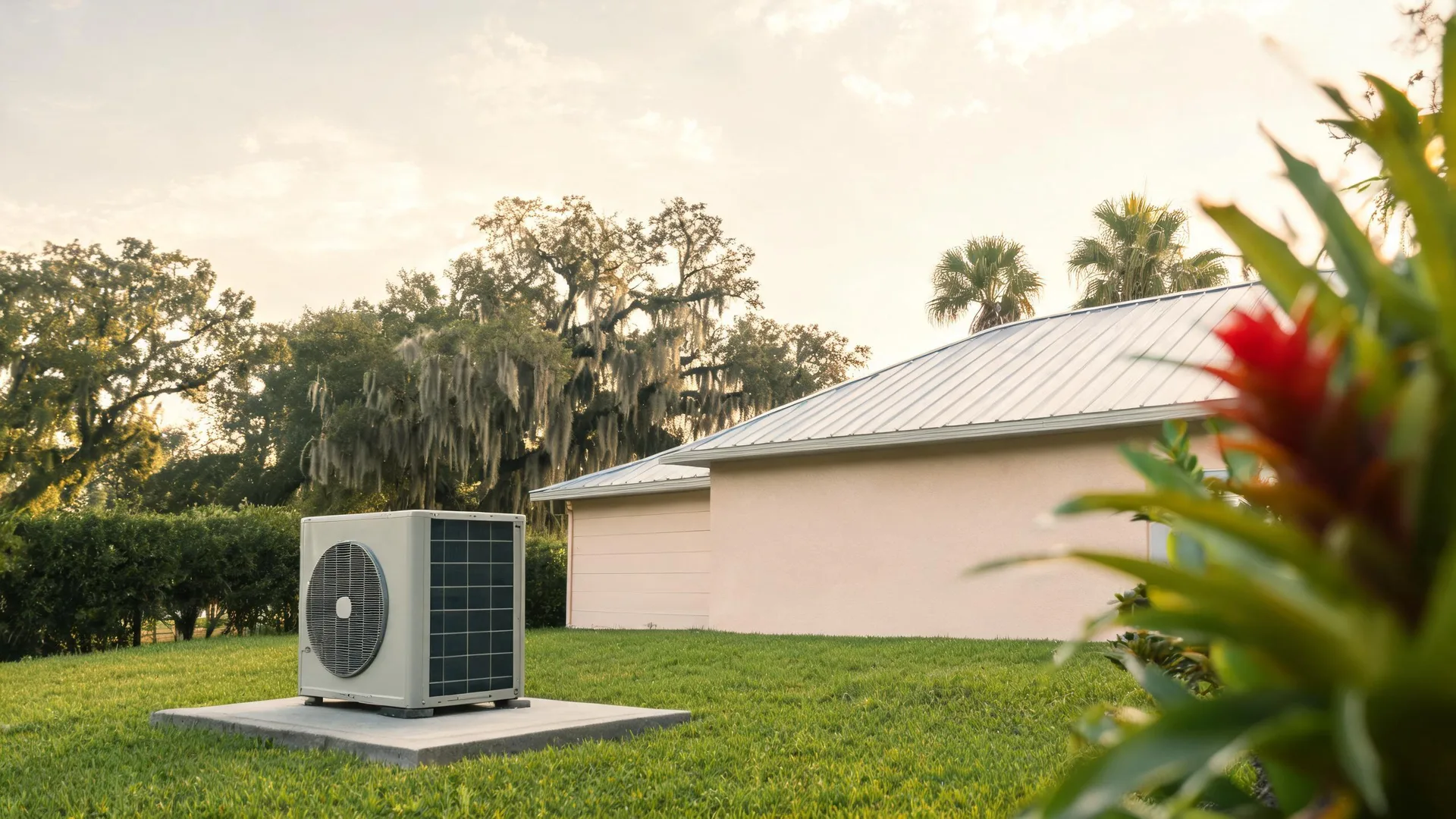
The outdoor coil takes the real punishment

The outdoor coil sits exposed to everything the weather brings, and it has to stay clean to pull heat out of cold air or dump it in summer. Dirt, leaves and ice buildup block airflow across the fins, and the system has to work harder to move the same amount of heat. Left alone, that extra strain is what burns out a compressor years before it should fail.

A low refrigerant charge does not stay put at low. The compressor still has to pull the same heat out of the air, so it runs longer and harder to make up for what the system is missing. That extra strain is what wears a compressor down before its time. A reversing valve that is starting to stick works the same way. Every cycle it fights through adds wear to the same core, so a valve that switches roughly today is closer to not switching at all tomorrow. Ice on the outdoor coil ends the same place a different way. Once ice forms, it blocks airflow across the fins, the system works harder to move the same heat, and more ice builds on top of that. None of this fixes itself by waiting. The machine keeps running because that is what it is built to do, not because whatever is wrong with it has gotten any better.

A compressor failure usually settles the question by itself. Replacing a compressor costs close to what a new system costs, so most homeowners put that money toward a new unit instead of an old one with a new compressor in it. A failed reversing valve or a bad capacitor is a different story. Those are parts a tech replaces on their own, the rest of the system keeps running, and there's no reason a repair like that shouldn't hold for years. What matters is what's actually broken, not how old the unit looks or how long it's been since anyone serviced it. Ask the tech which kind of problem this is before deciding anything.