A lit residential street at dusk featuring large two-story brick houses with glowing windows, mature trees, and a street lamp.

Heat Pump Repair in St. Paul, MN

Tell us about the job

Takes about a minute. No obligation.

RepairHeat PumpRamsey County, MN
Step 1 of 2

What ZIP code is the job in?

Air that doesn't feel warm isn't always a failure

A heat pump in heating mode puts out air that feels cool next to your skin even when it's working right, since the air is warmer than the room but still well below body temperature. What points to a real problem is air that's cold, air that won't shut off, or a system that runs constantly without catching up to the thermostat setting.

Short cycling wears out the parts that start the system

If the outdoor unit kicks on and off instead of running a full cycle, something is making it shut down early, a failing capacitor, a dirty sensor, or a refrigerant charge that's off. Each short cycle puts a load on the compressor and the contactor, and a system doing this is worth getting looked at before those parts fail outright.

8 months
October through May, your system heats
3 months
June through August, it cools
10°F
the average winter night it heats against
80°F
the average summer afternoon it cools against
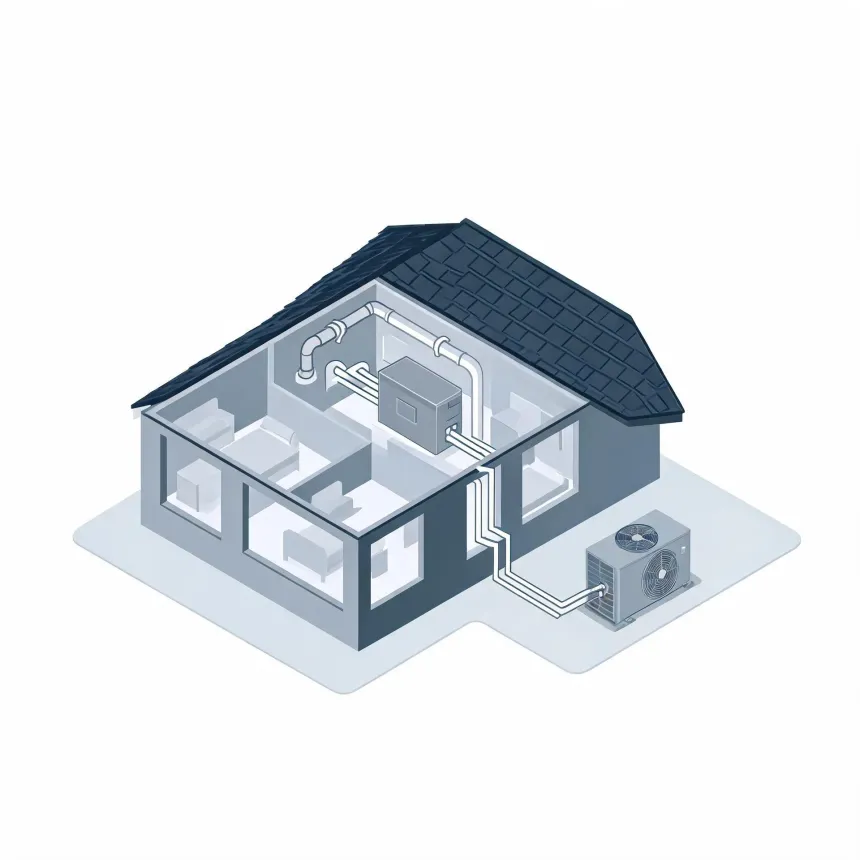
Isometric cutaway illustration of a gray house showing interior rooms, a central air handler with ducts in the attic, and refrigerant lines running to an outdoor condenser unit beside the building.
Your system heats October through May and cools June through August.

NOAA nClimDiv, 1991–2020 normals

Half the homes in Ramsey County were built in 1965 or earlier.

A heat pump installed when an older St. Paul home was built has likely used up most of what it had to give.

Minnesota's power costs make a struggling heat pump expensive to ignore

Power costs 15.45 cents a kWh statewide
64 hail events from 2015 to 2024
31 winter storms from 2015 to 2024

Heat here runs October through May, about eight months a year, so September is when a weak heat pump gets tested first. A part that was marginal in the shoulder months, a capacitor on its way out, a contactor with pitted points, often fails outright once the system has to run long cycles back to back. If your heat pump struggled last winter, September is worth paying attention to, not next month. The same goes in reverse come May, before the three months of cooling load hits a system that's already borderline.

Ask how much life it has left

If your system came with an older house, it may be near the end of its life. Ask how much life it has left before paying for a big repair.

Find a contractor
A man in a dark T-shirt, tan work pants and a backward cap walks up stone steps toward a dark green door, carrying a worn canvas tool bag, with a potted shrub in a green ceramic planter beside him.
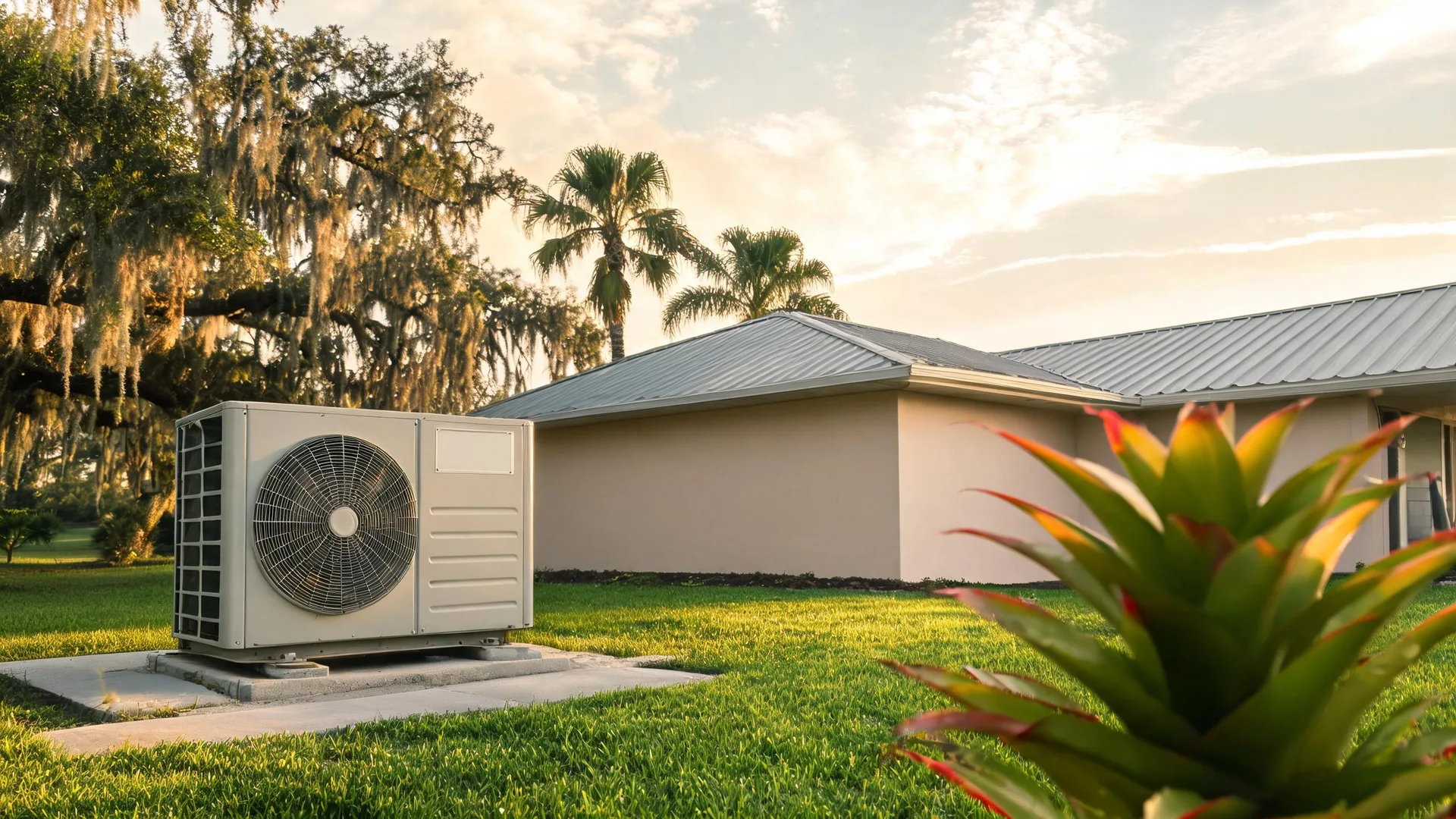
A gray heat pump outdoor unit mounted on a concrete pad next to the stone-accented exterior wall of a house.

Ask how many years are left before you fix it

If a repair is on the table, ask the contractor how many years the unit has left before deciding on it. A heat pump already near the end of a long run may not be worth a major part replacement. That question is worth asking before the diagnosis turns into a decision.

A refrigerant leak gets worse the longer it runs

A heat pump low on refrigerant makes the compressor work harder to move heat, and that extra strain shows up as heat. Run it long enough on a low charge and the compressor can overheat or the oil circulating with the refrigerant stops lubricating the way it should. What started as a slow leak worth a simple recharge can end with a compressor that needs replacing.

A stuck defrost cycle can freeze the outdoor coil solid

The outdoor coil picks up frost in cold weather, and the system is built to clear it on a schedule. If the defrost control fails or a sensor reads wrong, ice keeps building instead of melting off. Ice blocks airflow across the coil, so the system pulls in less heat each cycle, and a coil caked in ice for days can bend fins or crack the line feeding it.

Before anyone comes out, check the thermostat batteries and the setting itself, since a thermostat stuck on the wrong mode or a dead battery looks exactly like a broken heat pump. Walk outside and look at the unit. If it's buried in leaves, snow, or anything blocking the sides, clear it, since the outdoor unit needs air moving through it to work at all. Check the indoor filter. A filter packed with dust chokes airflow the same way a frozen coil does, and it's the one thing in this whole system you're meant to handle yourself. Look at the breaker panel. A heat pump that won't start at all sometimes just needs a tripped breaker reset, though if it trips again after that, leave it off and call someone. None of this fixes a bad capacitor or a refrigerant leak, but it rules out the few things that aren't a repair at all.

A compressor is the expensive part, and it's also the part that tells you the most. If a contractor says the compressor itself is failing, that's usually where the conversation turns toward replacement, since swapping a compressor costs enough that most of the time the money is better spent on a new system. Other repairs don't carry that weight. A capacitor, a contactor, a defrost sensor, these are parts built to wear out and be replaced, and fixing one doesn't say anything bad about the rest of the unit. The question worth asking isn't just what broke, it's whether what broke is a wear part or the heart of the system. A heat pump that keeps coming back for unrelated repairs is telling you something different than one that's run clean for years and just tripped on a single bad part.