

A dark two-story house with a wide covered front porch, framed by large leafy trees, behind a trimmed hedge and a striped mowed lawn.

Heat Pump Repair in St. Cloud, MN

Tell us about the job

Takes about a minute. No obligation.

RepairHeat PumpStearns County, MN
Step 1 of 2

What ZIP code is the job in?

Winter nights here average 6°F, and a heat pump has to pull heat out of air that cold for months at a stretch to keep a house warm. That is a harder job than most heat pumps are built for. The outdoor unit also sits outside through whatever the weather brings, and Stearns County has seen its share of damaging wind along with winter storms that pile snow and ice onto a unit already working long hours. Put those together and parts wear sooner here than they would somewhere milder. If yours is short cycling, blowing cool air, or icing over and not defrosting, that wear is probably why. Worth having someone trace it to the actual part before anything gets replaced.

9 months
September through May, your system heats
3 months
June through August, it cools
6°F
the average winter night it heats against
79°F
the average summer afternoon it cools against
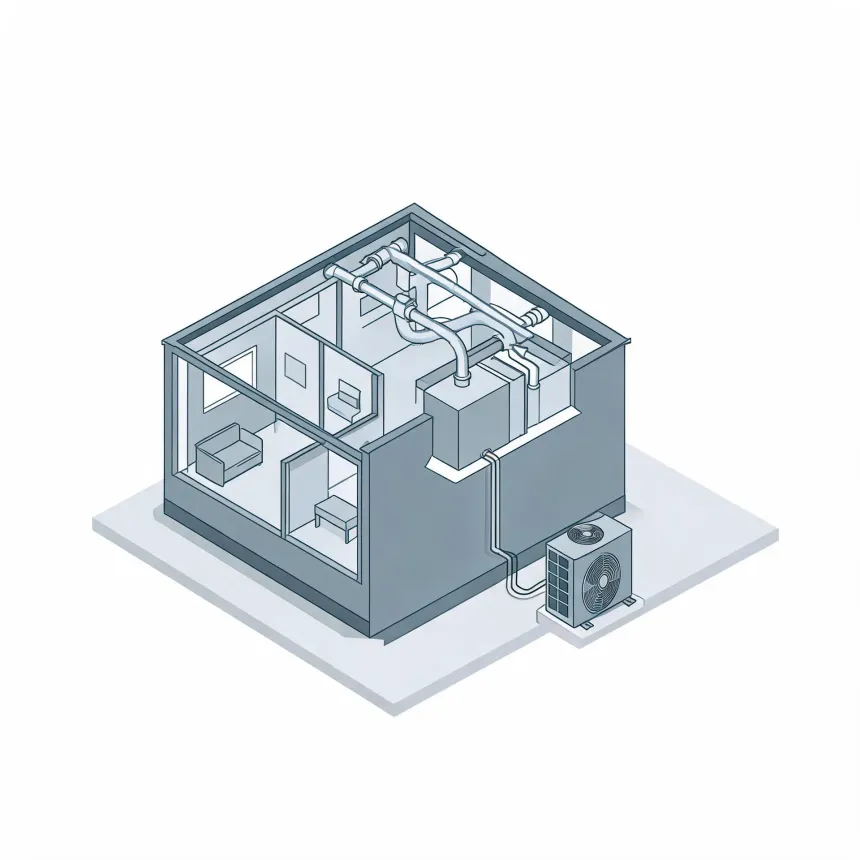
Isometric line illustration of a cutaway house showing interior rooms with furniture, ceiling ductwork connected to an indoor air handler, and refrigerant lines running to an outdoor condenser unit on a pad.
Your system heats September through May and cools June through August.

NOAA nClimDiv, 1991–2020 normals

August is the month before heat season starts here.

A heat pump that's been limping along all summer gets found out fast once it has to hold a house warm in the cold.

Half the homes in Stearns County were built in 1985 or later. If yours is one of them, the heat pump itself may not be old at all, even though it's working hard here. A unit that's only seen a handful of winters pulling heat out of cold air has earned a worn capacitor or a failing defrost board. That's a repair, not a reason to replace it. Worth finding out what year your system went in before anyone tells you otherwise.

A heat pump running wrong costs more here every month it waits

Minnesota power runs 15.45 cents a kilowatthour, and a heat pump that's short cycling or icing over is pulling more of it than it should. That cost shows up on the bill before winter even gets here. Worth having someone find the actual part before the cold sets in.

Find a contractor
A man in a dark jacket, tan work pants and cap, seen from behind, carries a canvas tool bag up concrete steps toward a dark green front door beside a potted shrub.
A dark gray heat pump unit mounted on a concrete pad next to a house with gray siding and a stone veneer wall.

Every winter night here is another one on the clock

That 6°F average isn't a cold snap, it's the whole winter, night after night, for the life of the unit. Every one of those nights is logged somewhere in the wear on the parts out there now. Ask whoever comes out to look at the age of the system before they talk about what to replace. A worn capacitor or defrost board on a young unit is a repair. The same part failing on a unit that's been through years of these winters already is just the clock catching up to it.

The reversing valve is often the first thing to go

A heat pump depends on its reversing valve to switch between heating and cooling, and that valve is working every time the system defrosts itself in winter. A stuck valve shows up as a unit blowing cold air when it should be heating, or running nonstop without catching up. Once it sticks, it usually has to be replaced, not freed up.
The capacitor and the defrost board wear from different causes

A capacitor weakens from the heat and the start-up load of the compressor and fan motor, failing a little more with every cycle. A defrost board fails from the cold side of the job, misreading the outdoor coil's temperature and either skipping a defrost cycle or running one too long. Both end with a unit icing over, but tracing which part is at fault means checking one against the other, not guessing.

Before anyone comes out, a few things are safe to check yourself. Look at the outdoor unit. If it's buried in snow or caked in ice beyond the normal thin frost, that alone can stop it from heating right, and clearing loose snow away from the sides and top is fine to do by hand. Check your thermostat is set to heat and not stuck on a schedule that dropped it back. Check the breaker for both the outdoor unit and the indoor air handler, since a tripped breaker on either side will shut the whole system down. Look at your air filter, because one clogged with dust chokes airflow and can make a heat pump run constantly without ever catching up. Past that, taking the unit apart or touching anything electrical isn't a homeowner job. If it's still short cycling or icing over after these checks, the problem is inside the system, not something you can see from the yard.

Age and symptoms only tell you so much. The real question is whether the part that failed is one failure or a pattern. A capacitor can be swapped on its own, and the rest of the system owes you nothing more for it. But if a compressor has been firing up hard for a couple seasons on a weak capacitor, that strain doesn't undo itself once the new part goes in. Replacing a stuck reversing valve fixes the valve. It doesn't fix whatever caused it to stick in the first place. A tech who's any good will tell you not just what broke but why, and whether that why points at one bad part or at a system that's been fighting itself for years. That answer matters more than how old the unit is on paper.