A lit residential street at dusk featuring large two-story brick houses with glowing windows, mature trees, and a street lamp.

Heat Pump Repair in Sauk Rapids, MN

Tell us about the job

Takes about a minute. No obligation.

RepairHeat PumpBenton County, MN
Step 1 of 2

What ZIP code is the job in?

Nights near 7°F ask a lot of a heat pump

Average overnight lows across December, January and February sit around 7°F here. A heat pump has to pull heat from outside air even on those nights, and the colder that air gets, the harder it runs to keep up.

Winter storms add their own strain

Benton County has seen 26 winter storms, heavy snow, ice and blizzards, between 2015 and 2024. Each one means the outdoor unit works through snow and ice instead of clear, open air, and that kind of strain shows up as wear sooner than you'd expect.

9 months
September through May, your system heats
3 months
June through August, it cools
7°F
the average winter night it heats against
79°F
the average summer afternoon it cools against
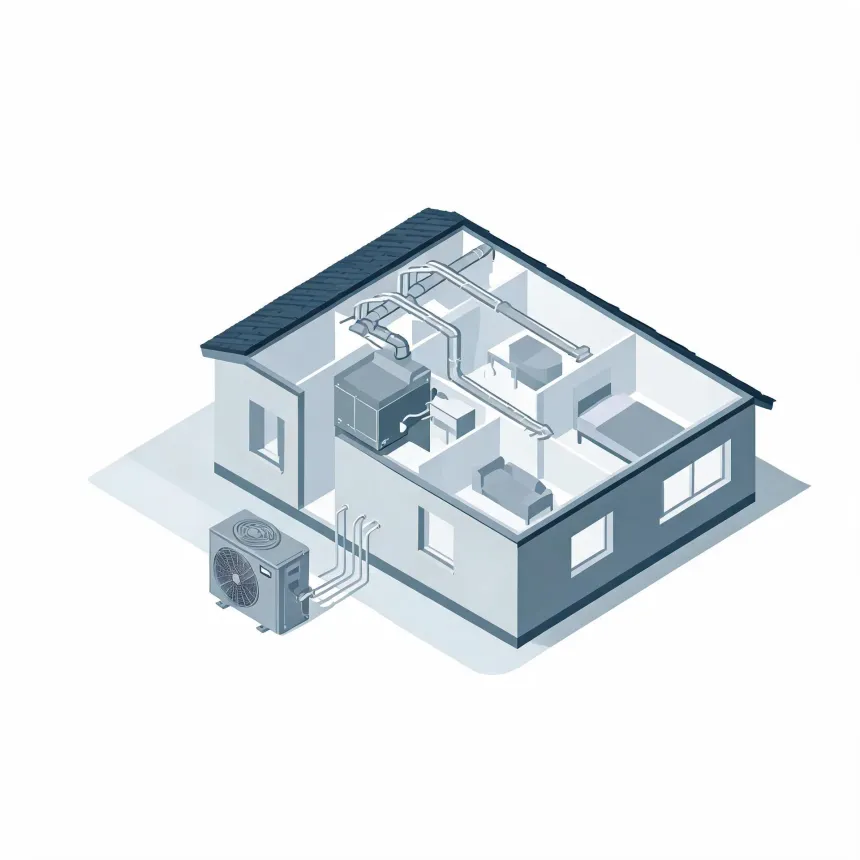
Isometric cutaway illustration of a single-story house showing interior rooms with ductwork, an indoor air handler unit, and an outdoor condenser unit connected by lines along the exterior wall.
Your system heats September through May and cools June through August.

NOAA nClimDiv, 1991–2020 normals

Minnesota electricity runs 15.45 cents per kilowatthour, higher than a lot of the country.

A heat pump that's struggling pulls more power every hour it runs, and here that shows up fast.

Half the homes here were built in 1986 or later, so the heat pump is usually young enough to fix

Half the homes here were built by 1986
26 winter storms from 2015 to 2024
Winter nights average 7°F
Heat season starts in September hereHeat runs here from September through May, about nine months a year.

If your heat pump is short cycling, icing up, or not keeping pace on a cold night, get it looked at before you decide it's done. A system working this hard all winter can throw a code or trip a limit switch for reasons that have nothing to do with its age, a stuck defrost cycle, a dirty outdoor coil, a low charge that got worse after a storm. A tech who checks the outdoor unit after the ice and snow it's been through can usually tell you in one visit whether you're looking at a repair or something bigger. Skipping that step and guessing is how a small fix turns into a replacement.

A heat pump this young is usually worth fixing

If your heat pump came with the house, it's probably young enough that a repair makes more sense than a replacement. The strain from cold nights and storms wears parts down sooner than you'd expect, but sooner than expected still isn't old. Get the outdoor unit checked before you decide it's done.

Find a contractor
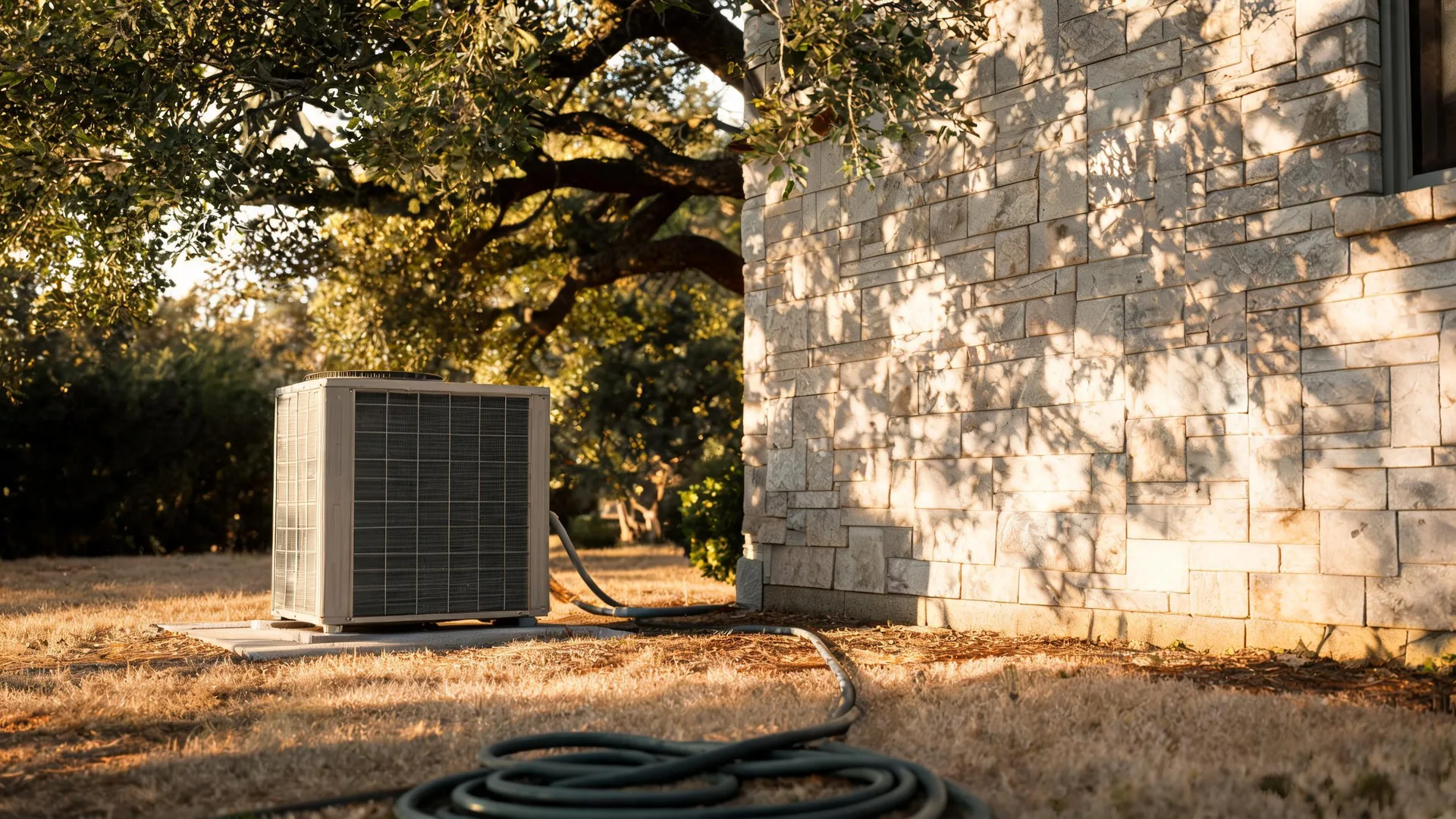
A gray heat pump outdoor unit mounted on a concrete pad next to the stone-accented exterior wall of a house.

What you can check before anyone shows up

Before anyone comes out, walk outside and look at the outdoor unit. Clear away any snow or ice piled against the sides or sitting on top. Check that nothing is blocking airflow, no fence, no bush, no stack of firewood pushed up close. Look underneath for ice buildup around the base, which can mean the condensate drain is frozen or blocked. Inside, check your thermostat is set to heat and not stuck on a schedule you forgot about, and swap the air filter if it's been a while, a clogged filter makes the whole system work harder and can bring on the exact symptoms that look like a bigger problem. Listen for short cycling, the unit kicking on and off every few minutes instead of running a steady stretch. That pattern alone is worth mentioning to the tech, it narrows down what they check first.

A frozen coil gets worse by the hour

Once frost starts building on the outdoor coil, the unit pulls less heat from the air, so it runs longer to make the same warmth. That longer runtime feeds more frost onto the coil, and the defrost cycle that's supposed to clear it has to work harder each round. Left alone, the coil can ice over enough to block airflow completely, and what started as a thin frost layer turns into a solid block that stops the system cold.

A low charge doesn't hold steady

A system low on refrigerant already has to run longer to keep up, and that extra runtime puts more hours on the compressor than it was ever going to see in a season. Heat pumps are built to handle a full season of steady work, not weeks of overtime caused by a leak nobody's found yet. The longer it runs low, the more likely that strain shows up as a failed compressor instead of a simple top-off.

Most heat pump failures trace back to a handful of parts. The reversing valve is a common one, it's what switches the system between heating and cooling, and when it sticks, the unit can blow cold air when it should be heating or get stuck in one mode entirely. The defrost control board is another, it tells the system when to melt frost off the outdoor coil, and when it fails, frost builds up unchecked until airflow chokes off. Capacitors wear out from the constant starting and stopping of the compressor and fan motor, and a weak one shows up as a unit that hums but won't start, or shuts off on its own. Contactors pit and burn from switching power on and off thousands of times a season, and a burnt contactor can leave the outdoor unit silent while the indoor side keeps blowing room-temperature air. Low refrigerant charge almost always means a leak somewhere in the line set or coil, not the refrigerant running out on its own, since these are sealed systems. None of these are wear you can see from across the yard. They show up as symptoms first, strange sounds, weak heat, short cycles, long before the part itself gives out.

A diagnostic visit starts outside, at the outdoor unit. The tech checks refrigerant pressure, since low charge tells them there's a leak to find before anything gets repaired for good. They'll pull the access panel and look at the contactor and capacitor, since those switch the compressor and fan on and off and wear out from the sheer number of cycles they go through. They check the reversing valve by running the system in both directions, heating and cooling, to see if it actually switches when it's told to. The defrost control board gets checked too, since a board that won't call for defrost lets frost pile up on the coil until the unit can't pull heat from the air anymore. Inside, they'll check the air handler, the blower motor, and the filter, since restricted airflow on the indoor side can look exactly like a failing part outside. Most of this comes down to testing each part against what it's supposed to do, not guessing from the symptom alone.