A dark two-story house with a wide covered front porch, framed by large leafy trees, behind a trimmed hedge and a striped mowed lawn.

Heat Pump Repair in Owatonna, MN

Tell us about the job

Takes about a minute. No obligation.

RepairHeat PumpSteele County, MN
Step 1 of 2

What ZIP code is the job in?

A heat pump that never really stops

Owatonna sits in zone 6A, a cold climate with a long heating season. A heat pump here pulls heat out of cold air for months at a stretch, then switches over to cool a summer where the dew point averages 60°F. Steele County has also seen 33 winter storms between 2015 and 2024, snow, ice and blizzards, and the heat pump is working through all of it. There isn't much of an off season for it.


What that means for the repair

A system that runs this hard shows wear sooner than the manual assumes. The part that failed may be a symptom of that load, not just a one-off defect. Getting a straight diagnosis matters more here than a quick swap, because the real cause can be upstream of the part that quit.

9 months
September through May, your system heats
3 months
June through August, it cools
10°F
the average winter night it heats against
79°F
the average summer afternoon it cools against
Isometric grey-toned illustration of a cutaway house showing interior rooms, ceiling ductwork and an air handler, connected by lines to an outdoor condenser unit beside the building.
Your system heats September through May and cools June through August.

NOAA nClimDiv, 1991–2020 normals

A refrigerant leak doesn't stay small, it gets worse every day the system keeps running on the charge it has left.

The compressor needs refrigerant to stay cool while it runs, so a low charge left alone can take out the compressor itself.

Power here costs 15.38 cents a kilowatt-hour, and a heat pump that's struggling spends more of it than one that's running right.

Power here costs 15.38 cents per kilowatt-hour
33 winter storms from 2015 to 2024
Winter nights average 10°F
The First Cold Snap Finds the Weak PartHeat runs September through May here, and September is when a part that barely made it through winter finally gives out.

A heat pump that's short on charge or losing airflow leans on its backup heat strip to make up the difference, and that strip pulls a lot more power than the compressor alone. Power here already costs more than in most places, so that difference shows up on the bill fast. Waiting through a billing cycle to see if the noise or the short cycling gets better just means paying more for a system that's already telling you something is wrong. Get it looked at before the strip has to carry the house.

Find the cause, not just the part that broke

A system that runs this much doesn't fail at random. The part that quit is usually telling you something about the load it's been under all year. A proper diagnosis finds that cause instead of just swapping the part that gave out first.

Find a contractor
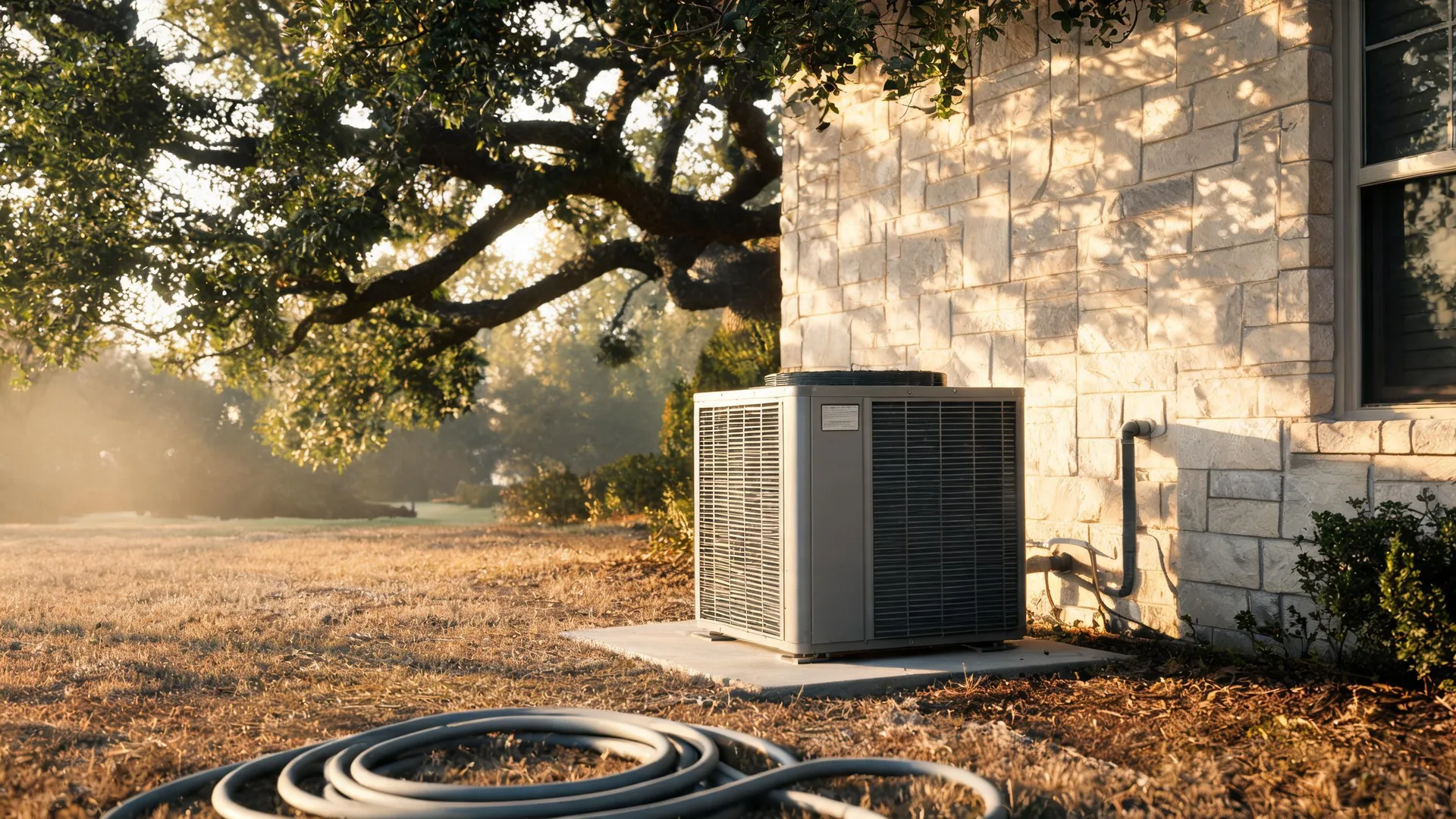
A gray air-source heat pump mounted on a concrete pad next to a house with gray vinyl siding, surrounded by gravel and flanked by green shrubs and white hydrangea flowers.

The Parts That Give Out, and Why

A heat pump fails the same handful of ways wherever it runs. The reversing valve sticks, and the system gets stuck cooling or stuck heating instead of switching when it should. A contactor pits and burns from the constant cycle of closing and opening until it stops making contact at all. The defrost board loses track of its sensor and either skips defrost cycles, leaving the outdoor coil caked in ice, or runs defrost too often and sends cold air through the house in the middle of winter. Capacitors dry out and weaken over years of starting and stopping the compressor and fan motors, and a weak capacitor shows up as a motor that hums but won't start, or one that starts slow and struggles. Refrigerant lines develop leaks at the joints and fittings, almost never in the middle of a solid piece of copper. Outdoor coils get coated in debris, dirt and ice until the system can't move enough air across them to do its job. None of these parts fail because the heat pump is a bad design. They fail because they are moving, flexing, or cycling on and off every time the system runs, and a part doing that for years eventually wears to the point it quits.

Signs that show up before the breakdown

A heat pump usually tells you something before it quits outright. Short cycling, where it turns on and off in quick bursts instead of running a full cycle, points to a sensor problem or a unit that's lost some of its charge. A hissing or bubbling sound near the lines can mean refrigerant escaping at a fitting. Warm air blowing in heating mode, or air that won't cool in summer, often means the reversing valve isn't switching all the way. Ice building up on the outdoor coil and staying there past a normal defrost cycle means the defrost board or a sensor isn't doing its job.

What's worth a call now versus a watch

A system that still heats and cools but sounds different, or runs longer than it used to, is worth getting looked at before it stops. A system that's stopped switching between heating and cooling, is icing over and staying iced, or has a motor that hums without starting needs a call now, not a wait and see. Running a heat pump with a stuck reversing valve or a badly iced coil for days at a time asks parts downstream to work harder to cover for the one that's already failing.

A few things are worth checking before a service call, and none of them need tools. Look at the outdoor unit and clear away leaves, mulch or anything stacked against it, since blocked airflow can look exactly like a failing part. Check that the filter isn't clogged, because a dirty filter starves the system of airflow from the inside too. Walk around the indoor vents and make sure none of them are closed or blocked by furniture. Look at the thermostat batteries if it has any, and confirm it's set to the mode you actually want, since a thermostat stuck between calls can mimic a reversing valve problem. If the outdoor coil has a light coating of ice, that can be normal for a short period during a defrost cycle, but ice that's thick or that's still there an hour later is not something to wait out. None of this fixes a bad capacitor or a stuck valve, but it rules out the simple stuff before you pay someone to find it for you.

A diagnostic visit starts outside at the condenser and works in. A tech checks refrigerant pressure and temperature split across the coil first, since that tells them whether the system has the charge it needs and is moving heat the way it should. From there they test the capacitors and contactor under load, not just by eye, because a capacitor can look fine and still be weak. The reversing valve gets checked both ways, heating and cooling, to see if it's actually switching or just stuck partway. Electrical readings at the compressor and fan motors show whether a motor is drawing the amps it should or straining to start. The point of all this is to find which part is actually failing before anything gets replaced, since swapping a contactor on a system with a refrigerant leak just means another call later.