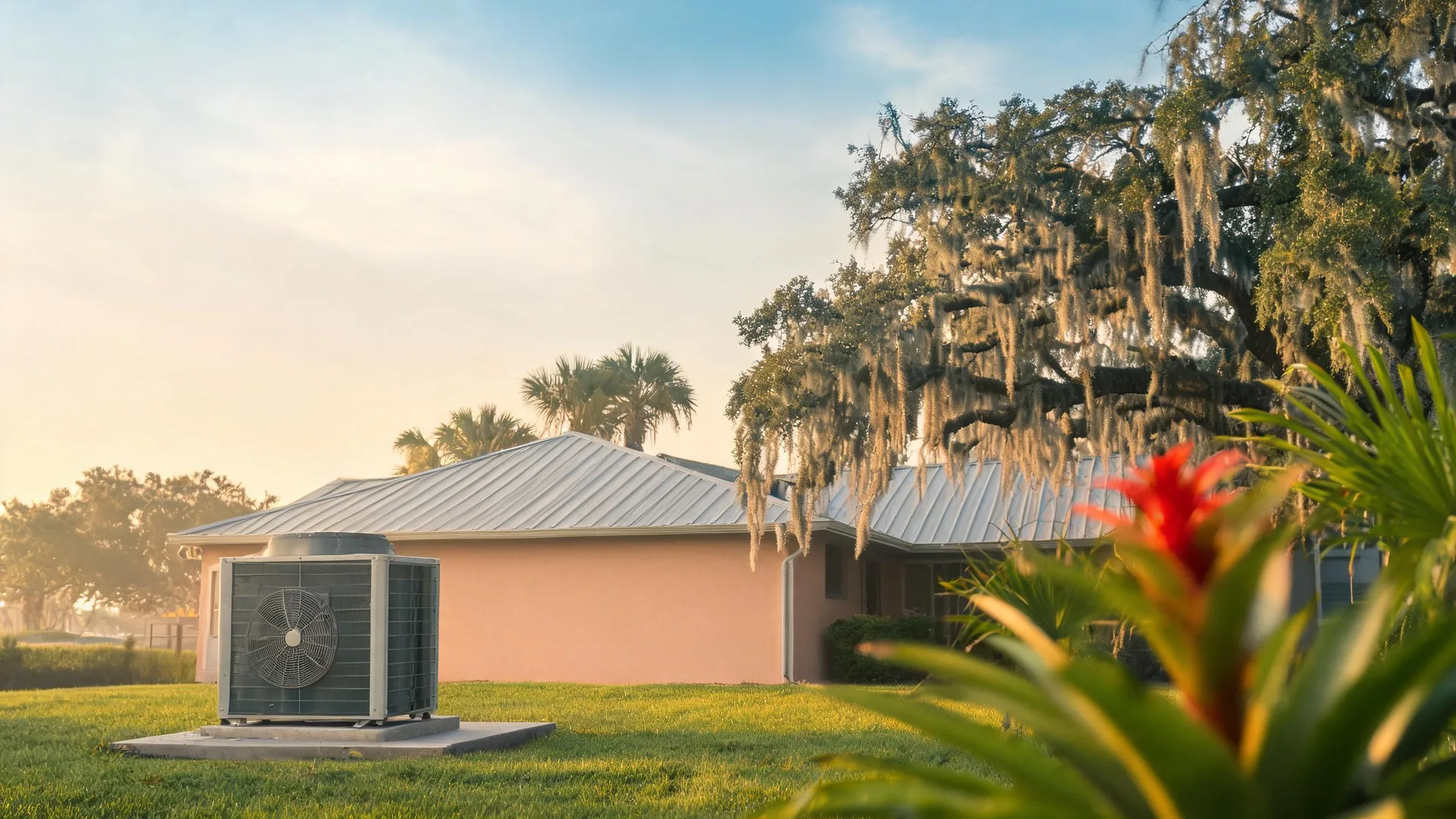
A large outdoor air-conditioning unit mounted beside a vinyl-sided house, surrounded by mulched garden beds and green shrubs.

Heat Pump Repair in Otsego, MN

Tell us about the job

Takes about a minute. No obligation.

RepairHeat PumpWright County, MN
Step 1 of 2

What ZIP code is the job in?

A heat pump in Otsego runs both ends of the year

Wright County sits in zone 6A, a cold climate with a long heating season. A heat pump here is pulling heat out of cold air all winter, then turning around to cool a house through the summer. There is no off season where the system just sits.


That workload catches up with parts

A system cycling that much puts hours on the compressor, the reversing valve, the board, in a way a milder climate never would. When something is off, it usually traces back to a part that wore down earlier than it should have. Getting that diagnosed right the first time matters more here than most places.

9 months
September through May, your system heats
3 months
June through August, it cools
8°F
the average winter night it heats against
80°F
the average summer afternoon it cools against
Isometric cutaway illustration of a small house showing interior rooms with furniture, an indoor air handler with ductwork, and lines running to an outdoor condenser unit beside the building.
Your system heats September through May and cools June through August.

NOAA nClimDiv, 1991–2020 normals

Heat in Wright County switches on in September, right as the first real cold hits.

A part that was already weak tends to fail on that first cold stretch, not before.

Electricity here runs 15.77 cents a kilowatt-hour, so a heat pump losing efficiency shows up on the bill fast

Power here costs 15.77 cents per kilowatt-hour
65 damaging wind events from 2015 to 2024
77 hail events from 2015 to 2024

Half the homes in Wright County were built in 1995 or later. If yours is one of them, the heat pump likely isn't that old, even if it's the one that came with the house. Most of what goes wrong with a newer system is a single part failing, a capacitor, a sensor, a control board, not the whole unit wearing out. That's a repair, not a replacement. Worth finding out what year your system actually dates to before assuming the worst.

Find out what's actually worn before it fails on you

A heat pump running both ends of the year wears parts sooner than a milder climate would. When something's off, that's usually why. Getting it diagnosed now means whatever wore down gets fixed instead of pushed into winter.

Find a contractor
A residential heat pump outdoor unit mounted on a concrete pad next to a house with gray vinyl siding.

Hours on the clock don't mean the unit is done

This one's been visible all day in the clip above, running into the evening without a break. That's the pattern most of the year here. A system built in 1995 or later still has a lot of working life in it, even with that kind of use. If a part's worn down early, that's what a repair is for. No reason to treat it like the whole unit is done.

What you can check yourself

Look at the outdoor unit first. If the fan isn't spinning or the coil is packed with ice, shut the system off at the thermostat before anything else. Check the air filter next, a clogged one chokes airflow and can ice up the coil or trip the system on high pressure. Walk the house and check that supply vents are open and not blocked by furniture or rugs. Check the thermostat batteries and make sure it's set to the mode you expect, heat or cool, not accidentally switched over. Look at the breaker panel for a tripped breaker before assuming the unit itself failed.

When to stop and call someone

If you reset a breaker and it trips again, stop, that's not something to keep resetting. A hissing or gurgling sound near the lines, ice that keeps coming back after you clear it, or a burning smell from the indoor unit all mean shut it down and get a tech out rather than keep running it. If the outdoor unit is making a grinding or screeching noise, don't let it keep running trying to see if it clears up on its own. Catching a failing part early is usually a smaller job than waiting until it takes something else with it.

A heat pump that's struggling will often keep running anyway, and that's the problem. If the charge is low, the compressor keeps trying to move refrigerant that isn't there in the right amount, and it runs hotter than it should every minute it's on. If the coil has ice building up, airflow keeps dropping while the system keeps calling for more, and the ice just builds faster. A failing capacitor makes the compressor or fan motor draw harder to start each cycle, and every extra second of that strain shortens what's left of its life. None of these fix themselves by running longer. The part that's struggling is doing the same bad job over and over, and usually getting worse at it, until it either trips the system off or fails outright. Shutting it down when something looks wrong doesn't hurt anything. Letting it run usually does.

A heat pump that's lost efficiency doesn't stop running, it just costs more to keep running. Power here isn't cheap, so a compressor working harder than it should shows up on the next bill, not months down the road. Waiting to get it looked at doesn't pause the problem. The unit keeps cycling, keeps drawing more than it needs to, for every day it sits unfixed. Get the worn part found and replaced before it runs like that all winter.