






A lit residential street at dusk featuring large two-story brick houses with glowing windows, mature trees, and a street lamp.

Heat Pump Repair in North Mankato, MN

Tell us about the job

Takes about a minute. No obligation.

RepairHeat PumpNicollet County, MN
Step 1 of 2

What ZIP code is the job in?

A diagnostic visit starts with the basics. The tech checks your thermostat settings, the breaker, and airflow at the vents before touching anything else. Then they move to the outdoor unit, checking refrigerant pressure and looking at the reversing valve, since that's the part that switches a heat pump between heating and cooling. If the system is running but not heating well, they'll check for a frozen coil or a failing defrost control. A weak capacitor can keep the compressor or fan from starting right, and that shows up fast on a gauge. By the end, you should know what part failed, why it failed, and what it takes to fix it.

8 months
October through May, your system heats
3 months
June through August, it cools
10°F
the average winter night it heats against
80°F
the average summer afternoon it cools against
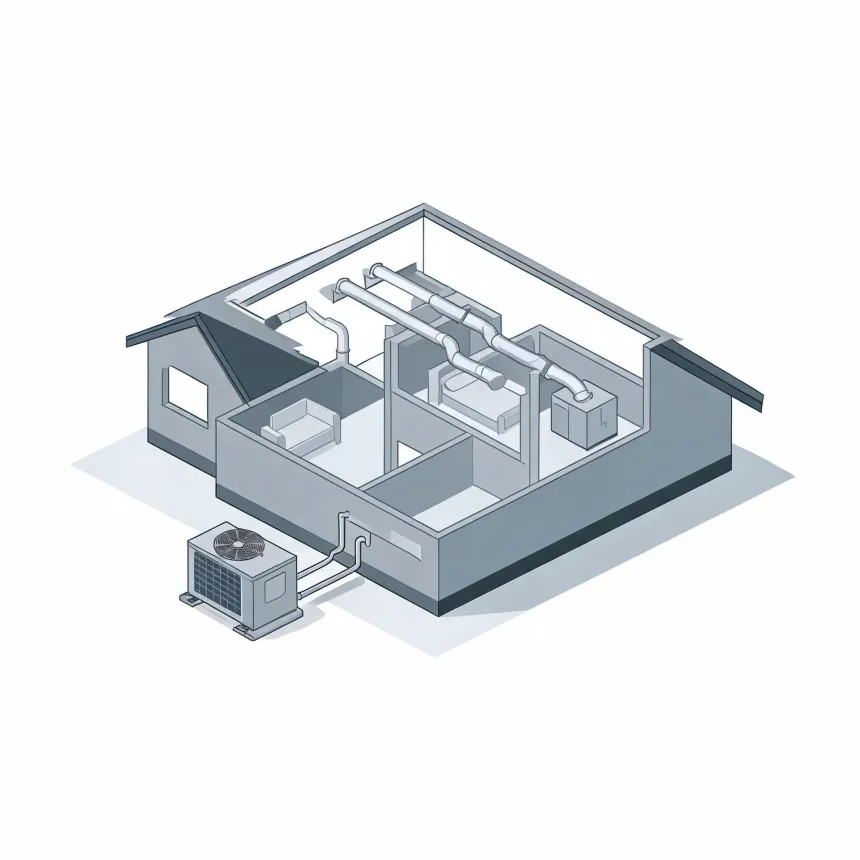
Isometric grayscale illustration of a cutaway house showing interior rooms, ceiling ductwork and an air handler, connected by lines to an outdoor condenser unit on a pad outside.
Your system heats October through May and cools June through August.

NOAA nClimDiv, 1991–2020 normals

Minnesota electricity runs 15.45 cents per kilowatthour.

A heat pump struggling to heat or defrost burns through that every day it's not fixed.

September is when a weak heat pump shows it before the cold really hits

Cooling runs June through August
Heat runs October through May
40 winter storms from 2015 to 2024
Don't let it run brokenAt 15.45 cents a kilowatthour, a bad reversing valve or weak capacitor adds up fast.

Your heat pump earns its keep here. Overnight lows average 10°F through December, January and February, so the compressor and defrost control run long hours just to keep up. Add in the winter storms this county sees, 40 of them over the last ten years bringing heavy snow and ice, and the outdoor unit is working through conditions that push every part harder than it was built for. That kind of strain doesn't break things all at once. It wears down a capacitor, a contactor, a defrost sensor, a little at a time, until one cold morning it doesn't start. Getting the actual cause checked means the next storm doesn't catch you without heat.

A newer system is usually worth repairing

Half the homes in Nicollet County were built in 1979 or later. If your heat pump came with a newer house, it hasn't had to survive as many of those winters yet. That favors fixing what failed over replacing the system.

Find a contractor
A man in a dark long-sleeved shirt and tan pants, seen from behind, carries a worn canvas tote bag as he climbs wooden steps toward a dark green front door flanked by a potted shrub.
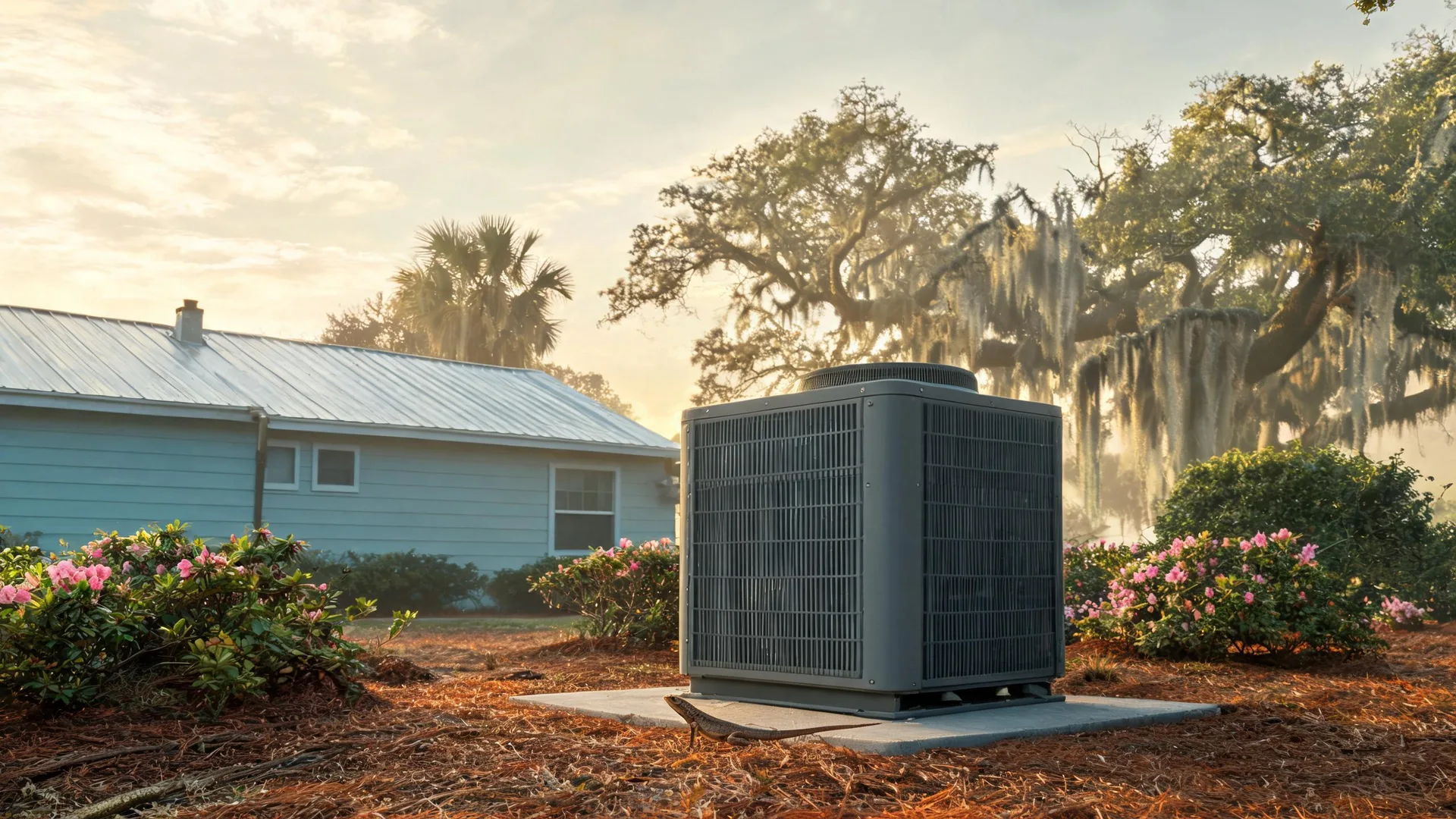
A gray outdoor HVAC unit mounted on a concrete pad beside a house with gray lap siding and a stone foundation.

Running broken doesn't buy you time, it spends it

A heat pump that's not heating right still runs, because the thermostat is calling and the compressor answers. That's the problem. A coil that's icing up keeps icing while it runs. A reversing valve that's stuck partway keeps grinding in that position. A weak capacitor keeps forcing the compressor to start hard every cycle instead of failing clean. None of that gets better with more run time, and a compressor that's been straining against a bad part for a long stretch can burn out for good, turning a repair into a replacement.

The signs are easy to miss at first

A heat pump that's failing doesn't usually quit outright. It runs longer than it used to without the house feeling any warmer. Air comes out of the vents barely above room temperature. Ice builds up on the outdoor unit and does not clear during the defrost cycle. The outdoor fan might struggle to start, or you hear a clicking that repeats instead of settling into a steady run. Each sign alone looks minor. Together they point to a specific part failing.
What the sign tells the tech

Where the problem shows up narrows down what's wrong before the panels even come off. Warm air that never gets hot points to the reversing valve or a low refrigerant charge. Ice that won't melt off points to the defrost control or a sensor reading wrong. A compressor that hums but won't start points to a weak capacitor or a failing contactor. Telling the tech exactly what you noticed, and when it started, points the diagnosis in the right direction before they touch a gauge.

Most heat pump failures come down to a handful of parts that wear out doing their job over and over. The capacitor gives the compressor and fan motor the jolt they need to start, and that jolt weakens it a little more each time until one day it isn't enough. The contactor is just a switch that closes thousands of times a season, and the contacts pit and burn until it sticks or stops closing at all. The reversing valve is what lets a heat pump switch between heating and cooling, and a coil failure or debris inside can leave it stuck halfway. The defrost control is a timer and sensor working together, and if the sensor reads wrong, the system never knows it's time to melt the ice off the outdoor coil. None of these fail because of one bad day. They fail because they've opened and closed and switched more times than the part was built to last.

Before anyone comes out, check the thermostat is set to heat and the temperature is actually above room temperature. Look at the breaker panel for the outdoor unit and the air handler, since a tripped breaker will stop a heat pump cold with no other symptoms. Check your air filter. A filter clogged with dust chokes airflow, and a heat pump starved for airflow will ice up or struggle to heat even if every part is working fine. Walk outside and look at the unit itself. Snow or debris piled against it blocks airflow the same way a dirty filter does, and clearing it is safe to do yourself. If you see ice on the coil, do not chip at it or pour water on it. Just note it and mention it when you call.