





A gray outdoor HVAC condenser unit mounted on a concrete pad in the front yard of a two-story suburban house.

Heat Pump Repair in North Branch, MN

Tell us about the job

Takes about a minute. No obligation.

RepairHeat PumpChisago County, MN
Step 1 of 2

What ZIP code is the job in?

A heat pump in North Branch deals with real cold. Winters here average 8°F overnight through December, January and February, and the system has to pull heat out of that air every day it runs. That's normal work for a heat pump built for this climate, not a sign of a bad unit. When one stops keeping up, the cause is usually something ordinary. A dirty outdoor coil, a low refrigerant charge, a defrost cycle that isn't kicking in right, or a thermostat setting that doesn't match what the system needs in deep cold. A contractor can check these in order and find which one it is.

9 months
September through May, your system heats
3 months
June through August, it cools
8°F
the average winter night it heats against
80°F
the average summer afternoon it cools against
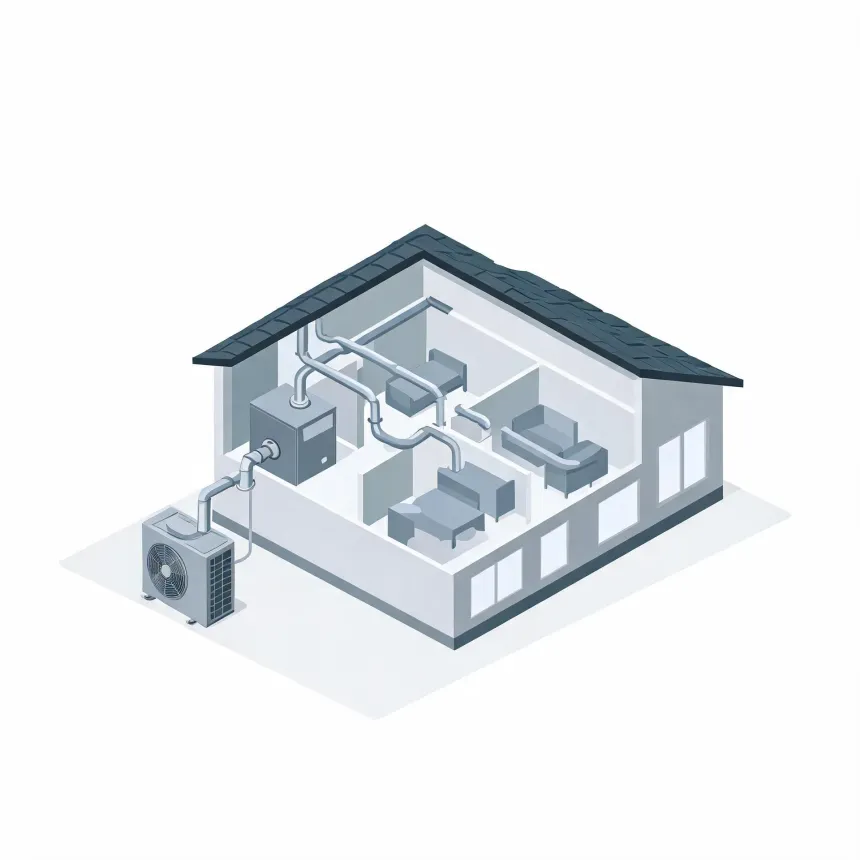
Isometric cutaway illustration of a single-story house showing an indoor air handler, branching ductwork through rooms with furniture, and an outdoor condenser unit connected by a line outside the wall.
Your system heats September through May and cools June through August.

NOAA nClimDiv, 1991–2020 normals

Heat pumps in North Branch run heat from September through May.

August is when a weak part gets found, right before nine months of relying on it.

Half the homes here were built by 1992, so most heat pumps are still well within their working life

Half the homes here were built by 1992
26 hail events from 2015 to 2024
25 winter storms from 2015 to 2024
North Branch pays more to run a heat pump that's strugglingMinnesota electricity ran 15.45 cents per kilowatt-hour in 2024.

If your heat pump came with a newer build here, repair is worth asking about before replacement. Half the homes in Chisago County were built in 1992 or later, so a lot of these units still have plenty of working life left in them. A worn capacitor or a low refrigerant charge doesn't mean the unit is done, it means one part needs attention. A contractor can check what's actually failing before anyone talks about swapping the whole system out. That's worth sorting out now, since the fix needs to hold through the cold months ahead.

A struggling heat pump still runs up your bill

A heat pump that's low on charge or stuck in the wrong cycle still draws power without doing its job well. At 15.45 cents per kilowatt-hour, that's a cost that shows up on every bill until the actual problem gets found. Worth getting a contractor to check it now, before months of relying on it.

Find a contractor
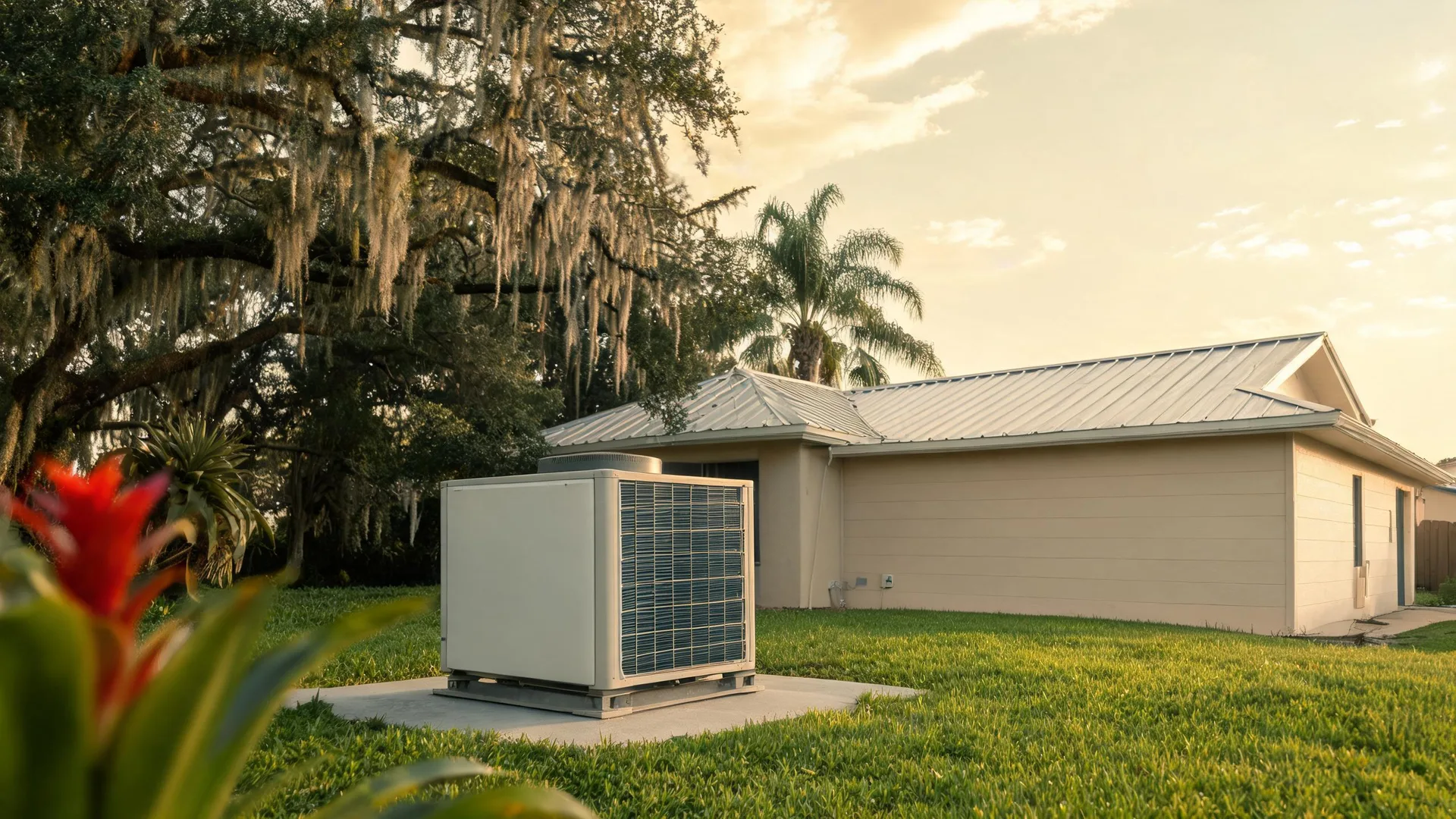
A gray heat pump outdoor unit mounted on a concrete pad next to a residential house with lap siding and stone accents.

What to check before anyone comes out

Before anyone comes out, a few things are worth a look. Check the thermostat is set to heat, not accidentally bumped to cool or off, and that the setpoint is actually above room temperature. Go outside and look at the unit. Frost is normal in small amounts, but a coil caked solid in ice that hasn't cleared on its own means something isn't cycling right. Don't chip at it or pour water on it. Clear away anything blocking airflow around the unit, leaves, a snow drift, a cover left on from last season. Inside, pull the filter and hold it up to light. If you can't see through it, air isn't moving the way it should, and that alone can make a heat pump seem like it's failing when it isn't. Check that supply vents around the house are open, not blocked by furniture or rugs. Listen for anything new. Clicking that repeats without the system starting. A hum with no air moving. A buzz from the outdoor unit. None of this tells you which part has failed. It tells a contractor what's already been ruled out.

Most failures trace back to the reversing valve or the defrost cycle

A heat pump has to switch directions to put heat into the house instead of pulling it out. The reversing valve does that switching, and when it sticks, the system can get stuck cooling or blowing air that never warms up. The defrost board is the other common point of failure. It's supposed to melt frost off the outdoor coil on a schedule, and when the sensor or timer goes bad, ice builds up until the coil can't pull in heat at all.
A refrigerant leak won't announce itself

Refrigerant doesn't get used up. If a heat pump is low, it's leaking somewhere in the line set or the coil, and the system keeps running while doing less work with every cycle. Left alone, the compressor ends up working harder to move what little charge is left, and the compressor is the part nobody wants to see fail. Catching a slow leak early is what keeps it from taking the compressor down with it.

A heat pump in trouble usually tells on itself before it quits outright. Warm air blowing that doesn't feel warm enough, especially when it's cold out, is the most common complaint, and it points at the reversing valve or a charge that's dropped. Short cycles, where the unit kicks on and off every few minutes instead of running a steady stretch, point at a different problem, often electrical. Ice on the outdoor coil that never clears on its own means the defrost cycle isn't doing its job. A unit that runs constantly without the house getting comfortable is working against something, low airflow, a bad sensor, or a stuck valve. Any new noise, a hard clunk when it switches modes, a buzz that wasn't there before, is worth mentioning to whoever comes out, because it narrows down what they check first.

A diagnostic visit starts outside, at the unit itself. A contractor checks the coil, the airflow, the frost pattern, and hooks up gauges to see what the refrigerant charge actually is, not what it's supposed to be. Inside, they'll check static pressure and look at what the thermostat is actually calling for versus what the system is doing. Electrical readings come next, the capacitor, the contactor, the board that runs the defrost cycle, since a part can look fine and still test out of range. None of this takes guesswork once the gauges are on. The point of the visit is to rule things out in order until only one explanation is left standing, then show the homeowner what it is before any repair starts.