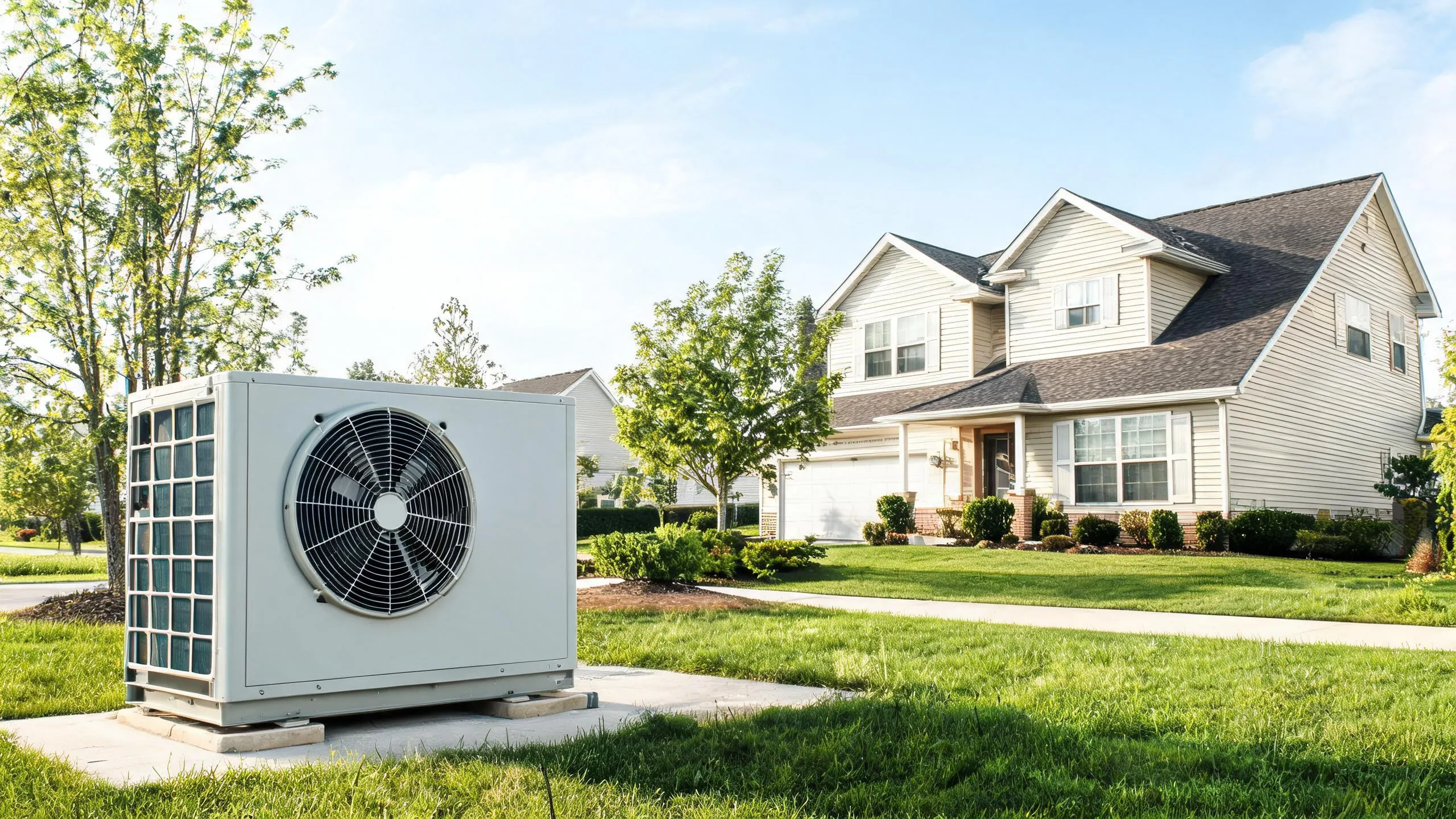







An outdoor heat pump unit mounted on a concrete pad in front of a two-story suburban house with a landscaped lawn.

Heat Pump Repair in New Ulm, MN

Tell us about the job

Takes about a minute. No obligation.

RepairHeat PumpBrown County, MN
Step 1 of 2

What ZIP code is the job in?

Half the homes in Brown County were built in 1963 or earlier. If your heat pump is original to a house that old, it's had a long run already. A repair might fix what's wrong today and still leave you facing the next failure a year from now. That matters more with an older unit than a newer one, because parts for it get harder to find as it ages. Before paying for a major repair, it's worth asking the contractor how much life the system has left.

8 months
October through May, your system heats
3 months
June through August, it cools
10°F
the average winter night it heats against
81°F
the average summer afternoon it cools against
Isometric cutaway illustration of a single-story house with a dark gabled roof, showing interior rooms with ductwork leading to an indoor air handler and an outdoor condenser unit connected by lines on the ground outside.
Your system heats October through May and cools June through August.

NOAA nClimDiv, 1991–2020 normals

A heat pump that won't turn on sometimes just needs a breaker reset or a thermostat with fresh batteries.

Check the breaker and the thermostat batteries before calling. If the outdoor unit is still dead after that, it's a job for a contractor.

Heat pumps here fail more in October than in June, because October is the longer season

Cooling runs June through August
Heat runs October through May
40 winter storms from 2015 to 2024
Running it broken costs more hereMinnesota electricity ran 15.45 cents per kilowatthour in 2024.

A compressor is the part that decides most of these calls. If it's failing, the unit can't move heat either direction, and replacing a compressor usually costs enough that a new system starts to make more sense. A bad capacitor or a stuck reversing valve is a different story. Those are parts a contractor swaps out, and the heat pump goes back to working the way it did before. The reversing valve is worth asking about by name, since it's the part that lets the unit heat in winter and cool in summer, and when it sticks, you'll notice the system blowing the wrong temperature of air. Age matters less than which part failed. A heat pump with one bad capacitor is an easy fix no matter how old it is. One with a failing compressor is a harder call, even if the rest of the unit is sound.

Get the repair, and the life expectancy, in the same visit

A repair gets it running again today. It doesn't tell you how much life is left in a unit that may already be older than it looks. Before you pay for the fix, ask the contractor for that number too.

Find a contractor
A man seen from behind in a dark work shirt and tan pants carries a worn canvas tool bag up concrete steps toward a dark green paneled front door, with a potted shrub at left.
A gray heat pump outdoor unit mounted on a concrete pad next to a residential house with lap siding and stone accents.

The longer it runs wrong, the harder it is on the compressor

A heat pump that's running fine doesn't announce itself. One that needs a repair usually does, if you know what to listen for. Short cycling is the big one. The unit kicks on, runs a few minutes, shuts off, then starts again before the room has even changed temperature. That's hard on the compressor every time it happens. Ice on the outdoor coil when it shouldn't be there is another sign. Some frost in defrost mode is normal, but a coil caked in ice means something isn't defrosting right. Air blowing the wrong temperature, cool air in heating mode or warm air in cooling mode, usually points to the reversing valve. And if the outdoor fan isn't turning while the indoor blower runs, that's not something to wait out. Catching these early almost always beats catching them late, because a strained compressor is what turns a simple repair into a much bigger one.

Refrigerant doesn't run out, it leaks out

A heat pump doesn't use up refrigerant the way a car uses gas. If the charge is low, there's a leak somewhere in the line set or the coil, and topping it off without finding the leak just means the same problem again later. A contractor should be able to tell you where it's leaking, not just that it is.
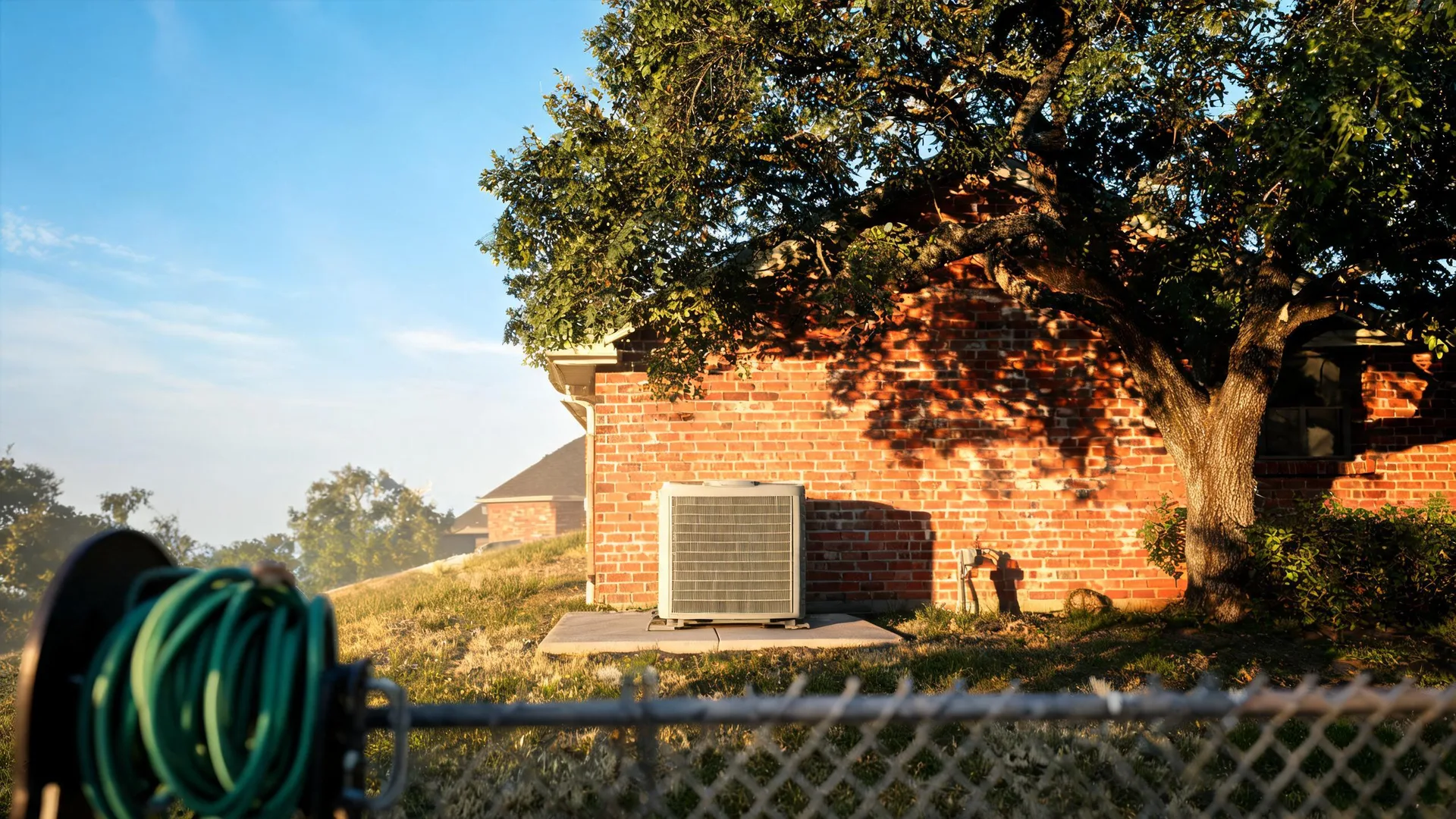
The outdoor unit takes the abuse

The outdoor unit sits through wind, ice, and whatever gets thrown at it by a mower or a snowblower, while the indoor unit sits in a closet doing far less work. That's why the outdoor coil, the fan motor, and the defrost control tend to fail before anything indoors does. Keeping the area around it clear helps, but it won't stop a motor from wearing out on its own schedule.

A heat pump that short cycles or runs iced up isn't resting between calls for heat. The compressor is still starting under load every time, and a start under load is the hardest moment in its whole cycle. Each one adds wear that a smooth, full run cycle wouldn't. A stuck reversing valve causes a similar problem from a different angle, since the system keeps calling for the temperature it never reaches, so it keeps running when a working unit would have shut off already. None of this fails the compressor today. It fails it sooner than it would have otherwise. A problem that's a capacitor swap this month can turn into a compressor replacement by next month, just from being left running while broken.

A diagnostic visit starts outside, at the unit itself. The contractor checks the refrigerant pressures, looks at the compressor's amp draw, and watches whether the reversing valve is switching when it's told to. Inside, they'll check the air temperature off the coil and look at the thermostat's calls against what the unit is actually doing. Some of this is gauges and a multimeter, some of it is just watching the unit run through a full cycle to see where it stumbles. A short cycling unit or one that's iced up usually shows its problem within a few minutes of being watched. The harder cases are the intermittent ones, where the fault only shows up under certain conditions, and those take longer to pin down than a straightforward failure.