





A snow-covered suburban street at dusk with lit houses and bare trees under a twilight sky.

Heat Pump Repair in Moorhead, MN

Tell us about the job

Takes about a minute. No obligation.

RepairHeat PumpClay County, MN
Step 1 of 2

What ZIP code is the job in?

A heat pump in Clay County earns its keep. Zone 6A means a long cold season, and winter storms hit this county 66 times between 2015 and 2024, so the outdoor unit runs through snow, ice and wind that most of the country never sees. Hail has struck 45 times in that same stretch, and wind damage 78 times, and either one can bend a fan blade or crack a cabinet without anyone noticing right away. That kind of exposure adds up on the coil, the fan motor and the reversing valve faster than it would somewhere milder. A problem that looks small, a strange noise or a cycle that runs too long, usually has a real cause behind it, and it is worth finding before it turns into a bigger repair.

9 months
September through May, your system heats
3 months
June through August, it cools
3°F
the average winter night it heats against
80°F
the average summer afternoon it cools against
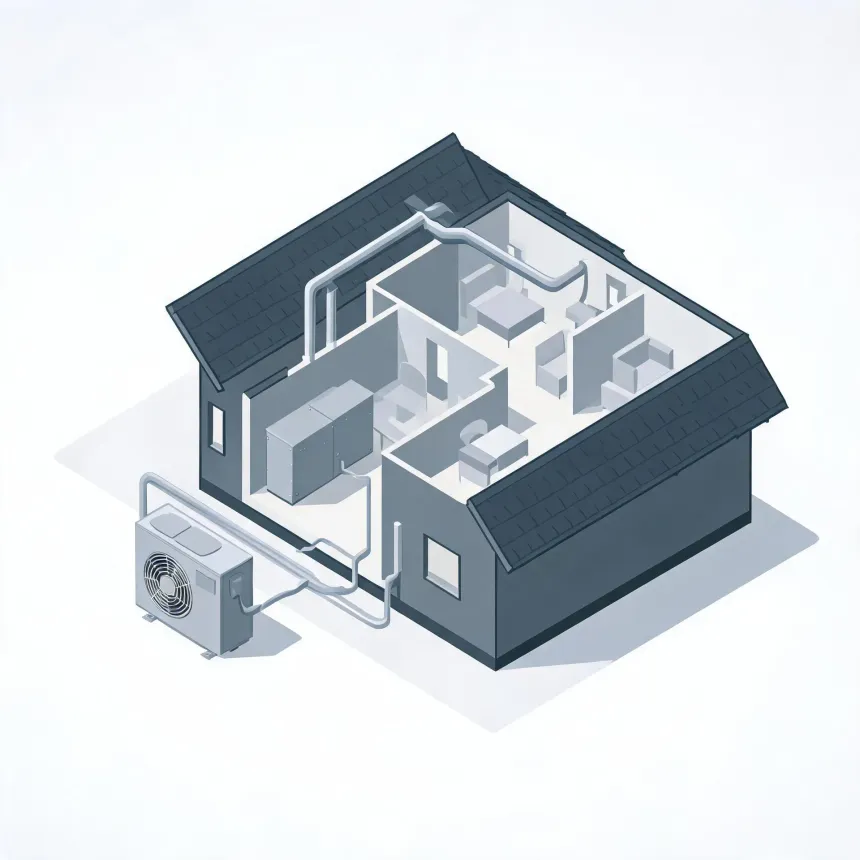
Isometric grayscale illustration of a cutaway house showing interior rooms, ductwork and an indoor air handler connected by lines to an outdoor condenser unit on the ground outside.
Your system heats September through May and cools June through August.

NOAA nClimDiv, 1991–2020 normals

Half the homes in Clay County were built in 1981 or later.

A heat pump in a newer house usually has years of working life left, which makes repair the right call here.

Nine months of heat, three months of cooling, and the first cold snap or the first hot week is when a weak part gives out

Cooling runs June through August
Heat runs September through May
78 damaging wind events from 2015 to 2024

Electricity in Clay County runs 12.30 cents a kilowatt-hour, cheap compared to most of the country. That helps, but it only goes so far when a heat pump is struggling. A unit with a failing part draws more power to do the same job, and it keeps drawing it every hour it runs, which in this climate is most months of the year. Low rates make that easier to miss on the bill, not free. A machine running badly here still costs you something every month it stays that way.

Find the real cause before it costs more to fix

A noise that wasn't there before, or a cycle that won't shut off, usually traces back to a part worn down by what this climate puts it through. Getting it looked at now means the fix addresses what's actually wrong instead of just the symptom.

Find a contractor
A man in a cap, dark long-sleeve shirt and tan work pants walks up concrete steps toward a dark green front door, carrying a worn canvas duffel bag.
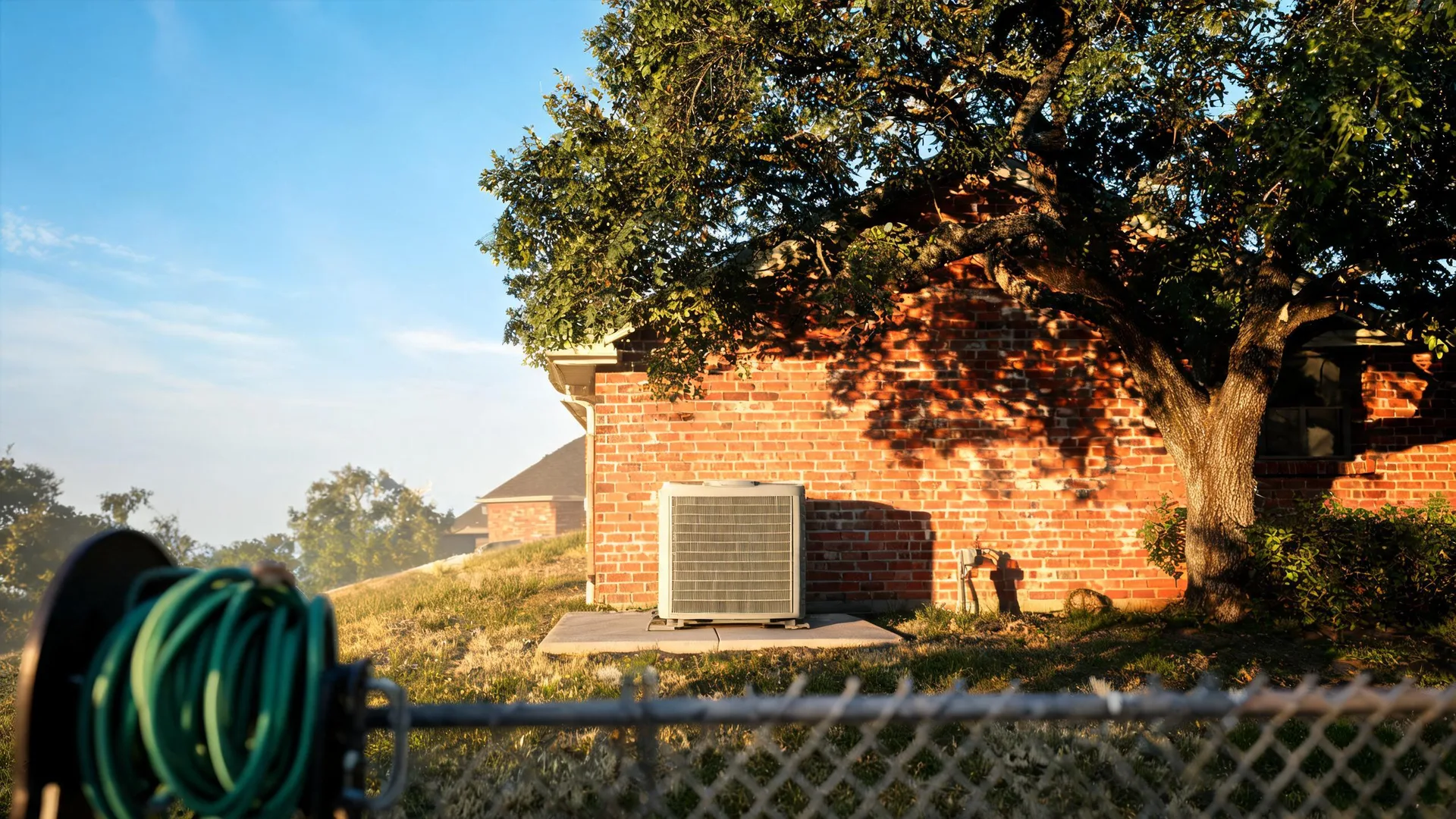
A gray heat pump outdoor unit mounted on a concrete pad next to a residential house with lap siding and stone accents.

How much life is left in this one

If the house came with this heat pump, a newer build usually means a newer unit, and that points toward repair over replacement. Worth asking whoever comes out what year it was installed, since that's the number that tells you how many years are likely left in it. A unit with years ahead of it is worth fixing when something goes wrong.

What actually wears out first

The reversing valve is usually the first thing to go. It switches the system between heating and cooling, and every switch means moving parts seating and reseating thousands of times a season. When it starts sticking, you get heat when you asked for cool, or the system stuck in one mode no matter what the thermostat says. After that it's usually the contactor or the capacitor, since those take a hit every time the compressor cycles on.
What it means for your call

A sticking reversing valve or a failing capacitor rarely fixes itself and rarely waits. If the system is stuck in one mode, or the outdoor fan is slow to start, or it hums but doesn't kick on, that part is already partway gone. Waiting usually just means the compressor ends up working harder to cover for it, and the compressor is the expensive part to replace.

Before you call anyone, a few things are worth checking yourself. Look at the thermostat first and make sure it's set to the mode you want and the temperature is actually past the point where the system should kick on. Check the breaker panel, since a tripped breaker will shut the whole unit down and it's an easy thing to miss. Walk outside and look at the outdoor unit. Snow, ice or leaves packed around it block airflow and can stop it from running right, and clearing that away costs nothing. Inside, pull the air filter and hold it up to a light. If you can't see through it, air isn't moving through your ducts the way it should, and that alone can make a heat pump run long or short cycle. If the system is blowing air but it feels off, or you hear it humming without starting, those are worth mentioning when you call, since they point to where the problem actually is.

If a part is already wearing down, the fix is to find it now, not to watch the bill first. A heat pump that is drawing extra power to cover for a sticking valve or a weak capacitor will keep doing that every day it runs, and here that is most of the year. Low rates make the increase smaller, not gone. The easiest way to know if that is happening is to have the actual part checked rather than guess from a monthly bill that moves for a dozen other reasons too. Ask for the part, not just a general tune up.