A row of illuminated two-story brick houses with front porches and mature trees photographed at twilight.

Heat Pump Repair in Long Prairie, MN

Tell us about the job

Takes about a minute. No obligation.

RepairHeat PumpTodd County, MN
Step 1 of 2

What ZIP code is the job in?

A heat pump working against ice and snow

Todd County has been hit by winter storms, heavy snow, ice and blizzards, 24 times between 2015 and 2024. A heat pump in weather like that is pulling what warmth it can out of cold air for months, and the cold snaps and storms push it harder than the average run of winter days. That kind of load adds up on the parts that keep it running.

Why that matters for a repair

A heat pump pushed this hard wears unevenly. A defrost cycle that kicks on more than it should, a compressor that short cycles, these can look like one-off glitches when really they are the system struggling with conditions it faces often here. Finding the actual cause matters more in a place that works the machine this hard.

9 months
September through May, your system heats
2 months
July through August, it cools
5°F
the average winter night it heats against
78°F
the average summer afternoon it cools against
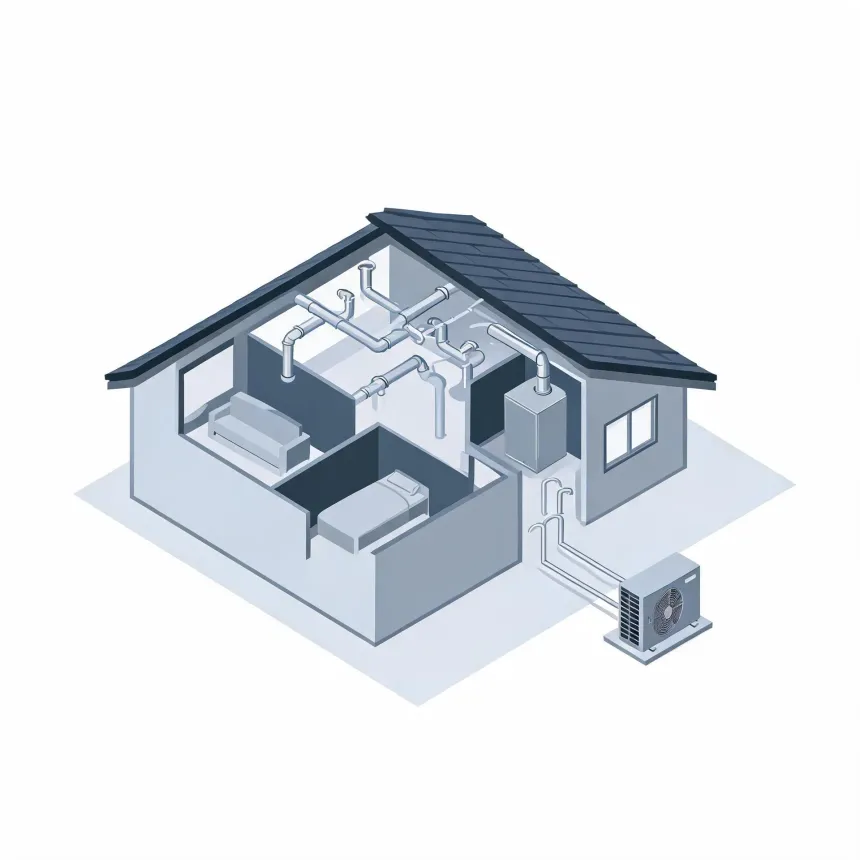
Isometric cutaway illustration of a small house showing ducted air distribution, an indoor air handler, and an outdoor condenser unit connected by lines, with a sofa and bed in the rooms.
Your system heats September through May and cools July through August.

NOAA nClimDiv, 1991–2020 normals

Heat in Todd County runs nine months a year, September through May, longer than it does almost anywhere else.

A part that was already wearing down gets caught by that first September cold snap, and that is when it gives out.

Electricity here runs 14.85 cents a kilowatt-hour, and a struggling heat pump burns more of it every day you wait

Power here costs 14.85 cents per kilowatt-hour
41 hail events from 2015 to 2024
24 winter storms from 2015 to 2024

A heat pump that's icing up wrong, short cycling or running long to hit the thermostat setting is pulling more power the whole time it does it. That cost shows up on the next bill whether the unit gets looked at or not. Waiting doesn't save you the repair, it just adds the extra power draw on top of it. Getting a contractor out to find what's wrong stops that drain instead of paying it every day between now and whenever you call.

Diagnose it right so the fix holds up to another Todd County winter

A heat pump working this hard against Todd County winters doesn't fail clean. Something wears unevenly first and starts showing up as odd behavior before it's a full breakdown. Getting a contractor out to diagnose it properly means the actual worn part gets fixed, not just whatever symptom is easiest to see.

Find a contractor
A white mini-split heat pump outdoor unit mounted on a concrete pad beside a gray-sided house, surrounded by gravel and green shrubs.

What to check yourself first

Before anyone comes out, walk around the outdoor unit and look at the coil. If it's caked in ice beyond the thin frost that clears on its own during a normal defrost cycle, that's worth noting. Check that nothing is stacked against the unit or blocking the airflow around it, no bags, no bins, nothing leaning on the cabinet. Inside, pull the air filter and hold it up to a light. If you can't see through it, swap it or clean it before anything else gets checked. Look at the vents and registers in each room and make sure none are shut or blocked by furniture. At the thermostat, check the batteries if it's a battery model, and confirm it's set to call for heat or cool the way you expect. If the system has an outdoor disconnect box or a breaker at the panel, check that neither has tripped. None of this calls for opening the unit itself or touching refrigerant lines or electrical connections, that part is a contractor's job. What you're doing is ruling out the simple stuff so the time on site goes toward the actual problem.

The reversing valve takes the abuse

A heat pump has one part a furnace doesn't: the reversing valve that switches it between heat and cool. Every time the system defrosts, that valve shifts over and back. Years of that wear the valve's seals until it starts leaking refrigerant past itself, and the system runs long without hitting the temperature it's set for.

A refrigerant leak doesn't announce itself

A heat pump low on refrigerant doesn't shut off. It keeps running, moving less heat each cycle, while the compressor works harder to make up for it. Left alone long enough, that extra strain is what ends a compressor. Catching the leak early is cheaper than replacing what it eventually takes out.

A heat pump that's struggling doesn't fail the part that's actually worn, it fails whatever gives out next while you wait. A compressor working against a weak capacitor draws more current than it should, and that extra heat breaks down the windings a little more each cycle. A refrigerant leak left alone means the compressor runs starved of the gas it needs to cool itself, so a slow leak that was a cheap fix becomes a dead compressor. Ice on the coil blocks airflow, so the system pulls harder to move the same amount of heat, and that strain lands on the same compressor and the fan motor behind it. None of this shows up overnight. It shows up as a system that still runs, just worse each week, until the part holding things together finally goes.

A diagnostic visit starts outside, at the unit itself, before anything gets opened up. A contractor will check the refrigerant charge and pressures, look at the reversing valve, and watch how the defrost cycle behaves, since that's the part most specific to a heat pump. Electrical readings come next: the capacitor, the contactor, the windings on the compressor and fan motor, checked against what they should be reading rather than just whether they turn on. Airflow gets checked too, because a coil or filter that's restricting air makes a healthy compressor work like a bad one. The point of all this is to find which part is actually worn, not just which symptom is easiest to see, because a heat pump showing one problem is often hiding another one behind it.