



A illuminated two-story red brick house on a quiet residential street at dusk, flanked by mature trees under a deep blue evening sky.

Heat Pump Repair in Le Sueur, MN

Tell us about the job

Takes about a minute. No obligation.

RepairHeat PumpLe Sueur County, MN
Step 1 of 2

What ZIP code is the job in?

A heat pump in Le Sueur County works right through October and keeps going until May, then switches over and runs the cooling side from June through August. The strain shows up at the start of a run, not in the middle of it. September is when a weak part tends to fail, because the system that idled all summer is suddenly asked for heat every day. The same thing happens in May, when cooling starts and a capacitor or contactor that barely held on last August finally gives out. If yours is acting up right as the season turns, that timing is the clue, not a coincidence.

8 months
October through May, your system heats
3 months
June through August, it cools
10°F
the average winter night it heats against
80°F
the average summer afternoon it cools against
Isometric cutaway illustration of a single-story house showing interior rooms, ceiling ductwork connected to an air handler, and an outdoor condenser unit linked by a line set.
Your system heats October through May and cools June through August.

NOAA nClimDiv, 1991–2020 normals

Le Sueur County winters average 10°F overnight, well within what a heat pump is built to handle.

A heat pump struggling here is dealing with a worn part, not the cold.

Minnesota electricity ran 15.45 cents per kilowatthour in 2024, and a heat pump that's struggling pulls more of it than one running right. A worn capacitor or a low charge makes the compressor work harder for the same heat or cooling, and that extra draw shows up on every bill until the part gets replaced. It's not a small system either. A heat pump is what moves both your heat and your air conditioning, so a problem in it costs you in both directions. The longer a bad part runs, the more it costs to keep running it.

The longer it runs bad, the more it costs you

A bad part doesn't get cheaper to run while it waits. Get the cause diagnosed and fixed so the draw on your bill goes back to normal.

Find a contractor
A man in a dark shirt and tan pants, seen from behind, climbs porch steps toward a dark green paneled door while carrying a worn canvas tool bag, with a potted shrub beside the entry.
A white mini-split heat pump outdoor unit mounted on a concrete pad beside a gray-sided house, surrounded by gravel and green shrubs.

A bad part left running wears out what's left of the system

A heat pump that's struggling still runs, because the thermostat just asks for heat or cooling and the system tries to deliver it however it can. A low charge makes the compressor run longer to move the same heat. A failing capacitor makes the motor strain on every start instead of spinning up clean. Neither one trips a breaker or shuts the system down on its own. It just keeps working harder, and that's what turns a small problem into a bigger one. A compressor running on a low charge builds up heat it isn't designed to handle, and over time that heat breaks down the oil that's supposed to protect it. A motor straining against a bad capacitor runs hotter on every single cycle, and the windings inside it wear faster for it. The part that caused the problem is usually a simple swap on its own. The compressor or motor it's connected to is not.

The reversing valve is the part unique to a heat pump

Everything else in a heat pump is close to what sits in a furnace or an air conditioner, but the reversing valve is what switches it between heating and cooling. When it sticks, the system can get stuck in one mode, or it can run but blow air that's barely warm or barely cool. A valve that hums but doesn't shift is a common sign, and it's not something to wait out.
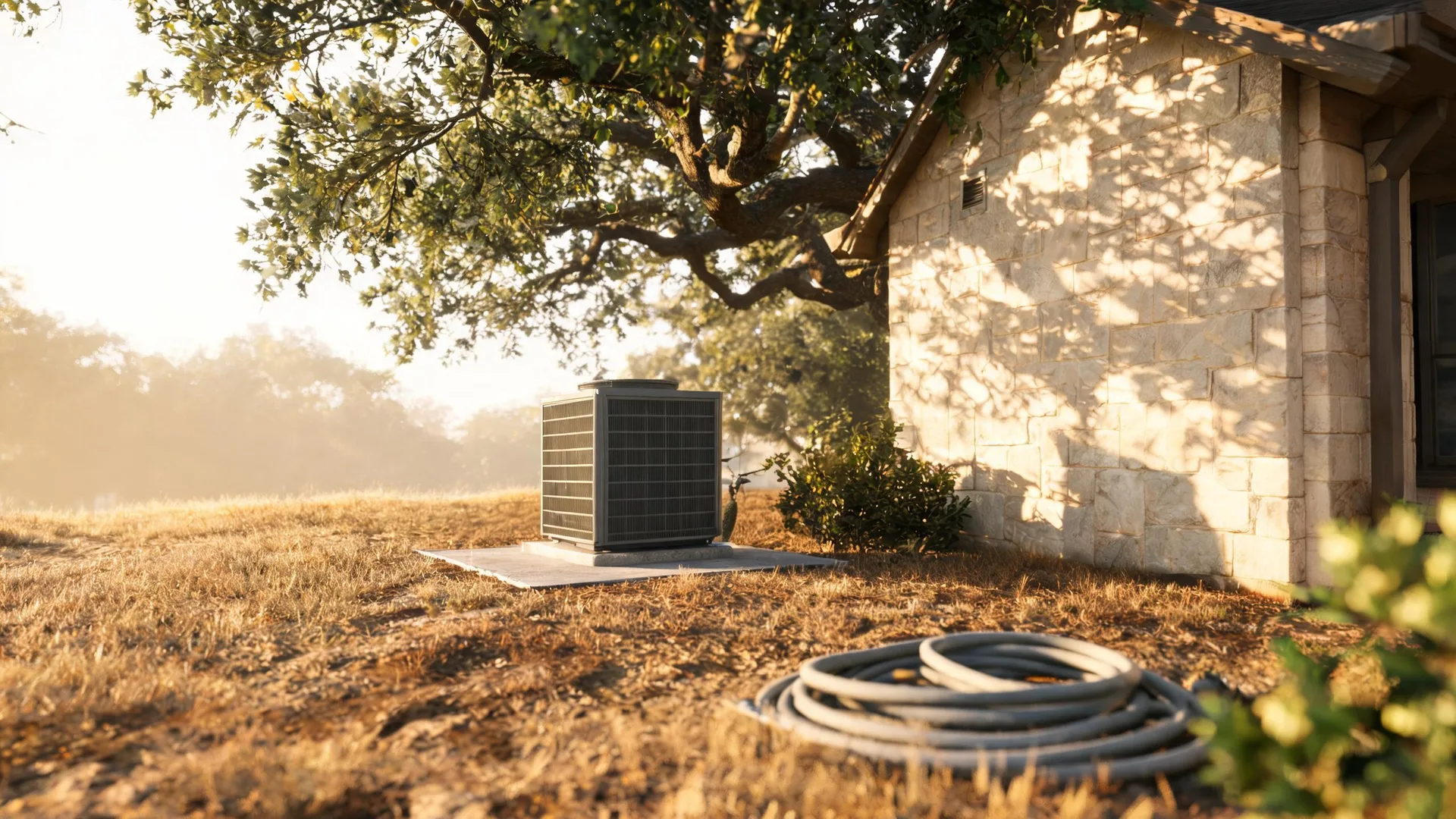
Most failures trace back to the start of a cycle, not the middle

A capacitor that's weak enough to fail usually fails on startup, when the motor needs the hardest push to get spinning. A contactor with pitted contacts can hang up the same way, chattering or refusing to close. These parts can look fine sitting still. The strain only shows up the moment the system is asked to turn on.

A heat pump that needs a repair usually tells you before it quits outright. Warm air out of the vents when the thermostat is set to heat, or air that never gets quite cold in summer, points at the reversing valve or a weak charge. Short cycling, where it kicks on and off every few minutes instead of running a full cycle, wears on the compressor and is worth catching early. Ice on the outdoor unit that doesn't clear during the defrost cycle means that cycle isn't working right. A hum from outside with no fan turning is a motor or capacitor that can't get started. Any of these is the system telling you a part is failing before it takes the rest of the system down with it.

Repair makes sense when one part failed and did its one job badly, like a capacitor, a contactor, a defrost sensor, a reversing valve. Swap that part and the system goes back to running the way it did before. Replacement starts to make more sense when the compressor itself is damaged. A compressor that's been running on a low charge or short cycling for a long stretch usually takes damage a repair can't undo, and the compressor is most of what a heat pump costs. Age matters less than what the system has been through. A heat pump that had one part fail and get fixed right away is in better shape than one that limped along on the same bad part all season. The question worth asking is whether the repair fixes the cause or just the symptom. If a tech finds a failed capacitor and nothing else, that's a repair. If the capacitor failed because it was straining a compressor that's already worn, replacing the capacitor buys time, not a fix.