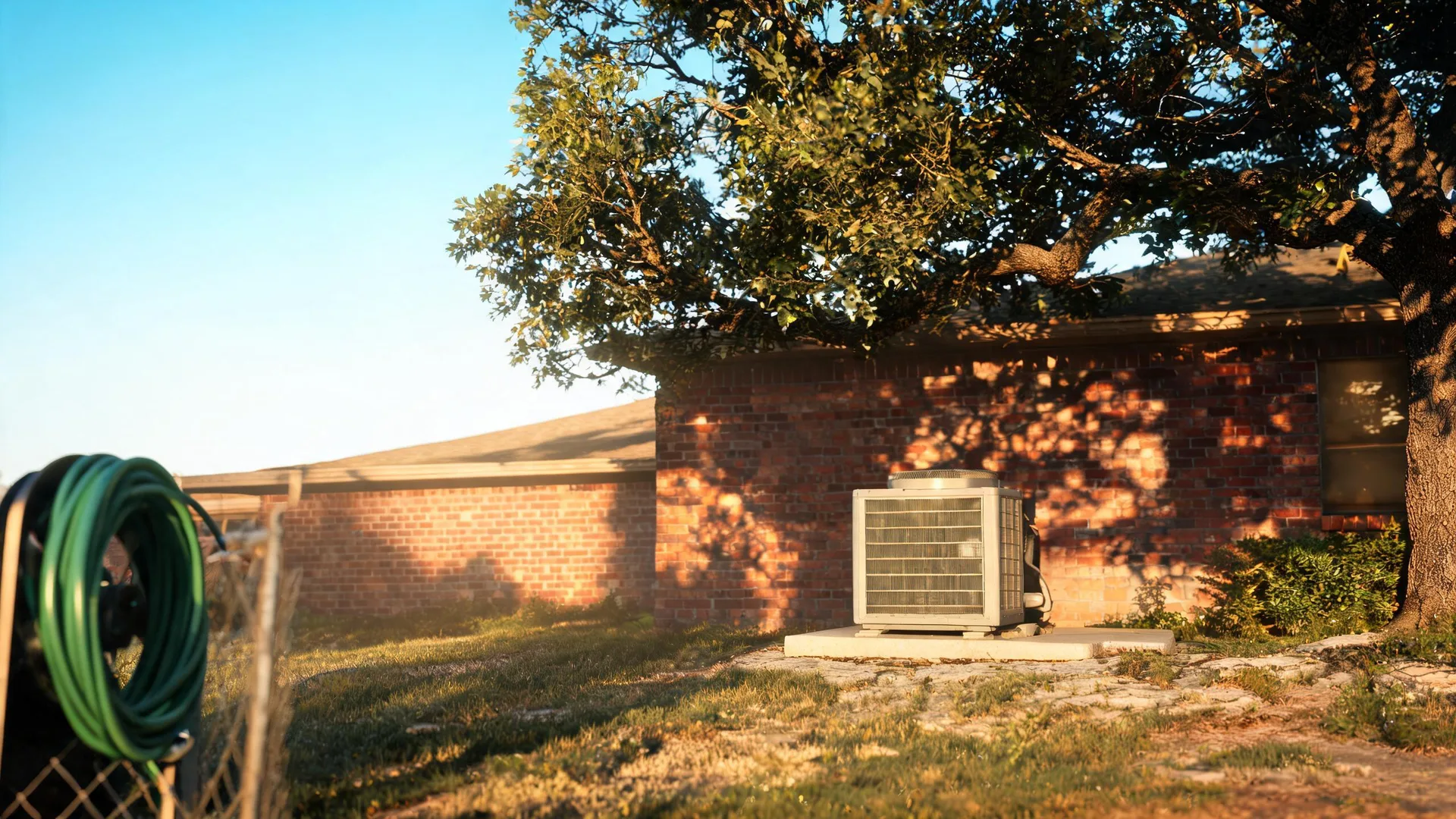
A grey residential air-conditioning condenser unit mounted on a concrete pad beside a house, photographed at sunset.

Heat Pump Repair in Hutchinson, MN

Tell us about the job

Takes about a minute. No obligation.

RepairHeat PumpMcLeod County, MN
Step 1 of 2

What ZIP code is the job in?

Nine degrees, night after night

A heat pump in Hutchinson pulls heat out of outdoor air that averages 9°F overnight across December, January and February. That's the hardest condition the unit faces, and it's not a one-time cold snap, it's the whole winter.

Snow and ice add their own wear

McLeod County saw 31 winter storms between 2015 and 2024, with heavy snow, ice and blizzard conditions around the outdoor unit. The coil and the defrost cycle take that on every time, on top of the cold air they're already working against.

9 months
September through May, your system heats
3 months
June through August, it cools
9°F
the average winter night it heats against
80°F
the average summer afternoon it cools against
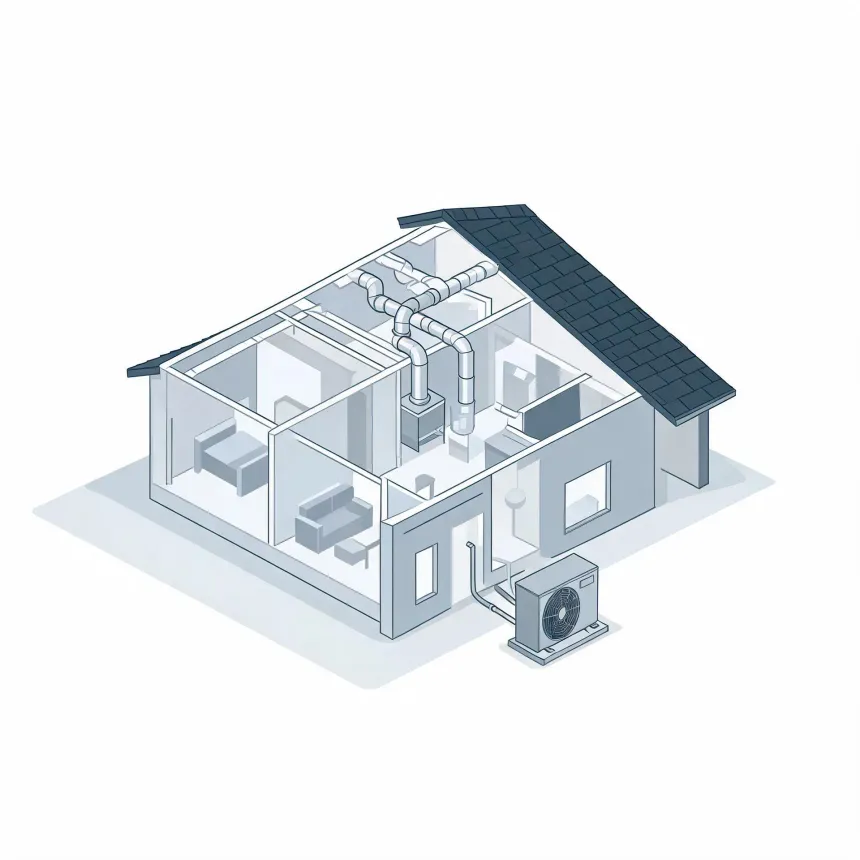
Isometric line illustration of a cutaway house showing interior rooms with furniture, ceiling ductwork connected to an indoor air handler, and an outdoor condenser unit linked by refrigerant lines.
Your system heats September through May and cools June through August.

NOAA nClimDiv, 1991–2020 normals

Half the homes in McLeod County were built in 1979 or later.

A heat pump that came with a newer house still has a lot of working life in it, and that makes repair worth a straight look before anything else.

Nine months of heat, three of cooling, and the switch in September is when a weak part gives out

Cooling runs June through August
Heat runs September through May
44 hail events from 2015 to 2024
Running this hard costs more in MinnesotaMinnesota power ran 15.45 cents per kilowatthour in 2024, and a heat pump working this hard burns through it every month it runs rough.

If your heat pump is struggling, don't guess at the cause. A tech can check the defrost cycle, the coil and the refrigerant charge and tell you which one is behind it. Those are the parts taking the brunt of a Hutchinson winter, so they're the first place to look. A repair done right there holds up through the next stretch of 9 degree nights. A fix aimed at the wrong part tends to come loose again once the cold sets back in.

A heat pump running rough gets expensive fast here

A heat pump that's short cycling or running constantly is pulling power the whole time it does it, and at 15.45 cents per kilowatthour that adds up fast in a Minnesota winter. Getting the coil, defrost cycle or charge checked now stops that cost before the next cold stretch hits.

Find a contractor
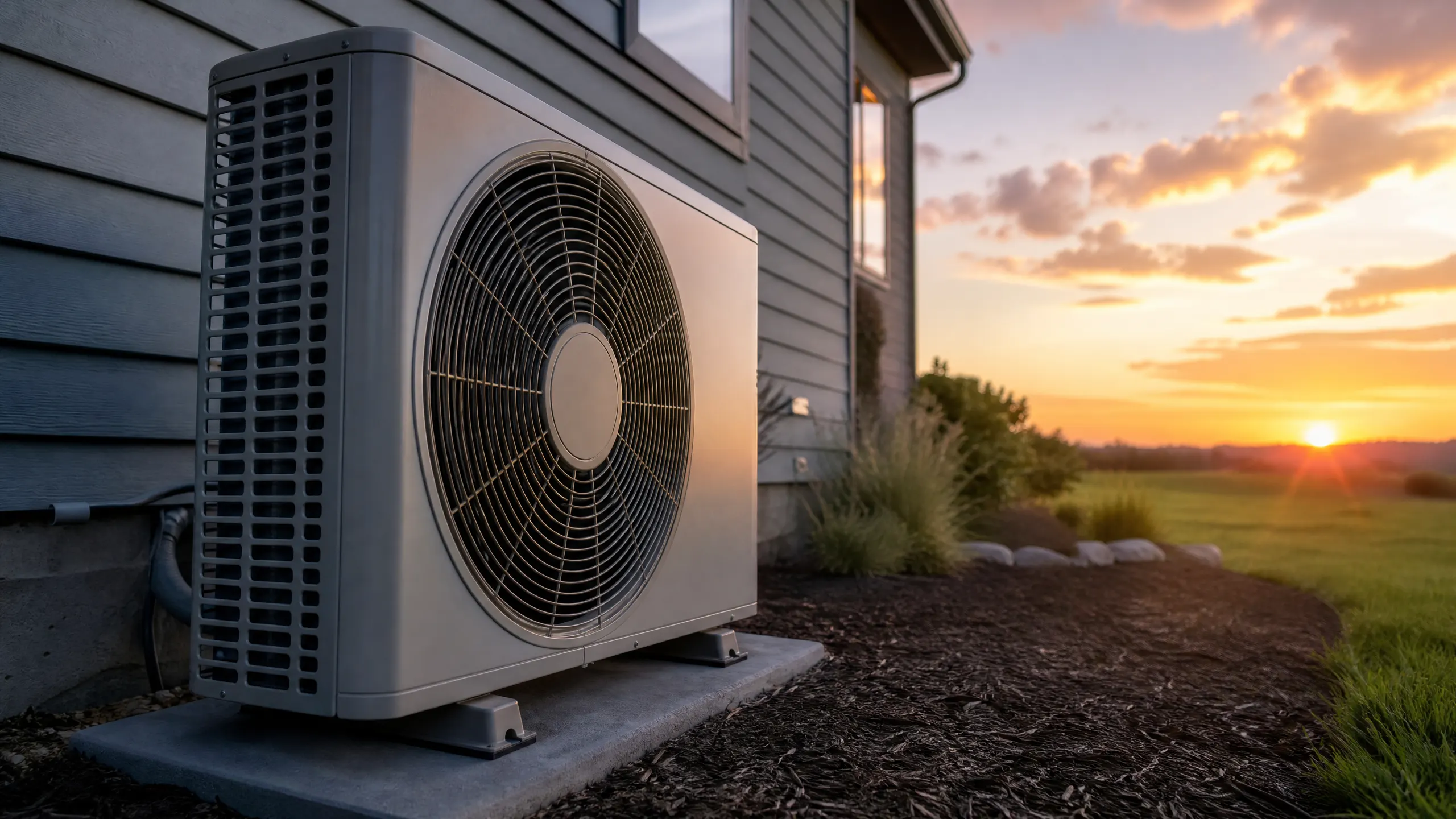
A gray heat pump condenser unit mounted on a concrete pad against the gray lap-siding exterior wall of a house.

Ask what year it went in

If your heat pump came with the house, find out when that was before you decide anything. A unit installed within the last decade or so still has years of service ahead of it, and that's worth knowing before you let anyone talk you into replacing it over a repair. Check the installation date on the unit itself or ask the tech to look when they're out. That one number tells you more than guessing ever will.

Wear shows up in a handful of places

Most heat pump failures trace back to the same short list of parts. The capacitor weakens and can't give the compressor or fan motor the jolt it needs to start. The contactor pits from years of opening and closing until it sticks or stops making contact. The reversing valve, which switches the system between heating and cooling, can stick in one position. The defrost control board can misread the coil temperature and skip a cycle the unit actually needs. None of these failures are rare. They're what happens to a machine that runs almost every day of the year.

The compressor fails differently

The compressor is the one part that doesn't fail from everyday wear the way a capacitor or sensor does. It usually goes because something else went wrong first and wasn't caught. Running low on refrigerant for a long stretch makes it work harder than it was built for. A dirty or iced coil does the same thing by making heat exchange harder than it should be. Electrical faults can also take it out directly. A compressor that fails on its own with no warning sign beforehand is the exception, not the rule.

A heat pump that's struggling usually tells you before it quits outright. Air coming from the vents that's barely warm, or just a little cooler than the room, often means it's stuck in a cycle it can't finish. Ice building up on the outdoor unit and staying there instead of clearing during defrost is another one, a little frost is normal but a solid coating isn't. Listen for it cycling on and off in short bursts rather than running a steady stretch, that's hard on the compressor and it's usually not subtle once you notice it. A hissing or bubbling sound near the lines can point to refrigerant escaping, and that's not something that fixes itself or waits politely until spring. If the outdoor fan isn't turning while the system's calling for heat, that's worth a call the same day, not the same week.

A diagnostic visit starts outside, at the unit itself. The tech checks whether the outdoor fan and compressor are running, looks at the coil for ice that didn't clear, and watches how the system moves through a defrost cycle if it's due for one. Gauges go on the lines to check refrigerant pressure, since low charge shows up there before it shows up anywhere else. Inside, the tech checks the air coming off the indoor coil and tests the components that control the system, like the contactor, the capacitor and the reversing valve. Each reading points toward or away from a specific part, and that's how the cause gets narrowed down instead of guessed at. By the end, you should hear which part is behind it and what fixing that part involves.