





A row of illuminated two-story brick houses with front porches and mature trees photographed at twilight.

Heat Pump Repair in Faribault, MN

Tell us about the job

Takes about a minute. No obligation.

RepairHeat PumpRice County, MN
Step 1 of 2

What ZIP code is the job in?

A heat pump in Rice County earns its keep. Zone 6A means a long heating season, and the compressor is leaning hard through cold stretches for most of the year. Summer doesn't give it much of a break either, with the dew point averaging 60°F across June, July and August. The outdoor unit takes more than just temperature, too. Hail has hit the county 41 times between 2015 and 2024, and winter storms have come through 34 times in that same stretch. All of that adds up to parts working harder than they would somewhere milder. When a heat pump here starts acting up, it's usually not random. It's wear showing up on schedule.

9 months
September through May, your system heats
3 months
June through August, it cools
10°F
the average winter night it heats against
80°F
the average summer afternoon it cools against
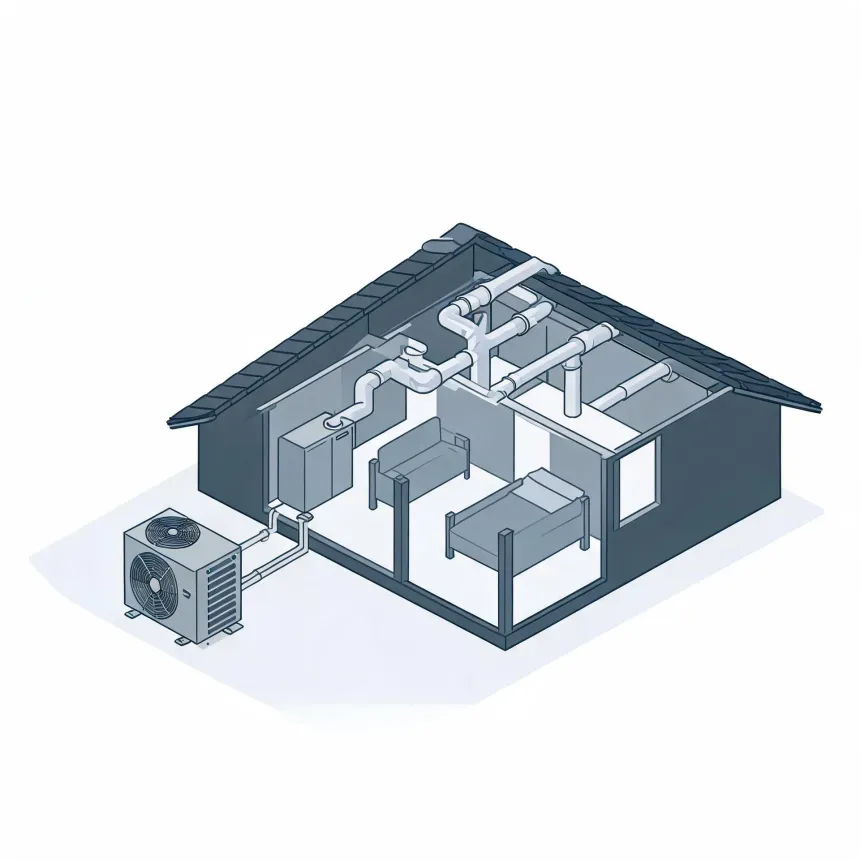
Isometric cutaway illustration of a house showing interior ductwork, an indoor air handler, and beds, with an outdoor condenser unit connected by lines outside the wall.
Your system heats September through May and cools June through August.

NOAA nClimDiv, 1991–2020 normals

Electricity in Rice County runs 15.84 cents per kilowatt-hour.

A heat pump that's struggling pulls more power to do the same job, and you pay for every extra minute it runs.

Nine months of heat, three of cooling, and the first cold snap or first hot week is when a weak part gives out

Cooling runs June through August
Heat runs September through May
41 hail events from 2015 to 2024

A heat pump that's short cycling or running constantly doesn't fix itself. It keeps pulling power at that higher rate every single day it's left alone. Waiting through a billing cycle to see if it gets better just answers the question at your own expense. If the unit is icing up, struggling to hit the set temperature, or running longer than it used to, that's the signal to get a technician out now rather than after the next bill arrives.

Get the Cause Diagnosed, Not Just the Symptom

A heat pump working this hard needs a real diagnosis when something's off, not a guess. Hail, snow and ice have all had their chances at the outdoor unit, and the compressor has been leaning hard for most of the year besides. A technician can look at what's actually worn and fix that, instead of you waiting to see if it gets worse.

Find a contractor
A man in a cap, dark long-sleeve shirt and brown work pants, seen from behind, steps up onto a porch toward a dark green door while carrying a canvas tool bag.
A white mini-split heat pump outdoor unit mounted on a concrete pad beside a gray-sided house, surrounded by gravel and green shrubs.

Small Problems Don't Hold Still

A heat pump that's struggling doesn't stay at the same level of trouble. A failing capacitor makes the compressor draw harder to start every cycle, and that extra draw wears the windings a little more each time. A refrigerant leak gets worse under load, not better, and running a system low on charge lets the compressor run hotter than it should. Ice on the outdoor coil blocks airflow, so the system works harder to move the same heat, which pulls more ice and chokes it down further. None of these fix themselves by running longer. They compound.

What You Can Check Yourself

Look at the outdoor unit first. Clear away leaves, grass clippings or snow piled against it, since blocked airflow around the coil makes the whole system struggle. Check the air filter inside and swap it if it's gray or clogged. Walk through the house and make sure no vents are closed or blocked by furniture. Check the thermostat batteries and make sure it's set to the mode you want, since a setting bumped to the wrong mode will make the unit act like it's broken when it isn't. If you have a breaker panel you can safely access, check that nothing has tripped.
What to Leave Alone

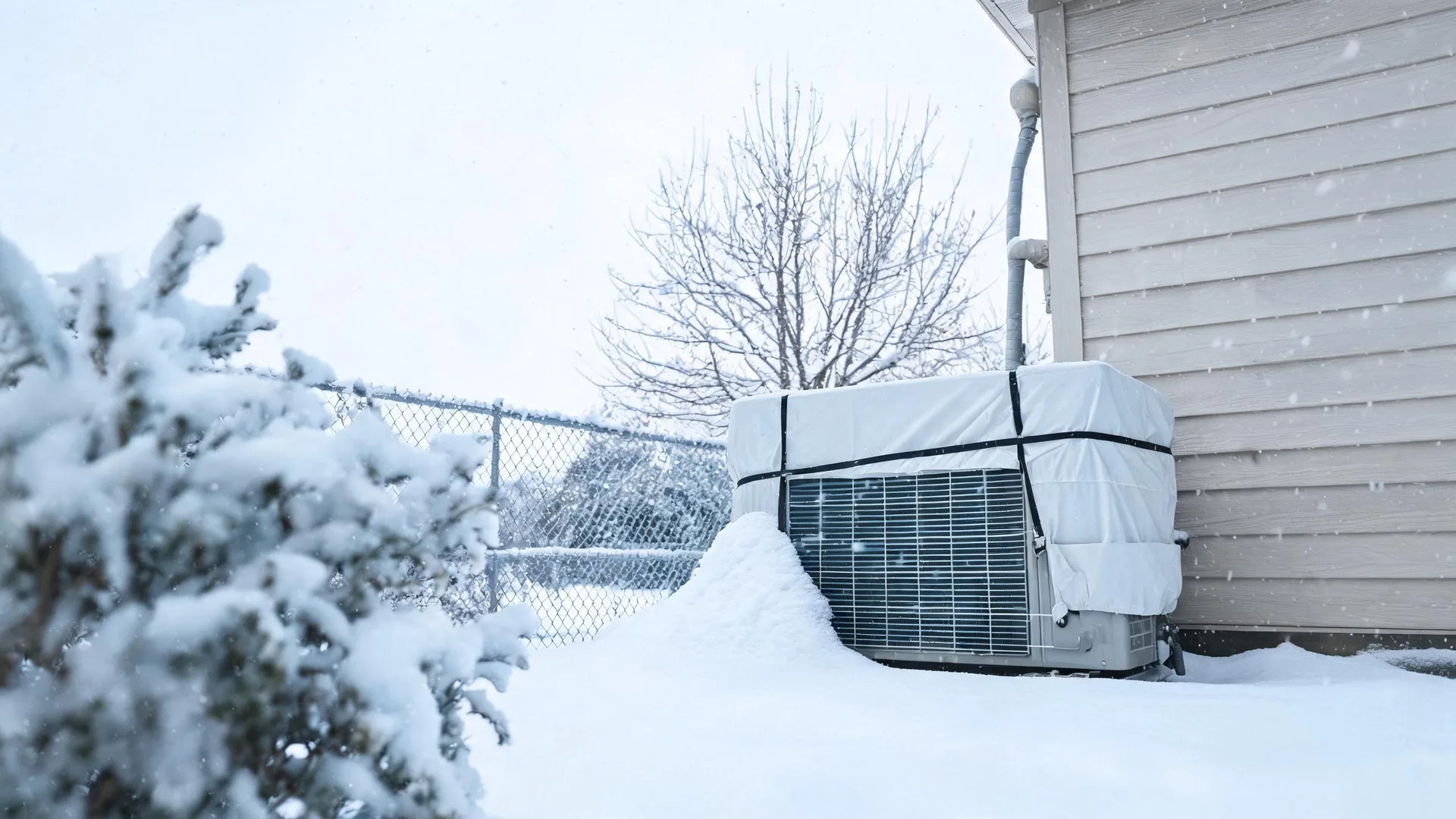
Don't take a panel off the outdoor unit or touch anything inside it. The compressor and the wiring around it can hold a charge even when the power's off. If the outdoor coil has ice on it, don't chip at it or pour hot water over it. Switch the thermostat to fan only or off and let it melt on its own, since forcing ice off can bend the fins or crack the coil. If you smell anything burning or hear grinding or screeching from the unit, shut it off at the thermostat and leave it off. Running a system that's already failing usually turns a repair into a replacement.

Most heat pump failures trace back to a handful of parts, and they tend to go in predictable ways. The capacitor is usually first. It gives the compressor and fan motor the jolt they need to start, and it weakens slowly until one day it can't deliver that jolt at all. The contactor is next, since it's switching high voltage every time the system cycles on and off, and the contacts inside it pit and burn with age until they stop making good contact. Refrigerant doesn't get used up, so a system low on charge has a leak somewhere, usually at a fitting or a coil, and it only gets worse under load. The outdoor fan motor wears out from running outside in all weather, and once it slows down or quits, the compressor overheats because it isn't getting rid of heat fast enough. A dirty outdoor coil causes a lot of the same trouble as a bad fan motor, just slower, because caked dirt blocks airflow the same way a dead motor does.

A diagnostic visit starts outside at the unit itself, not with a guess. A technician checks refrigerant pressure and the temperature split between the air going in and the air coming out, since that split says whether the system is actually moving heat the way it should. They test the capacitor under load, not just by looking at it, because a capacitor can look fine and still be too weak to start the compressor reliably. They check the contactor for pitting and the wiring for loose connections, since a connection that's heating up under load will fail again soon even if it's working today. Amp draw on the compressor and both fan motors gets checked against what that model should pull, which catches a motor that's struggling before it quits outright. The point of all this is to find the part that's actually failing, not just the symptom it's causing, so the repair holds instead of masking the problem for a few weeks.