






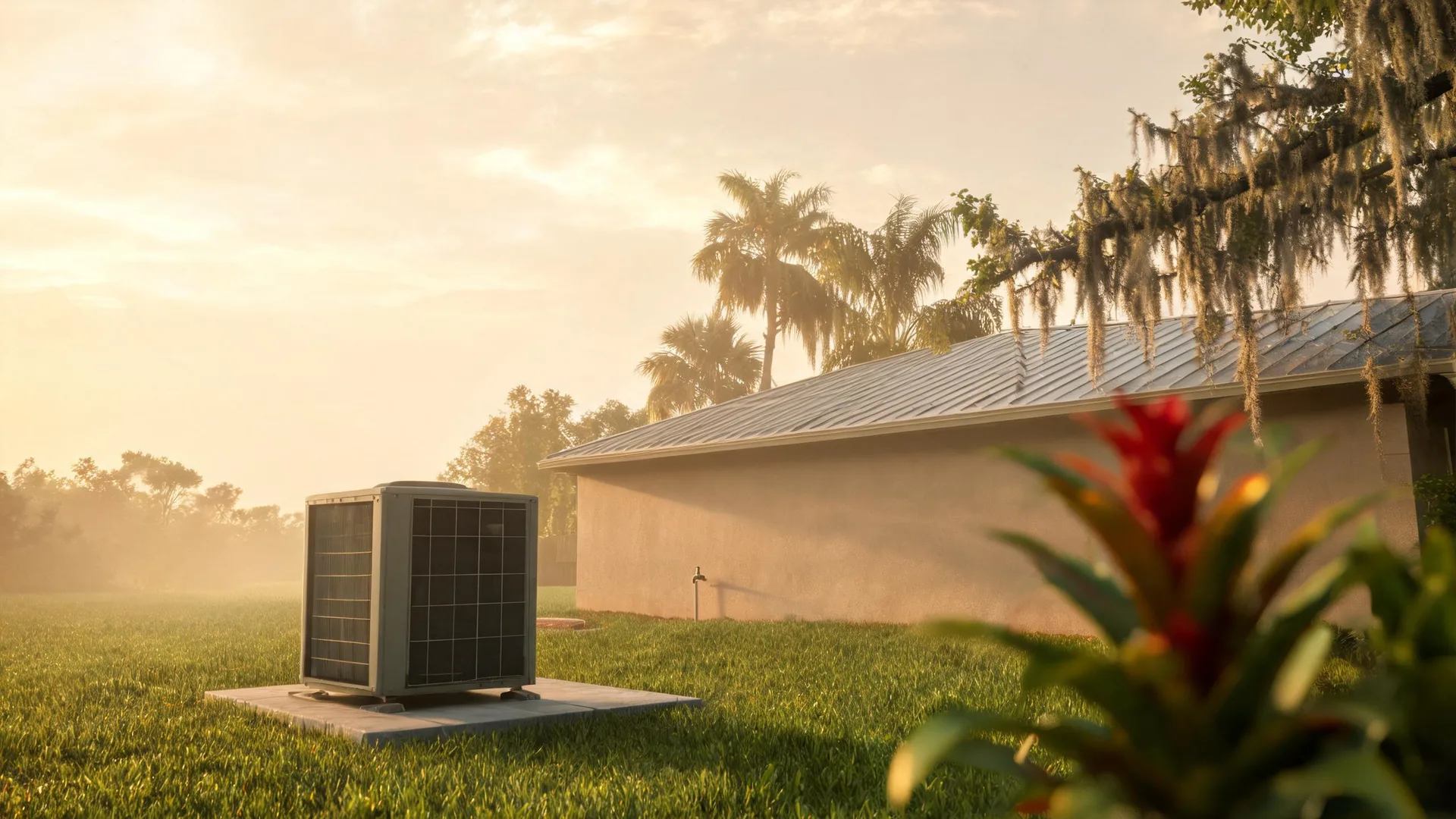
A grey air-source heat pump outdoor unit mounted on a concrete pad next to a modern white-rendered residential house.

Heat Pump Repair in Elk River, MN

Tell us about the job

Takes about a minute. No obligation.

RepairHeat PumpSherburne County, MN
Step 1 of 2

What ZIP code is the job in?

A heat pump that's struggling usually tells you before it quits outright. Air coming from the vents feels cool or barely warm when it should feel hot. The outdoor unit runs constantly and never cycles off, or frost builds up on the coil and stays there instead of melting away on its own. Listen for a grinding or squealing from the outdoor fan motor, or a hard clicking when it tries to start and fails. If the system switches between heating and cooling on its own, or won't switch at all when you change the thermostat, that points to a problem with the reversing valve. Any of these is worth a call soon. A heat pump under strain tends to fail at the compressor, and that failure is often sudden.

9 months
September through May, your system heats
3 months
June through August, it cools
8°F
the average winter night it heats against
79°F
the average summer afternoon it cools against
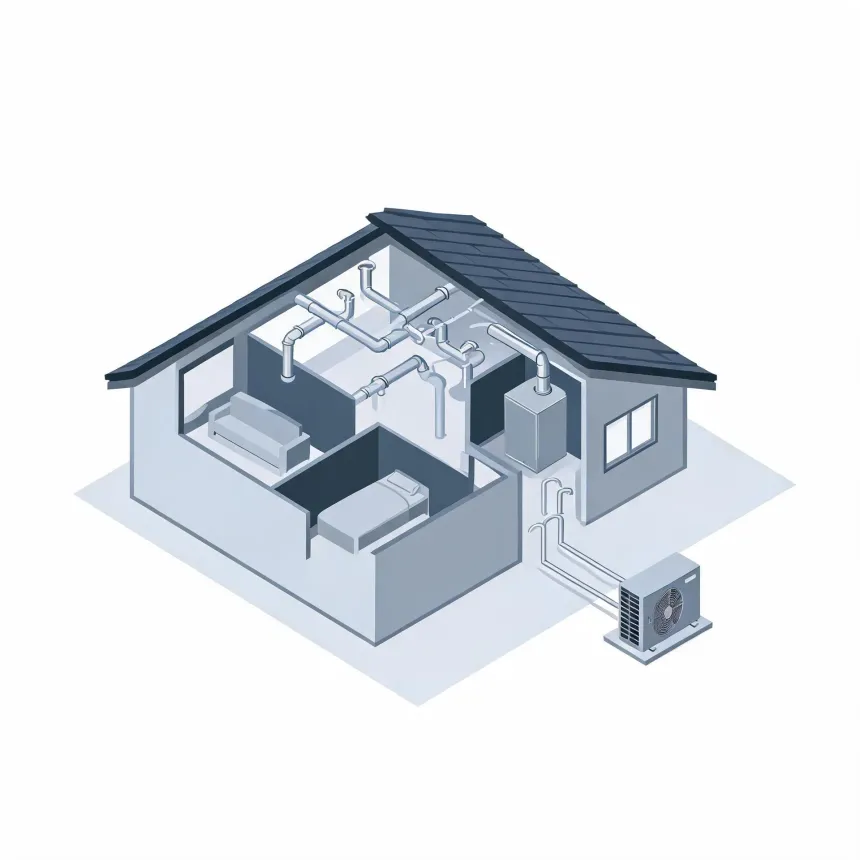
Isometric cutaway illustration of a small house showing ducted air distribution, an indoor air handler, and an outdoor condenser unit connected by lines, with a sofa and bed in the rooms.
Your system heats September through May and cools June through August.

NOAA nClimDiv, 1991–2020 normals

Heat pumps here run heat from September through May, close to nine months a year.

A heat pump with a weak part is most likely to fail in August, right before that nine-month stretch of heat begins.

Half the homes here were built in 1996 or later, so age probably isn't your heat pump's problem

Half the homes here were built by 1996
53 hail events from 2015 to 2024
23 winter storms from 2015 to 2024
Elk River pays more for every hour a heat pump runs roughMinnesota electricity ran 15.45 cents per kilowatt-hour in 2024.

Hail is the other thing working against a heat pump here. Sherburne County has had 53 hail events between 2015 and 2024, and the outdoor unit sits right in the open for all of them. A hit to the coil can bend the fins and block airflow, and a hit near the top can damage the fan blade or its motor mount without cracking anything you'd notice from across the yard. The damage doesn't always show up the day it happens. Sometimes it's months later, as a noise that wasn't there before or a system that suddenly won't hold up on a cold night the way it used to. That's one more reason a repair should start with a real diagnosis rather than a guess, since what looks like normal wear might trace back to a storm instead.

A struggling heat pump costs more here. Get it looked at now.

At 15.45 cents a kilowatt-hour, a heat pump that's running rough is costing you more every day it's left alone. Getting the repair done now stops that waste instead of paying it through the rest of the season.

Find a contractor
A man in a worn dark jacket and tan pants, seen from behind, climbs porch steps toward a dark green paneled front door while carrying a canvas tool bag holding a hammer and other tools, with a potted conifer shrub to the right.
A white mini-split heat pump outdoor unit mounted on a concrete pad beside a gray-sided house, surrounded by gravel and green shrubs.

Worth fixing, not worth replacing

If your heat pump came with the house, check the paperwork or ask the tech for the install date before you decide anything. A unit still inside its working life is worth repairing. Replacement makes more sense for something already past it, not for a system that's just having a bad week.

What actually wears out

The compressor, the reversing valve, and the defrost control are the parts that fail most on a heat pump. The compressor is the heart of the system, and once it's worn, it tends to go all at once rather than giving much warning. The reversing valve gets worked every time the system switches between heat and cool, and that constant switching is what wears it down. The defrost control manages when the outdoor coil clears itself of frost, and if it starts misreading the cycle, ice builds up and the whole system loses capacity.
Why it matters for your repair

Knowing which part failed changes what the fix looks like. A bad capacitor or contactor is a straightforward swap. A failing compressor or reversing valve is a bigger job, and worth weighing against how much life the rest of the system has left. A tech checking refrigerant charge, electrical readings, and the condition of the outdoor coil can tell you which kind of problem you're actually looking at before any work starts.

A heat pump that's low on refrigerant or struggling to switch modes doesn't just run poorly, it runs longer. The thermostat keeps calling for heat the system can't fully deliver, so the compressor stays on trying to close a gap it can't close. That extra runtime is exactly what finishes off a weak compressor, and it's also what pushes a frosted coil past the point where the defrost cycle can keep up with the ice. A reversing valve that's starting to stick gets worse the same way, since every extra cycle it's forced through is another chance for it to stick for good instead of just hesitating. None of this fixes itself by giving the system more time to work it out. The longer a struggling heat pump keeps running, the more likely it ends up replacing a part instead of repairing one.

Repair versus replacement comes down to what failed and what it would take to fix. A bad capacitor, a stuck contactor, a dirty sensor, those are inexpensive parts doing a small job, and swapping one brings the system right back to normal. The compressor is a different question. It's sealed, it's the most expensive part in the unit, and a failing compressor often means the rest of the system has been straining for a while already. When a tech opens up the outdoor unit, they're looking at more than just what broke. They're checking whether the coil is clean, whether the wiring and connections look sound, whether the rest of the system is in shape to keep running once the one bad part is replaced. A system that's otherwise solid is worth repairing almost every time. One where the same kind of failure keeps coming back is telling you something different.