




A grey outdoor HVAC unit mounted on a concrete pad beside the beige-sided exterior wall of a suburban house.

Heat Pump Repair in East Grand Forks, MN

Tell us about the job

Takes about a minute. No obligation.

RepairHeat PumpPolk County, MN
Step 1 of 2

What ZIP code is the job in?

Polk County saw 353 severe weather events between 2015 and 2024. That includes 136 cases of damaging wind, 98 hail events, and 16 tornadoes. Your outdoor unit sits outside through all of it, with the coil and fan exposed to whatever blows through. Hail dents fins and bends the cabinet, and wind-driven debris can nick the coil or jam the fan without stopping it outright. A heat pump can keep running after a storm like that and still be working harder than it should. If your unit has been through a bad storm, it's worth having someone look even if nothing seems wrong yet.

9 months
September through May, your system heats
2 months
July through August, it cools
2°F
the average winter night it heats against
78°F
the average summer afternoon it cools against
Isometric cutaway illustration of a single-story house showing interior rooms with furniture, an attic duct system connected to an indoor air handler, and an outdoor condenser unit linked by lines along the exterior wall.
Your system heats September through May and cools July through August.

NOAA nClimDiv, 1991–2020 normals

Electricity in Polk County averages 12.66 cents per kilowatt-hour, cheaper than most of the country.

A heat pump struggling to heat or cool still runs every day it's left broken, and that adds up even at this rate.

Wind, hail, winter storms, and one outdoor unit taking all of it

136 damaging wind events from 2015 to 2024
98 hail events from 2015 to 2024
101 winter storms from 2015 to 2024
The First Cold Snap Finds the Weak PartHeat comes on in September here, and a unit that limped through summer storms often fails the week it has to switch over.

Half the homes in Polk County were built in 1971 or earlier. A heat pump that came with a house that old has likely been replaced at least once already, and the replacement has its own age on it. Older homes also tend to keep their original ductwork and electrical setup, and a heat pump depends on both to run the way it was rated to. None of that means your system is done. But if yours came with the house, or you're not sure when it was put in, that history matters more than whatever it's doing right now. A repair is only worth paying for if the system has enough life left to be worth repairing.

If It Took a Storm, Get It Checked Before It Fails You

If your outdoor unit has been through hail or a bad wind storm, don't wait for it to act up. A dented coil or a fan nicked by debris can run for weeks before it quits, usually on a day you need it most. Have it looked at now, while it's still just a question and not a cold house.

Find a contractor
A gray heat pump outdoor unit mounted on a concrete pad next to the stone-accented exterior wall of a house.

Ask Its Age Before You Pay for the Repair

Ask whoever comes out to look how old the heat pump actually is, not how old the house is. If it came with the house or nobody's sure, that's worth settling before any repair gets priced. A system with real life left is worth fixing. One that's already past what it was built to run may not be, and the only way to know is to ask.

What Actually Wears Out

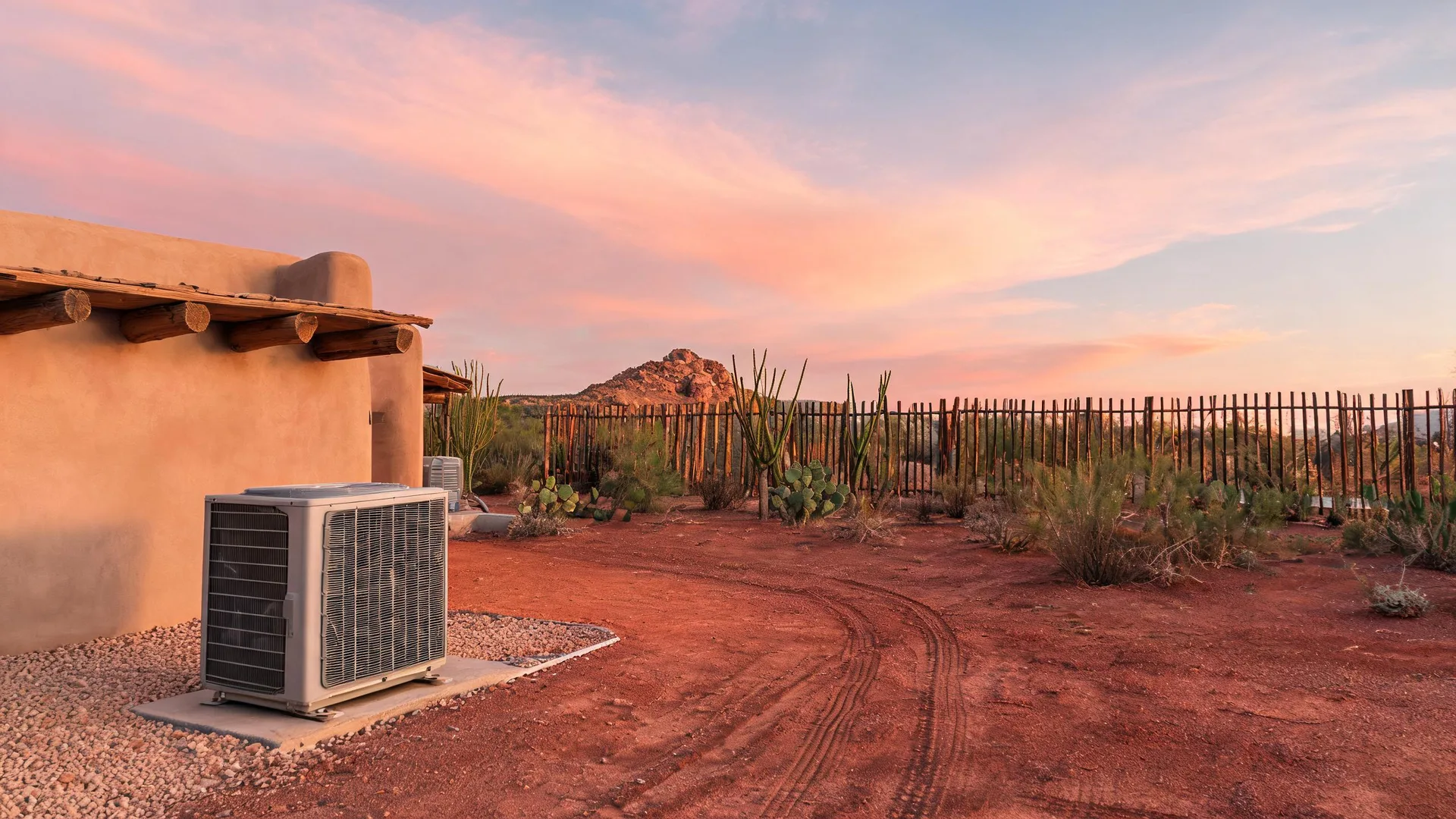
The compressor is the part that ends most heat pumps, and it rarely fails on its own. It usually goes because something else let it down first, a refrigerant leak that ran it low on charge, or a weak capacitor that made it strain every time it started. The reversing valve is the other common failure point, since it's the part working hardest on this kind of system, switching the unit between heating and cooling. When it sticks, the system can get stuck in one mode or stop warming the air at all.
Why Catching It Early Matters

A heat pump rarely quits all at once. It usually gives some warning first: short cycling, ice building up on the outdoor coil when it shouldn't, air coming out barely warm. Any of those signs means a part is already failing, even while the system keeps running. Left alone, a struggling component drags down the ones around it, and a repair that would have been simple turns into a compressor replacement.

A refrigerant leak is a good example. The system keeps running low on charge, so the compressor works harder to move the same amount of heat, and it runs hotter doing it. Ice on the outdoor coil is another. Left alone, that ice blocks airflow across the coil, so the system pulls in less heat and runs longer to make up for it, which feeds more frost back onto the coil. A failing capacitor does something similar to the motors it starts. Every hard start wears it down a little more, and a weak capacitor under more strain fails faster than one left alone. None of these start as emergencies. They start as a system quietly working past what it was built to handle, and the part under the most strain is usually the one that gives out first.

Polk County's weather doesn't let up on this system. Damaging wind hit the county 136 times between 2015 and 2024. Hail came through 98 times. Winter storms, the heavy snow and ice and blizzards, hit 101 times in that same stretch. Every one of those is a chance for something on the outdoor unit to get bent, nicked, or strained without anybody knowing it yet. A heat pump that's been through that much weather needs someone checking what the storms actually did to it, not just confirming that it still turns on. Have it diagnosed properly, because a fix that only addresses what you can hear or feel can miss the part the last storm already weakened.