






Three lit brick homes on a tree-lined residential street photographed at dusk.

Heat Pump Repair in Duluth, MN

Tell us about the job

Takes about a minute. No obligation.

RepairHeat PumpSt. Louis County, MN
Step 1 of 2

What ZIP code is the job in?

Half the homes in St. Louis County were built in 1962 or earlier. If yours is one of them, the heat pump itself is probably newer than the house, but there's no way to know its age without checking the unit. An older heat pump nearing the end of its life can still run, but a major repair on it is a gamble. Before paying for a big part or a compressor job, it's worth finding out how many years the system has left in it.

10 months
September through June, your system heats
1°F
the average winter night it heats against
76°F
the average summer afternoon it cools against
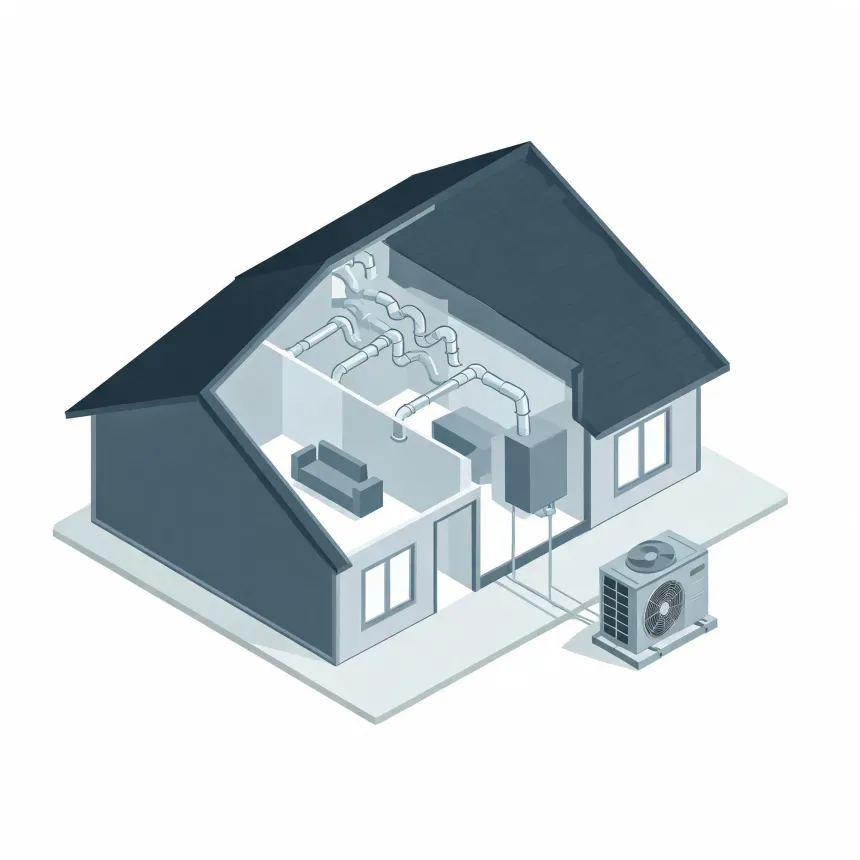
Isometric cutaway illustration of a house showing interior ductwork, an indoor air handler unit, and an outdoor condenser unit beside the building.

St. Louis County sees winter storms, hail and damaging wind most counties don't deal with.

A heat pump out here takes more punishment year after year, so when something fails, a real diagnosis matters more than a quick patch.

This county sees more storms than most, and the outdoor unit sits right in them

695 severe weather events from 2015 to 2024
13% of homes statewide lost power a day or more in 2024
284 damaging wind events from 2015 to 2024
Electricity Here Doesn't Make It CheapSt. Louis County pays 16.14 cents per kilowatt-hour, more than most US counties, and a struggling heat pump burns through it fast

Heat here starts up in September and runs until June. That first cold stretch is when a heat pump that was limping along in spring finally gets tested, and whatever was marginal before tends to fail outright once it has to carry real demand. August is the window before that load hits. A unit that struggled last winter and got by on borrowed time all summer isn't going to do better this year, especially with overnight lows averaging 1°F through December, January and February. Getting it looked at before September beats finding out on the first hard night it can't keep up.

Find out what the storms wore down, then fix that

When a heat pump out here breaks down, the cause is rarely random. Storms, hail and wind put real strain on the outdoor unit year after year, and a part that finally gives out is usually one that's been working too hard for too long. A proper diagnosis finds that part instead of just patching over the symptom, so the repair actually holds.

Find a contractor
A man in a dark T-shirt, tan work pants and a backward cap walks up stone steps toward a dark green door, carrying a worn canvas tool bag, with a potted shrub in a green ceramic planter beside him.
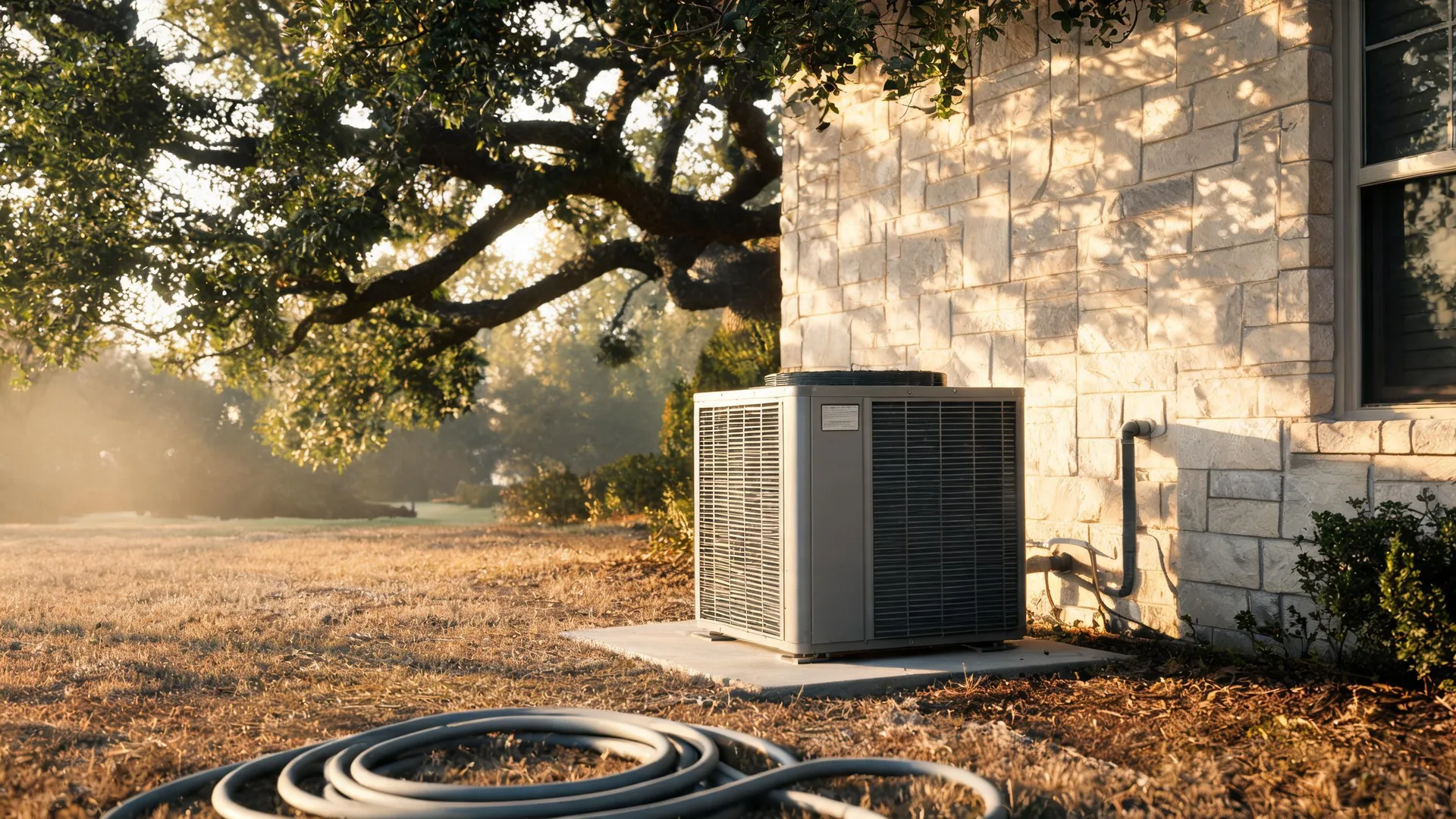
A gray air-source heat pump mounted on a concrete pad next to a house with gray vinyl siding, surrounded by gravel and flanked by green shrubs and white hydrangea flowers.

Check the Unit Before You Pay for the Repair

The data plate on the unit has the install date, or close to it. That one number tells a contractor how many years the system likely has left, and whether a major repair is worth paying for or just puts off a replacement that's coming anyway. Worth checking before anyone orders a compressor or a major part for this job.

What a Failing Heat Pump Sounds Like

A heat pump in good shape runs quiet. Grinding, rattling or a hard clicking when it starts up usually points to the compressor or a motor bearing wearing out. Short cycling, where it kicks on and off every few minutes instead of running a full cycle, often means a failing sensor or a refrigerant charge that's off. Ice building up on the outdoor coil when it shouldn't be there, or the system blowing air that's barely warm, both mean something inside isn't doing its job anymore.
What's Worth Fixing and What Isn't

A single bad capacitor or a stuck reversing valve is usually a straightforward repair, and the system runs like new afterward. A compressor failure is a different conversation, since that part does most of the work in the whole system and replacing it on its own can cost nearly as much as a new unit. If the system has needed a repair every year recently, that pattern matters more than any one symptom. It's telling you the machine is wearing out faster than it's being fixed.

A heat pump that's struggling doesn't fix itself by staying on. If the charge is low, the compressor keeps trying to pump refrigerant that isn't there, and it runs hotter than it was built to. A reversing valve that's starting to stick gets worked harder every time it's forced through a cycle it can't quite complete. Ice on the outdoor coil blocks airflow, so the system pulls in less heat each time it runs, and runs longer to make up for it, which only builds more ice. None of that wears evenly. It wears whatever's already weakest, and that part is usually what fails next, often taking a second part down with it. A problem caught early is often one part. The same problem ignored for a season can be two or three.

A heat pump that's cycling too much or icing up is working harder than it should, and every extra hour it runs costs more here than it would somewhere with cheaper power. That cost doesn't wait for the unit to fail outright. It shows up on the bill while the system is still limping along, month after month. If the compressor is still good and the problem is a capacitor or a valve, fixing it now stops that drain instead of paying for it a while longer first. The longer a struggling unit keeps running, the more it's costing before anyone calls someone out.