





A lit brick residential street at dusk showing a row of two-story homes with covered porches and mature trees.

Heat Pump Repair in Chaska, MN

Tell us about the job

Takes about a minute. No obligation.

RepairHeat PumpCarver County, MN
Step 1 of 2

What ZIP code is the job in?

A diagnostic visit starts with the tech asking what you've noticed. Short cycles, a unit that runs but doesn't warm the house, ice building up on the outdoor coil, anything like that helps narrow things down before a panel ever comes off. From there the tech checks refrigerant pressures, looks at the reversing valve to see if it's switching the way it should, and tests the capacitor and contactor that get the compressor and fans running. Electrical connections get checked too, since a loose or corroded wire can cause the same symptoms as a failing part. Outside, the coil gets a look for dirt or ice that would block airflow. By the end you should know what's failing, why, and whether it makes sense to repair it or think about replacement.

8 months
October through May, your system heats
3 months
June through August, it cools
9°F
the average winter night it heats against
80°F
the average summer afternoon it cools against
Isometric grayscale illustration of a cutaway two-story house showing interior ductwork, an indoor air handler unit, and an outdoor condenser unit on a pad beside the building.
Your system heats October through May and cools June through August.

NOAA nClimDiv, 1991–2020 normals

Heat pumps in Chaska switch over to heating in October.

A unit that was struggling by the end of last winter will show it again once it has to carry the house through fall.

Electricity here runs 15.45 cents a kilowatt-hour, so a heat pump losing efficiency costs you every month it runs that way

Power costs 15.45 cents a kWh statewide
26 hail events from 2015 to 2024
36 winter storms from 2015 to 2024

Half the homes in Carver County were built in 1996 or later. If yours is one of them, the heat pump likely isn't that old either, especially if it's the original unit that came with the house. A compressor or reversing valve problem in a system that age is usually a repair, not a sign the whole unit is done. Worth finding out what's actually wrong before anyone talks replacement.

Get it looked at early

Problems tend to show up in the first weeks of the season, when the load hits a part that was already weak.

Find a contractor
A dark gray heat pump unit mounted on a concrete pad next to a house with gray siding and a stone veneer wall.

A newer system still has years of running left to show for itself

A system with years left in it still runs day and night once the temperature drops, and that adds up over a season. Ask the tech how many hours a day the unit has been cycling and whether that matches what a system this age should be handling. If it's working harder than it should for its age, that points to a specific part rather than the whole unit wearing out.

Check the thermostat first

Make sure it's set to heat, not cool, and the setpoint is actually above room temperature. Check the batteries if it has a screen that looks dim or blank. People call about a dead heat pump and find out the thermostat lost power.
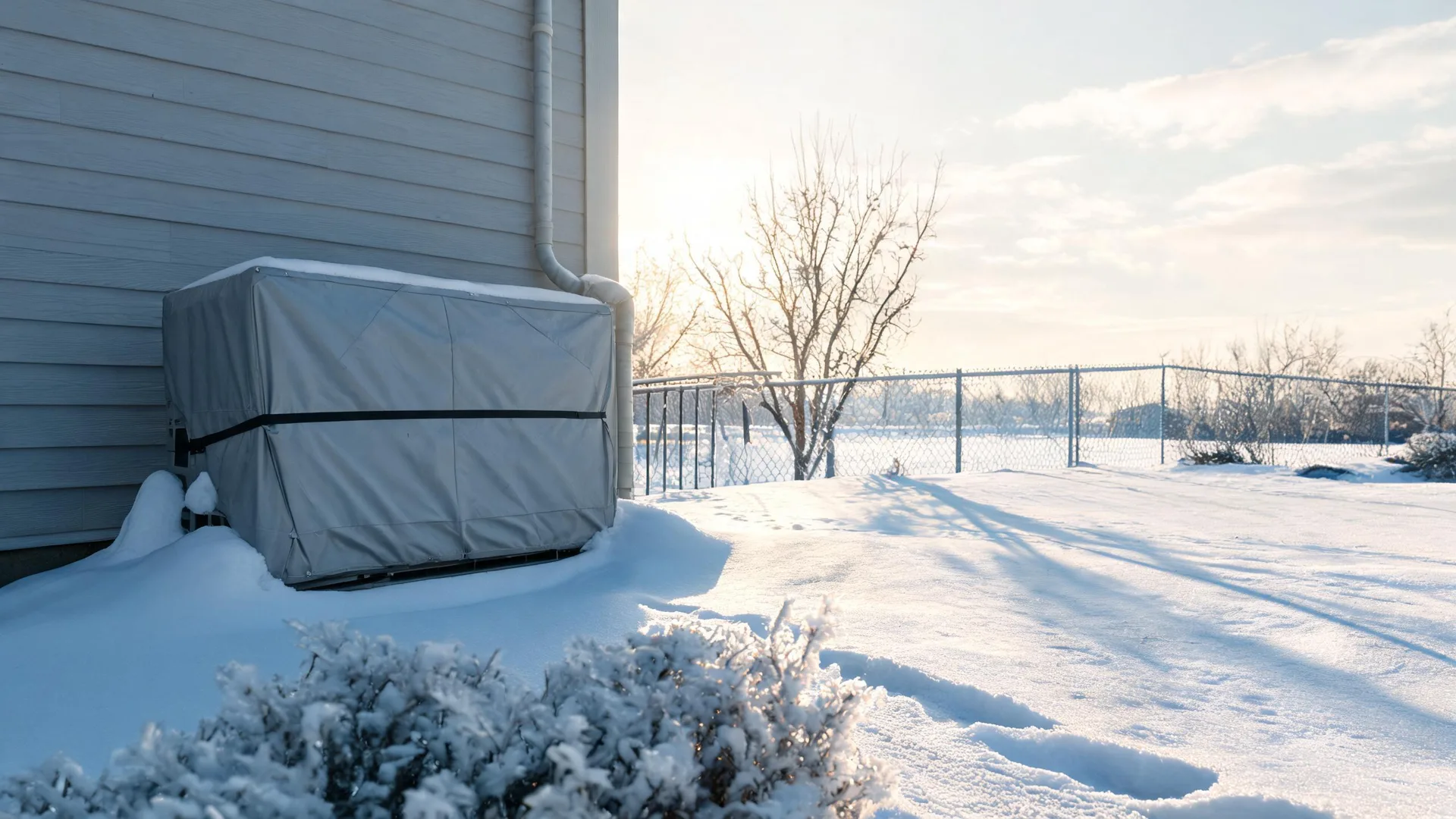
Look at the outdoor unit

Walk outside and see if the outdoor coil is caked in ice or buried in leaves and debris. Some frost in cold weather is normal since heat pumps defrost themselves on a cycle, but a coil fully iced over or a unit surrounded by snow needs airflow restored before anything else gets checked.

Most calls start with the system running longer than it used to, or blowing air that feels cooler than it should for heat mode. Short cycling is another one, where the unit kicks on, runs a few minutes, and shuts off before the house warms up at all. That wears on the compressor every time it happens. A hissing or bubbling sound near the lines usually points to refrigerant escaping somewhere, and low refrigerant makes a heat pump work harder while heating less. If you hear clicking at the outdoor unit but the fan or compressor never starts, that's often the capacitor or contactor failing rather than anything bigger. And if the whole system defrosts constantly, never fully clearing the coil, the defrost control or a sensor is probably not doing its job.

A compressor failure is the one that usually ends a heat pump's life, since replacing it costs most of what a new system would. A bad reversing valve, a failed capacitor, a stuck contactor, or a control board issue are a different story. Those get swapped out and the rest of the system keeps running like it did before. Age of the part matters more than age of the system when you're weighing repair against replacement. Failures in different parts showing up close together are worth paying attention to, since that can mean the system is wearing out in general rather than one piece just giving out on its own.