




Dark-painted single-story houses with gray shingle roofs behind a trimmed green hedge and mown lawn, surrounded by leafy trees under an overcast sky.

Heat Pump Repair in Cambridge, MN

Tell us about the job

Takes about a minute. No obligation.

RepairHeat PumpIsanti County, MN
Step 1 of 2

What ZIP code is the job in?

Winter here runs long, with overnight lows averaging 8°F across December, January and February. A heat pump working against that kind of cold is doing what it was built to do. When one stops keeping up, the cause is usually the same thing a contractor sees in any cold climate. Low refrigerant. A failing defrost control. A worn reversing valve. Ice building up on the outdoor coil faster than the unit can clear it. None of that means the system was wrong for this area. It means something inside it needs a look before the cold gets worse.

9 months
September through May, your system heats
3 months
June through August, it cools
8°F
the average winter night it heats against
79°F
the average summer afternoon it cools against
Isometric line illustration of a cutaway single-story house showing interior rooms, ceiling ductwork, an indoor air handler unit, and an outdoor condenser connected by a line set.
Your system heats September through May and cools June through August.

NOAA nClimDiv, 1991–2020 normals

Heat in Isanti County runs September through May.

August is when a heat pump with a weak part gets tested first.

Half the homes here were built in 1988 or later, and most heat pumps don't outlast the house

Half the homes here were built by 1988
21 winter storms from 2015 to 2024
Winter nights average 8°F

Minnesota electricity ran 15.45 cents per kilowatthour in 2024, and a heat pump leans on electricity hard once the temperature drops. A unit that's low on refrigerant or losing the fight against coil ice doesn't just heat worse, it pulls more power trying to keep up. That cost shows up on every bill until the actual problem gets fixed. Nursing along a heat pump that's struggling costs more than the repair usually does.

Check the age before you decide on repair

If your house came with the heat pump, check the age on the unit before deciding anything. A repair that fixes the actual cause, a low charge, a bad defrost control, a worn reversing valve, is the right move on a system that still has years left in it.

Find a contractor
A gray air-source heat pump mounted on a concrete pad next to a house with gray vinyl siding, surrounded by gravel and flanked by green shrubs and white hydrangea flowers.

Letting it run doesn't fix the problem, it just wears out what's already failing

A heat pump that's struggling still answers the thermostat, so it keeps running even while something inside it is failing. A worn reversing valve can leave it running long cycles without ever reaching temperature, and that extra runtime wears the compressor harder than it should. Ice on the outdoor coil behaves the same way. Every hour the unit runs without clearing that ice, more builds up, and the system keeps pulling in air it can't move past the blockage. A failing defrost control adds to it, either skipping defrost cycles it needs or triggering them too often, so the coil never gets properly clear and the home never gets properly warm. None of this corrects itself by letting the system keep running. The compressor just keeps working against whatever is restricting it, drawing more current and running hotter than it was built to. A compressor pushed that way long enough tends to fail along with the part that was already worn.

A lot of failures start outside, not inside

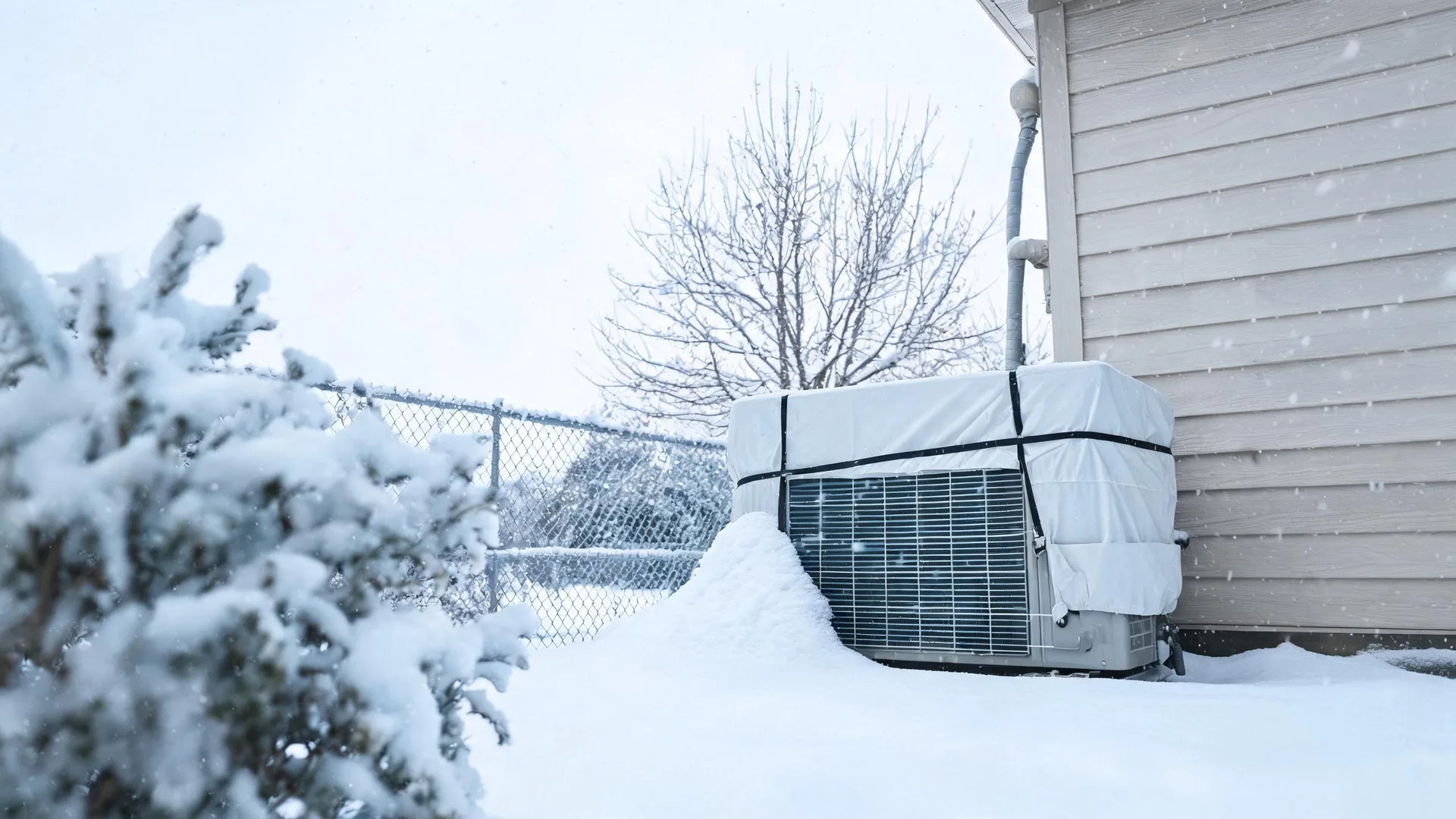
The outdoor unit sits exposed to everything the season brings. The reversing valve, the defrost sensor, the fan motor, all of them take the brunt of running through cold weather. A unit that cycles into defrost constantly, or never seems to, usually has a control or sensor going bad rather than a problem with the whole system.
The compressor rarely fails on its own

By the time a compressor stops, something else was already dragging on it. Low refrigerant forces it to work harder to move the same heat. A dirty or iced coil restricts airflow it needs to breathe. A worn valve makes it push against the wrong side of the system. The compressor is usually the last thing to go, not the first.

Before calling anyone, look at the outdoor unit. A layer of frost in winter is normal, heat pumps build some during a defrost cycle. A thick coat of solid ice that doesn't clear on its own is not. Check that nothing is blocking airflow around the unit, no snow drift, no stored patio furniture, no shrub grown in too close. Inside, swap the air filter if it's been more than a few months, a clogged filter starves the whole system of airflow and can mimic a much bigger problem. Look at the thermostat setting and make sure it's actually calling for heat, not sitting in a mode that's quietly shut the system off. If the outdoor fan isn't spinning at all while the system is running, that's worth noting for whoever comes out. None of this fixes a failing reversing valve or a low charge, but it rules out the simple stuff first.

A diagnostic visit starts outside, at the unit itself, before any panel comes off. A contractor checks the refrigerant charge, because a system running low shows up everywhere else as a symptom, long cycles, weak heat, ice that won't clear. From there it's the defrost control and the sensor that feeds it, checked against what the coil is actually doing rather than what the board thinks it's doing. The reversing valve gets tested under load, since a valve that's worn can seem fine sitting still and fail the moment it's asked to switch direction. Electrical readings on the compressor come next, current draw mostly, because a compressor working harder than it should tells on itself there before it ever stops running. None of this takes guesswork. It takes someone checking each part in the order that rules things out fastest.