




A low ground-level view across a mown lawn toward a dark two-story house with a covered front porch, flanked by large leafy trees under an overcast sky.

Heat Pump Repair in Brainerd, MN

Tell us about the job

Takes about a minute. No obligation.

RepairHeat PumpCrow Wing County, MN
Step 1 of 2

What ZIP code is the job in?

Crow Wing County recorded 297 severe weather events between 2015 and 2024. That includes 139 damaging wind events and 120 hail events, the two that do the most to an outdoor heat pump unit sitting outside in the open. Hail dents fins and bends the cabinet. Wind throws branches and debris into the coil. A unit can take a hit like that and keep running for weeks before the damage shows up as a drop in heat or a strange noise, so a system that still works isn't proof it came through clean. If you know a storm came through hard, it's worth having the outdoor unit looked at even if nothing seems wrong yet.

9 months
September through May, your system heats
2 months
July through August, it cools
5°F
the average winter night it heats against
78°F
the average summer afternoon it cools against
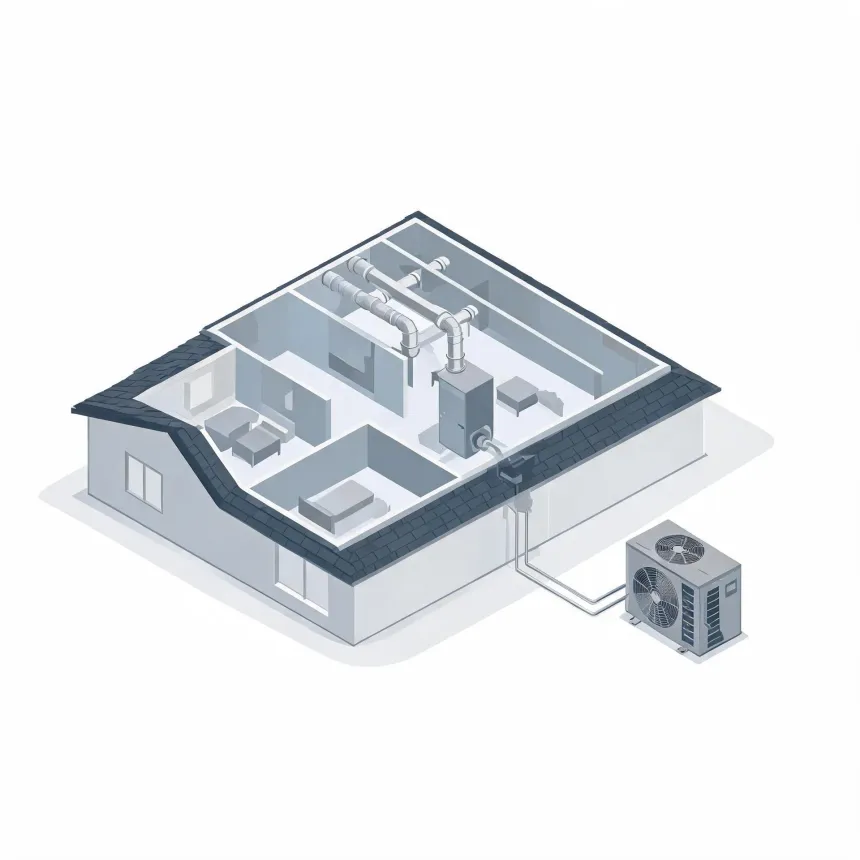
Isometric cutaway illustration of a single-story house showing interior rooms with ductwork, a furnace or air handler, and refrigerant lines running outside to a condenser unit on a pad.
Your system heats September through May and cools July through August.

NOAA nClimDiv, 1991–2020 normals

Electricity here runs 14.76 cents a kilowatt-hour.

A heat pump struggling to heat or cool burns more of it every day you wait on the repair.

This much wind and hail finds every weak spot in a heat pump

139 damaging wind events from 2015 to 2024
120 hail events from 2015 to 2024
33 winter storms from 2015 to 2024

August is the month to get a heat pump looked at here. Heat starts running in September and keeps going through May, nine months on that system. Whatever weakness is sitting in the unit from a summer storm or just from age tends to show up fast once the load hits it, usually in those first cold weeks rather than in the easy months. Winter overnight lows here average 5°F across December, January and February, so a heat pump that's struggling has to keep up with that from the start, not ease into it. Catching a weak part in August means it gets fixed before the system has to run nine months straight on it.

Get the outdoor unit checked before winter finds the damage

If a storm has come through since the outdoor unit was last checked, get it looked at now instead of waiting for a cold snap to find the damage for you.

Find a contractor
A man in a cap, dusty work shirt and tan trousers walks up front steps toward a dark green panelled door, carrying a canvas tool bag with hand tools, beside a potted shrub.
A gray air-source heat pump mounted on a concrete pad next to a house with gray vinyl siding, surrounded by gravel and flanked by green shrubs and white hydrangea flowers.

Built in 1988 or later, your heat pump has years left in it

Half the homes in this county were built in 1988 or later. If that's your house, the heat pump may still be the one it came with, or close to it. A unit that age usually has years left in it, and that changes the math on a repair. Mobile homes make up a small share of the housing stock here, so most readers are dealing with a system built into a standard house rather than one of the harder cases to size and service. Worth checking the install date before you decide anything. A newer system with a bad part is usually a repair, not a replacement.

Most failures start with the outdoor unit

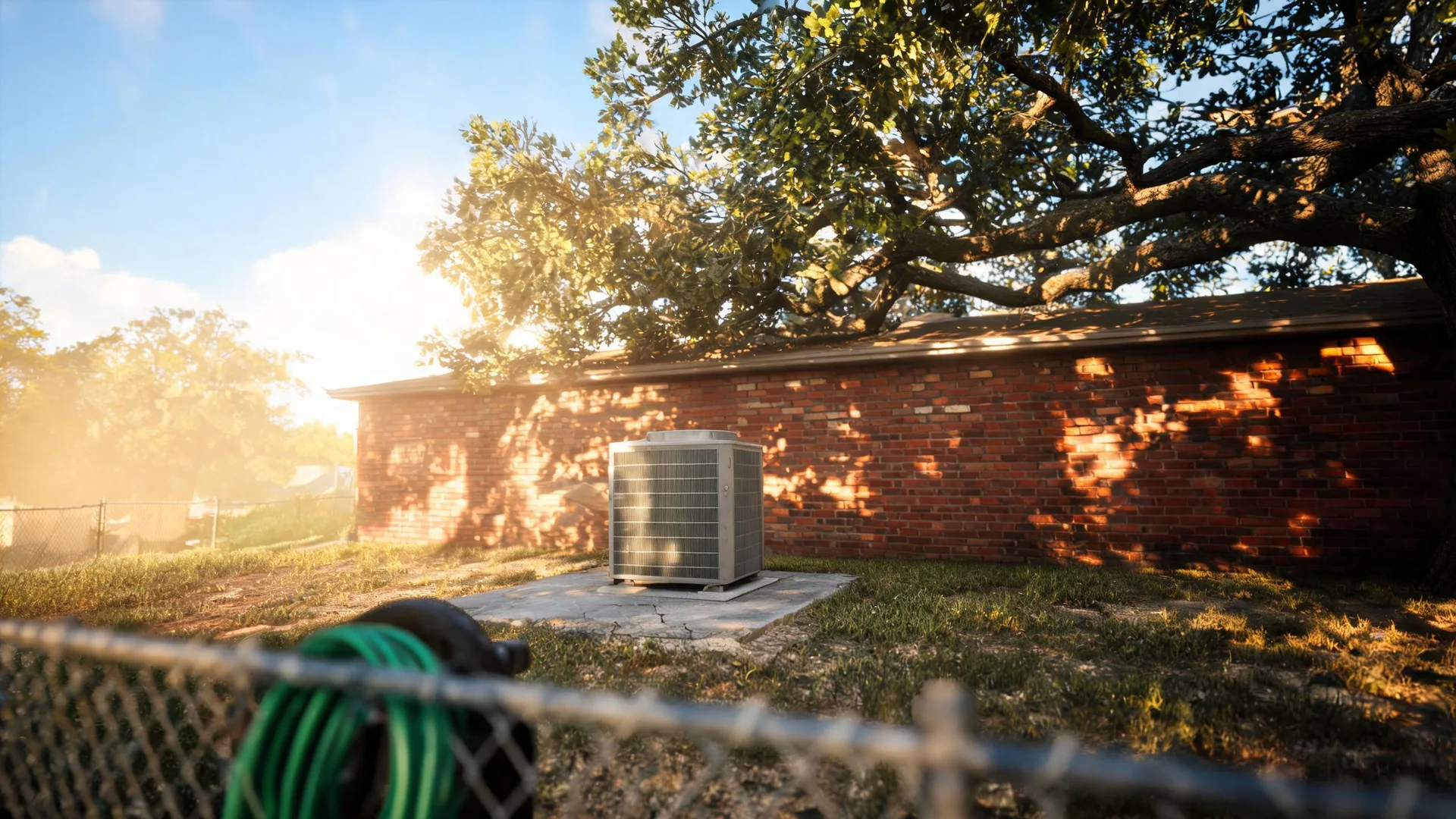
The outdoor unit holds the compressor, the fan motor and the coil, and it sits outside exposed to everything. A refrigerant leak at a fitting, a failed capacitor, a seized fan motor, or a coil caked with debris are the common ways a heat pump stops working. The coil especially needs clear airflow on all sides. Anything blocking it makes the whole system work harder and wear faster.
A reversing valve failure means no heat at all

The reversing valve is what lets a heat pump switch between heating and cooling. When it sticks or fails, the system can get stuck in one mode, blow air that isn't warm, or run constantly without catching up. Because this part does double duty that a furnace or an AC unit alone doesn't ask of anything, it's one of the more common reasons a heat pump specifically needs a repair call rather than a simple fix.

A heat pump usually tells you something is wrong before it quits outright. Ice building up on the outdoor coil when it isn't supposed to be there is one of the clearest signs, especially if it's not melting off during the defrost cycle. Air coming out of the vents that feels barely warm, or just feels like room temperature, often points to the reversing valve or a refrigerant problem rather than anything minor. Listen for the outdoor unit too. A grinding or rattling sound usually means the fan motor or a loose part inside the cabinet, not something that fixes itself. Short cycling, where the system kicks on and off every few minutes instead of running a full cycle, puts extra wear on the compressor and is worth addressing before it leads to a bigger failure. A system that runs constantly without the house ever feeling warm enough is working against something, whether that's a stuck valve, a low charge, or a blocked coil, and it won't catch up on its own.

That storm history is exactly why a diagnosis matters more than a guess here. Wind and hail don't always leave a mark you can see from the window, and a reversing valve or a weak capacitor can look like nothing until the system is asked to actually work. If your heat pump is short cycling, running without catching up, or icing over the outdoor coil, that's the machine telling you something specific, and a tech can trace it back to the part instead of swapping things until one works. A repair done against a clear diagnosis holds. One done as a guess tends to send you back out to the same unit in a few weeks, usually on a colder day than this one.