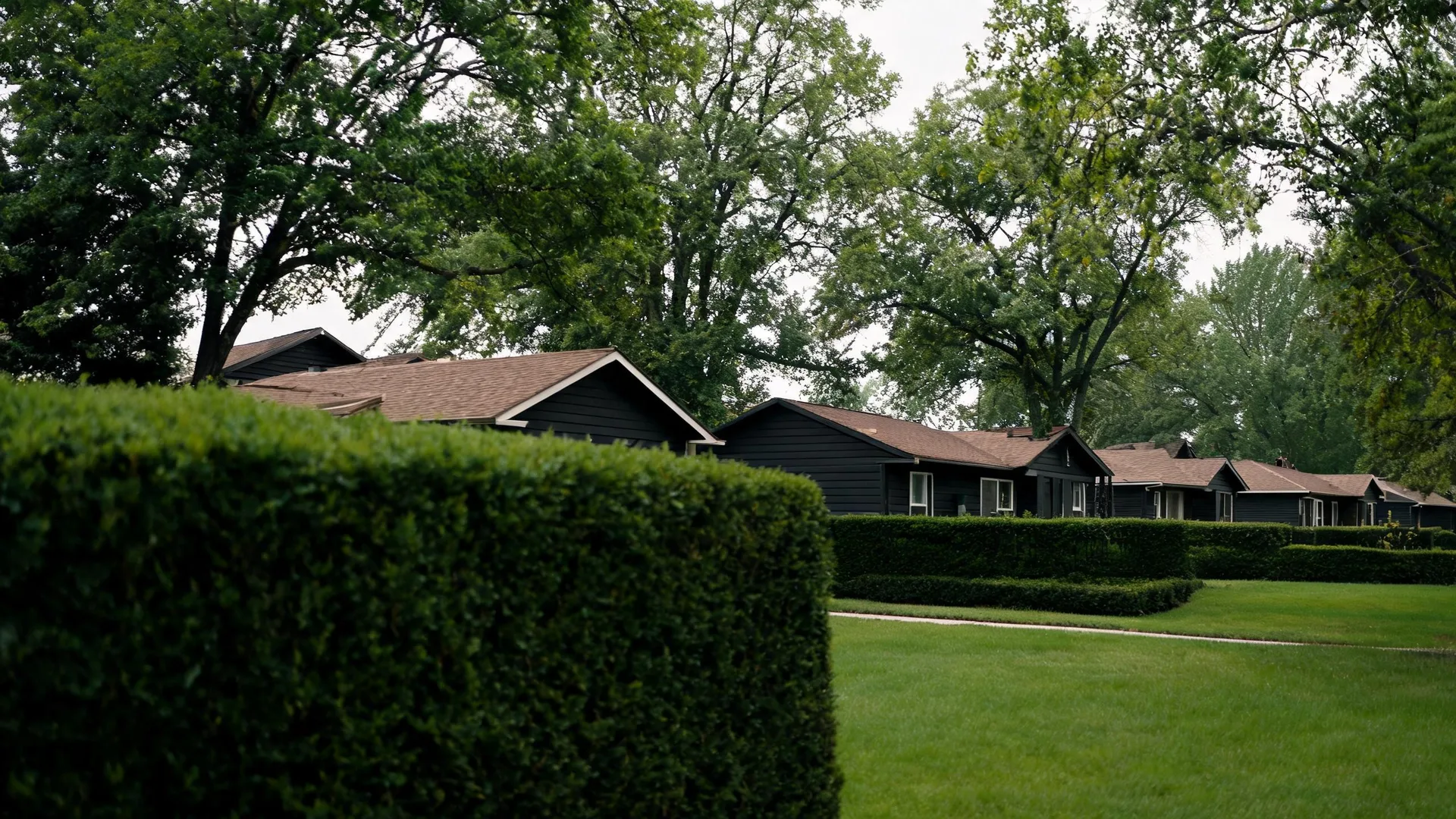
A row of dark-sided single-story cottages with brown shingled gable roofs behind trimmed hedges, mown lawn and a light-colored path, surrounded by large deciduous trees under an overcast sky.

Heat Pump Repair in Austin, MN

Tell us about the job

Takes about a minute. No obligation.

RepairHeat PumpMower County, MN
Step 1 of 2

What ZIP code is the job in?

Winters here work the system hard

Austin gets overnight lows averaging 10°F through December, January and February. A heat pump leans on its backup heat strip or furnace more on nights that cold. If the unit is struggling to keep up, that's often age or a refrigerant or defrost issue rather than anything unusual about the cold itself.


Same machine, same usual fixes

A heat pump acting up in Austin is breaking down for the same reasons it would anywhere. A failing capacitor. A stuck reversing valve. A low charge. A dirty coil. Nothing about this county changes what's likely wrong. The job is finding which one it is and fixing that part.

9 months
September through May, your system heats
3 months
June through August, it cools
10°F
the average winter night it heats against
79°F
the average summer afternoon it cools against
Isometric illustration of a cutaway single-story house showing interior ductwork and vents connected to an outdoor condenser unit beside the building, on a white background.
Your system heats September through May and cools June through August.

NOAA nClimDiv, 1991–2020 normals

Heat here runs September through May, starting right after August.

A heat pump that made it through last winter can still fail in the first cold snap of this one.

Electricity here runs 15.45 cents a kilowatt-hour, so a heat pump working harder than it should shows up fast on the bill

Power costs 15.45 cents a kWh statewide
59 damaging wind events from 2015 to 2024
32 hail events from 2015 to 2024
Many Austin homes are old enough to be on their second or third heat pumpHalf the homes in Mower County were built in 1958 or earlier

A heat pump that's low on charge or running a weak capacitor doesn't just struggle on cold nights, it draws more power every time it cycles, all season long. That cost compounds at 15.45 cents a kilowatt-hour. Waiting a month to get it looked at means a month of paying extra for heat you're not even getting fully. The fix is usually straightforward once a contractor finds the actual cause, so there's little reason to let it run bad for long.

Ask how old the unit is before you fix it

If your heat pump came with the house, ask the contractor how old the unit is before you pay for the repair. Half the homes in Mower County were built in 1958 or earlier, and a system that old has likely been replaced at least once. Knowing where this one stands tells you whether the repair is worth it.

Find a contractor
A gray outdoor HVAC unit mounted on a concrete pad beside a house with gray lap siding and a stone foundation.

It's not the cold, it's the hours on the clock

A heat pump runs for months at a stretch, so it rarely fails from one bad night. It fails from the cycling adding up. Every time the compressor starts, it draws a hard jolt of current, and the start components take the wear. A reversing valve that's thrown too many cycles can stick between heating and cooling. A contactor that's arced one too many times stops pulling in clean. The defrost board, the sensors on the outdoor coil, the capacitor that smooths the compressor's start, all of it keys off running hours more than outdoor temperature. A unit asked to run nonstop through a long cold stretch wears the same parts a unit in a mild climate wears, just faster. None of that means the machine is doomed. It means the parts that fail are the ones that always fail, and finding which one it is usually settles the question fast.

A weak start turns into a dead compressor

A compressor that's low on charge or working against a failing capacitor draws more current trying to start than it should. Each cycle stresses the windings a little more. Left alone, a part that would have been a simple swap turns into a failed compressor, and that's not a part a contractor can patch, only replace.

Ice that should melt off stops melting

A heat pump clears frost off its outdoor coil by reversing itself for a few minutes at a time. If the reversing valve is sticking or the defrost sensor is reading wrong, that frost builds instead of clearing. A coil caked in ice can't pull heat from the air, so the unit leans harder on backup heat and the actual problem never gets smaller on its own.

Before anyone comes out, a few things are worth checking first. Make sure the thermostat is set to heat and the setpoint is actually above room temperature, since a bumped switch looks exactly like a dead system. Go to the breaker panel and look for anything tripped, the indoor air handler and the outdoor unit usually have their own breakers. Walk outside and look at the unit itself. If the outdoor coil is caked in ice or buried in snow, that's worth noting but not worth chipping at yourself. Pull the air filter and hold it up to a light. If you can't see through it, swap it or clean it, since restricted airflow alone can make a healthy system act like a failing one. If the indoor vents are blowing air that feels cold rather than warm, that's useful to mention when you call, not something to chase down further.

A diagnostic visit starts outside at the unit itself, not with a part swap. A contractor hooks up gauges to the refrigerant lines and checks the pressures against what that system should be running. Low charge shows up right there. So does a compressor straining against the wrong pressure. From there it's the electrical side, testing the capacitor under load, checking the contactor for pitting, watching whether the reversing valve actually throws when it's told to. Airflow gets checked too, since a weak return or a clogged filter can mimic a refrigerant problem and send someone chasing the wrong fix. Whatever's actually wrong usually turns up somewhere in that sequence.