




A row of dark-painted single-story cottages with gabled shingle roofs behind a mowed lawn, a trimmed hedge in the left foreground and large leafy trees overhead under an overcast sky.

Heat Pump Repair in Albert Lea, MN

Tell us about the job

Takes about a minute. No obligation.

RepairHeat PumpFreeborn County, MN
Step 1 of 2

What ZIP code is the job in?

Heat pumps in Albert Lea run cooling from June through August, then switch straight into heat for the stretch from September through May. The same compressor and reversing valve handle both jobs, so a part that was already weak in summer tends to give out once the system shifts to heating. That's why August is worth paying attention to. If the heat pump struggled to keep up with cooling, or has been cycling oddly, a contractor can still test it under real load before the change-over. Wait until September and you're troubleshooting a system that just started a nine-month run with a part that was already failing.

9 months
September through May, your system heats
3 months
June through August, it cools
10°F
the average winter night it heats against
79°F
the average summer afternoon it cools against
Isometric line illustration of a cutaway single-story building showing interior rooms, ceiling ductwork, an indoor air handler, and an outdoor condenser unit connected by refrigerant lines.
Your system heats September through May and cools June through August.

NOAA nClimDiv, 1991–2020 normals

Albert Lea winters average 10°F at night across December through February.

A heat pump that's slow to defrost or short on output has to work through months like that, not just a cold snap.

Electricity here runs 15.45 cents a kilowatt-hour, so a heat pump working harder than it should shows up on every bill until it's fixed

Power costs 15.45 cents a kWh statewide
28 hail events from 2015 to 2024
33 winter storms from 2015 to 2024

Half the homes in Freeborn County were built in 1959 or earlier. If your heat pump came with a house that old, it's worth asking how old the system itself is, since nothing says it's original to the house. A compressor or reversing valve nearing the end of its life tends to show it first as a repair that doesn't quite hold, the same complaint coming back a few months later. Before paying for another fix, ask the contractor how much life is likely left in the unit. A system that's already on its second or third repair may be telling you something a repair can't fix.

Fix it now, before it costs you another month

A heat pump running rough doesn't fix itself, and at 15.45 cents a kilowatt-hour it keeps costing you until someone looks at it.

Find a contractor
A gray air-source heat pump mounted on a concrete pad next to a house with gray vinyl siding, surrounded by gravel and flanked by green shrubs and white hydrangea flowers.

It never gets an off-season

A heat pump wears out from running, not from sitting idle, and unlike a furnace it never really gets the off-season. Every start puts the heaviest load on the compressor and the capacitor that helps start it, and a system that cycles on and off all day rack up more of those hard starts than one that runs in long, steady stretches. The reversing valve takes a different kind of wear. It only moves when the system switches between heating and cooling, and a valve that sits in one position for months can stick a little when it's finally asked to switch back. Bearings in the fan motors wear down the same way any motor's do, just from hours logged. None of this is damage you can see coming from outside the cabinet. It shows up as a system that runs a little weaker each season, until a season comes along that asks more of it than it has left to give.

The system blows air that isn't the right temperature

A heat pump in heating mode should feel warm at the vents, not room temperature or cool. In cooling mode it should feel cold. Air that feels off, or that changes temperature on its own partway through a cycle, usually means the reversing valve isn't switching all the way, or the refrigerant charge is low.
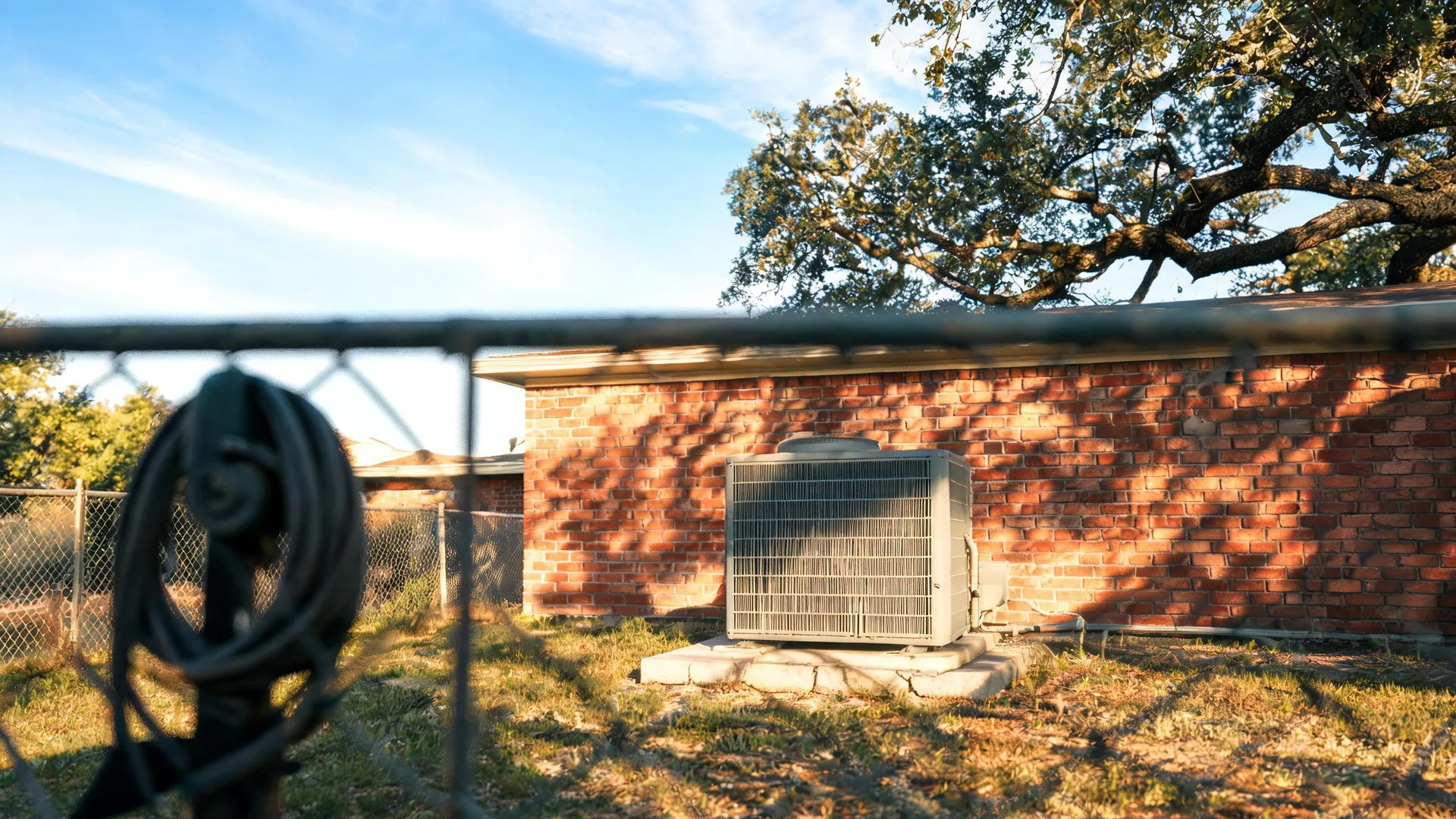
The outdoor unit is frosted over or icing up

Some frost in cold weather is normal, and the system should clear it on its own through a defrost cycle. A coil that stays covered in ice, or builds up thick frost within an hour of defrosting, means the defrost control, a sensor, or the reversing valve isn't doing its job. Running it like that puts strain on the compressor.

A refrigerant leak is a good example. A system that's low on charge will still run, but the compressor has to work harder to move heat either direction, and it runs hotter than it's built to. Left alone, that heat is what kills a compressor for good, and a failed compressor usually means the whole outdoor unit gets replaced, not just a part. A failing capacitor behaves the same way. It lets the compressor or fan motor start under strain instead of cleanly, and every strained start wears the motor windings a little more. None of this shows up as a sudden breakdown. It shows up as a system that still runs, until the day it doesn't.

A diagnostic visit starts outside at the compressor and reversing valve, since that's what both heats and cools the house. A contractor checks refrigerant pressure first, because that one reading tells them if the system is low on charge, and low charge is behind a good share of heat pumps that run weak or freeze up. They'll test the capacitor too, since a capacitor that's starting to go still lets the compressor run, just under more strain than it should. Inside, they check the temperature of the air coming off the coil against what the system is set to do, heating or cooling, to see if the reversing valve is actually switching all the way. If the outdoor coil had frost on it, they'll watch it through a defrost cycle rather than just looking at it once, because a system that can't clear its own frost has a control or sensor problem, not just bad luck with the weather. Most of this gets answered in one visit, with the system running the whole time rather than taken apart.