
Why your heat pump smells like burning in Minnesota
Why does my heat pump smell like it's burning?
You caught a burning smell coming from your heat pump and you shut it off, or you're standing near it right now trying to decide if that's serious. In Minnesota, your heat pump is likely carrying a good share of your heating load alongside your gas furnace, so you want to know fast whether this is dust burning off or something that needs a technician before you run it again.
Usually a dust or dirt that's burned on the coil or blower motor, but sometimes an electrical problem
If the system has sat idle for a while, a faint burning smell the first time it runs is often just dust baked off the coil or burning off the blower motor housing. That smell should fade within an hour of run time. A smell that doesn't fade, or one that's sharper, like hot plastic or scorched wiring, points to something else: a failing blower motor, a bad capacitor, or wiring that's overheating inside the unit. Minnesota winters push a heat pump hard when it's working alongside your furnace, and a motor or electrical connection under strain is more likely to overheat and smell before it fails outright. If the smell is sharp or doesn't go away, shut the system off and have it looked at before running it again.


A burning smell from your heat pump usually means something is overheating right where it shouldn't: a motor bearing, a stuck blower wheel, dust burning off a hot electrical connection. Running it while that smell is there can turn a bad capacitor or a dirty motor into a tripped breaker, a melted wire, or a blower motor that won't restart at all. In your house, that heat pump is likely doing a good share of your winter heating along with your gas furnace, so losing it on a cold night leaves your furnace carrying a load it may not be sized to handle alone. If the smell is coming from the outdoor unit, you might also be looking at a seized fan motor, which won't fix itself and tends to get worse the longer it runs. You already shut it off or you're standing there deciding, and that instinct to catch it now instead of waiting is the right one. Left alone, a small electrical problem like this is how heat pumps end up needing a part replaced instead of just cleaned or adjusted.


Is it safe to keep running my heat pump right now
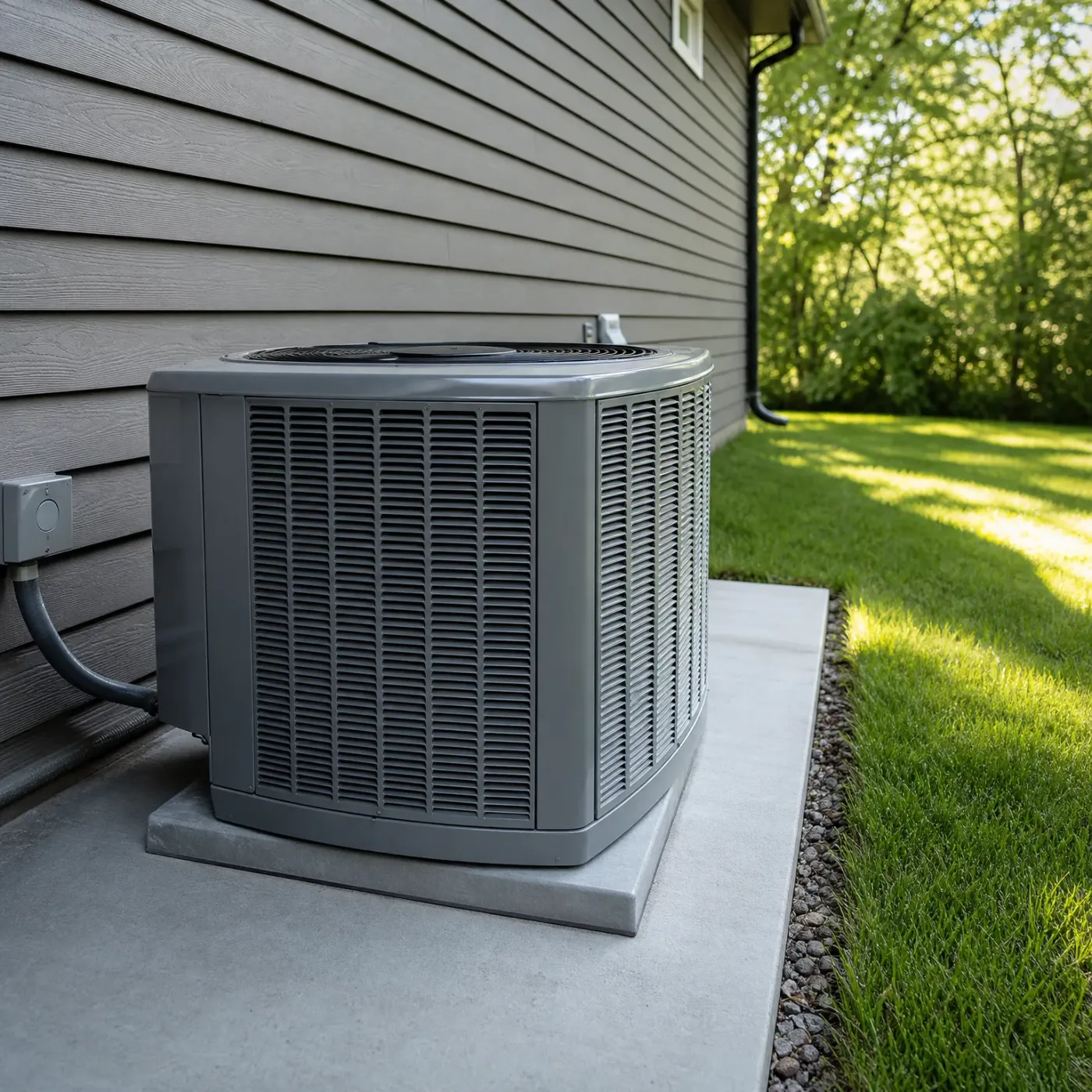
You might notice the smell near the indoor air handler, coming through the vents, or outside at the unit itself, stronger when the system first kicks on. Sometimes there's a faint haze or dust smell that fades after a minute. Sometimes it doesn't fade, and you catch something sharper, almost electrical. If a breaker trips, or the unit shuts itself off and won't restart, that's the system protecting itself from the same problem you're smelling. Leaving it running through that is how a motor that could have been repaired ends up needing to be replaced, and in a Minnesota winter, a heat pump that quits on you is a problem you feel within hours, not days.

You're out before the sun's really up, coffee still in hand, and you catch it from the side yard: the outdoor unit wearing a thick shell of ice, the kind that builds overnight when a Minnesota January doesn't let go. Your breath hangs in the air next to it. No hum, no fan turning, just ice packed into the coil fins and frost climbing the refrigerant line. You crouch down to look closer and that's when you smell it again, the burning smell that sent you outside in the first place, faint but there, coming off a unit that should be defrosting itself and isn't. You stand up and decide this one isn't waiting for a warmer afternoon.
A local pro for your heat pump repair

Your request goes to one pro, not a list of companies.
Sending the form costs nothing.
What's Actually Burning In There
- Most heat pumps use a reversing valve to switch between heating and defrost, and a solenoid stuck half open can overheat and smell like burning plastic.
- The outdoor fan motor has sealed bearings, and once they dry out the motor works harder and runs hotter than it should.
- A blower wheel caked with dust can throw itself off balance, and the motor driving it will heat up trying to push it anyway.
- Wire connections at the contactor loosen over years of cycling, and a loose connection arcs and scorches the insulation around it.
- During a Minnesota defrost cycle the unit briefly runs like an air conditioner in the cold, which can push a weak part past where it was already failing.
- A circuit board with a failing relay can short against its own casing and give off that same hot electrical smell before it fails outright.
Your heat pump switches between heating and defrost using a reversing valve, and that switch happens a lot more in a Minnesota winter than most homeowners realize. Every time frost builds on the outdoor coil, the system reverses itself briefly to melt it off, then switches back. The solenoid that drives that valve can stick halfway, and when it does, it overheats and gives off a smell closest to burning plastic. The outdoor fan motor has sealed bearings that are supposed to last the life of the unit, but years of cold starts and summer heat take a toll, and a drying bearing makes the motor work harder than it was built to. Inside, the blower wheel can collect enough dust to throw off its own balance, and the motor behind it keeps pushing against that imbalance instead of shutting down, which heats it up fast. At the contactor, wire connections loosen a little with every cycle the system runs, and a loose connection arcs, scorching the insulation right at the point of contact. That scorched insulation is often where the smell is actually coming from, not the part you'd expect. A circuit board with a relay going bad can also short against its own housing, and that gives off a hot electrical smell before the board fails for good. Each of these is a different part, but they share one thing: by the time you smell it, something has already been running hotter than it should for a while.
Power costs 15.83 cents per kilowatt-hour statewide
At 15.83 cents a kilowatt-hour, your heat pump is already one of the pricier things pulling power in the house. A motor or valve forcing itself to work harder doesn't just risk a bigger repair, it shows up on the next bill too.
EIA-861 2025 statewide residential average

A burning smell means something, and you already know that much
A burning smell from your heat pump is the system telling you a part is working harder than it should, whether that's a motor losing its bearings, a valve sticking half open, or a connection running hot. You shut it off or you're standing there deciding, and either way that's the right instinct. The smell doesn't tell you which part on its own, and guessing wrong by running it anyway is how a small repair turns into a replaced motor or a burned-out valve.
What you need now is someone who can put eyes and hands on the unit and tell you exactly what's overheating. A contractor local to Minnesota who works on heat pumps through the defrost cycles and the ice buildup every winter has seen this smell come from a dozen different causes, and knows which ones show up most in weather like yours. You'd get matched with one contractor, not a handful calling you at once, so the person reaching out already knows roughly what they're walking into before they see your unit.

Get the right pro for your heat pump
The pro who reaches out is licensed in Minnesota.
You're not committing to anything by asking.